As published in

Paraguay’s economic ambition is transforming the country into a hub for industry, logistics and technology – with forests as its next great asset.
Paraguay’s two decades of careful macroeconomic management have created the foundation for a deliberate economic transformation. Real GDP grew 6.6% in 2025, according to World Bank data, foreign direct investment exceeded $1 billion for the third consecutive year and all three major rating agencies rate the country investment grade. That points to both political and economic stability and the breadth of opportunity open to German partners – a relationship built on significant historic ties.
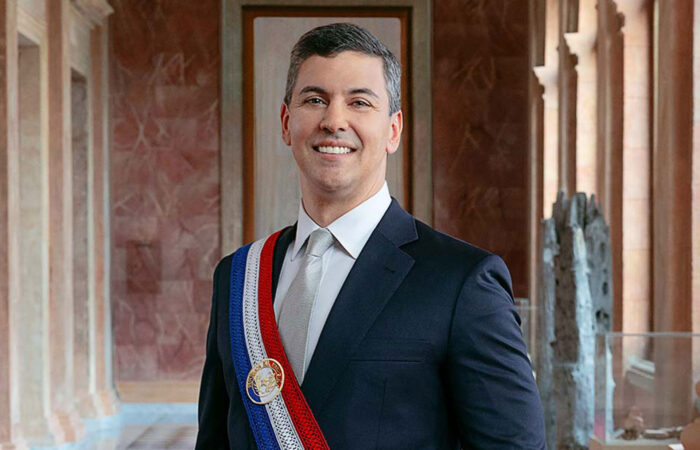
Now, Paraguay’s economic shift is accelerating. “We are competitive. We move fast. We adapt faster. The region and the world are beginning to realise that,” says President Santiago Peña. The country’s economy has long been built on agricultural strength – particularly beef and soy – but a strategic push towards value addition and diversification is already bringing dividends. The maquila regime, offering exporting companies a 1% tax, saw manufacturing grow 8.2% in 2025 and maquila exports exceed $1.3 billion, creating 37,000 jobs in the process. The government has declared an industrial revolution and set a target of doubling GDP to $90 billion within ten years. The entry into force of the EU-Mercosur free trade agreement in May 2026 – opening a combined market of 720 million people – has given those ambitions further momentum.

Paraguay’s growing logistics strength offers further support. The Bioceánico Corridor, linking Atlantic ports in Brazil to the Pacific coast, runs through the country and is nearing completion, while the 3,441-kilometre Paraguay-Paraná waterway remains a key export route. In parallel, a surplus of affordable, clean electricity – largely from hydroelectric sources – adds a further advantage, one that is already drawing data centre and AI infrastructure investment from the United States, Taiwan, Japan and Saudi Arabia.
Alongside technology and digital infrastructure, the government is backing sectors where Paraguay’s natural conditions offer an intrinsic edge. “Paraguay is so rich in natural resources that the more you understand the country, the clearer it becomes that all the progress we have seen is nothing compared with what will come,” says Peña.
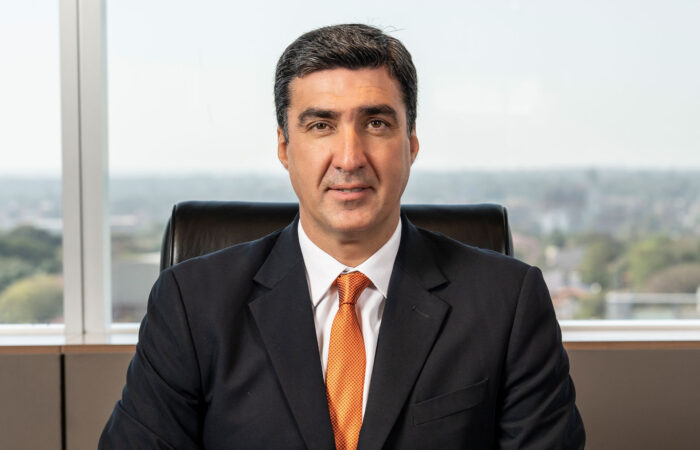
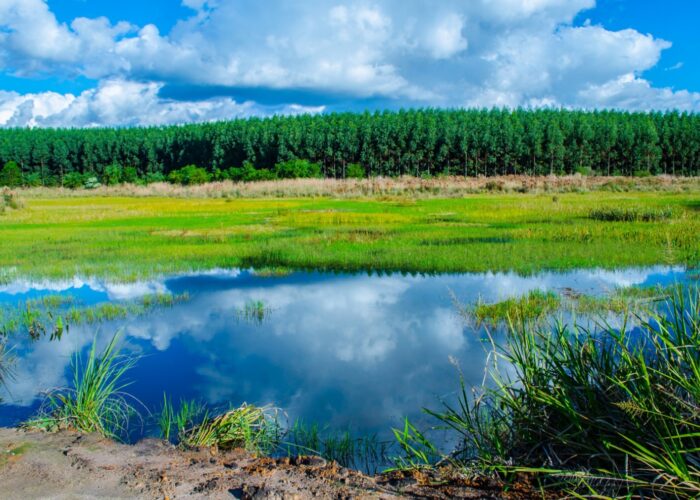
Forestry is a key example. Paracel, a more than $1.5 billion initiative to build Paraguay’s first pulp mill, is the flagship project in the sector. Due to begin cellulose production in 2030, the mill is conceived as the first phase of a larger ecosystem, with an adjacent free-zone industrial park being developed to attract European partners. “We are perhaps the only competitive, certified forest area that is yet to be developed,” says CEO Flavio Deganutti. “That is a genuinely rare position, and it will not remain open indefinitely.” It is a sentiment that captures the trajectory of a nation set on realising its potential.
Economic stability, a competitive tax framework and abundant clean energy are remaking Paraguay’s case to global investors.
Paraguay’s economy grew at 6.6% in 2025 according to the World Bank, its fastest expansion in more than a decade. The country’s Central Bank noted that all major sectors made gains in the period, reflecting the success of a macroeconomic strategy built on controlled inflation, a stable policy environment and the 10-10-10 taxation framework – a flat 10% rate on corporate income, VAT and personal income.
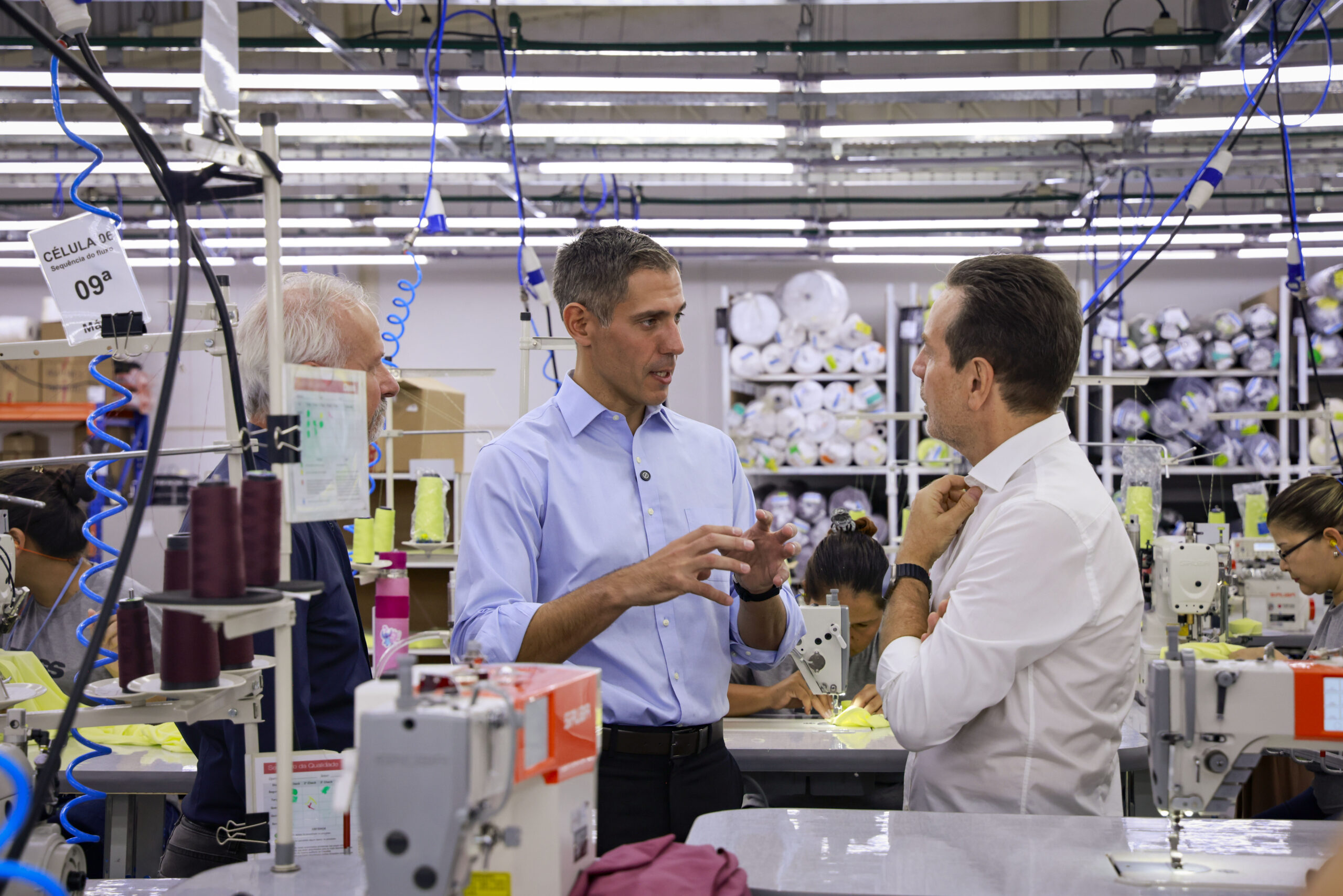
That provides the foundation for the economic diversification currently taking place. The maquila regime’s 1% tax for exporters and tariff-free import window for raw materials give Paraguay a growing edge in regional value chain integration. “At the moment, companies often open a factory in Brazil or Argentina without realising that building in Paraguay could be more efficient and competitive for exporting into those same markets,” says Minister of Industry and Commerce Marco Riquelme. “More than 300 companies have already relocated part of their operations to Paraguay to export back into Brazil, which validates our model.”
In the context of the EU-Mercosur agreement, which brings together economies representing around 25% of global GDP, that increasingly positions Paraguay as a key gateway to South American markets for German partners. Added to this are a youthful population – median age 29, with 100,000 new workforce entrants each year – a surplus of renewable energy and a government committed to expanding sectors from forestry to technology. Taken together, they point to a country fast becoming the continent’s next hub for manufacturing and investment.
Residential demand, landmark urban projects and infrastructure investment are reshaping the face of Paraguay.
Paraguay’s construction sector grew 5.6% in Q1 2026, driven by residential demand and large-scale infrastructure development, reflecting industry’s importance to the wider economy.
Leading firm Benítez Bittar Constructora identified a housing deficit of one million units, with 100,000 new units required each year. That structural gap has seen the company expand its annual output fortyfold in eight years, with projections to develop three times as many hectares in 2026 as in the last three years combined. “We consider ourselves a company with a strategic vision for our country,” says Director Sebastián Benítez Bittar.

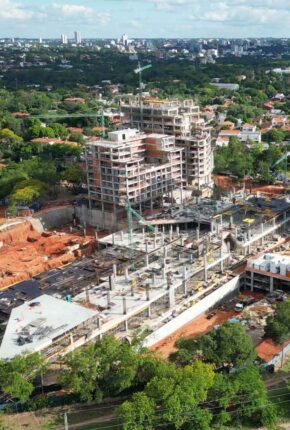
The sector’s evolution is captured in another landmark project: Asunción’s Distrito Perseverancia, a $300 million development combining retail, commercial and residential spaces, designed for walkability. “We wanted the project to be a catalyst for a lifestyle that Asunción had lost,” says Pedro Zuccolillo, executive director of Grupo La Perseverancia. The development is attracting both locals and the city’s growing digital nomad population. “That’s making the project succeed faster than we imagined,” he adds.
Large-scale infrastructure, meanwhile, remains central to Paraguay’s economic model. Under national navigation and ports administration ANNP, obstruction removal and channel widening along the Paraguay-Paraná waterway are enabling larger cargoes – consolidating Paraguay’s strength as a logistics hub. “The waterway, in this sense, does not just serve Paraguay – it serves the entire region,” says ANNP President Julio César Vera Cáceres.