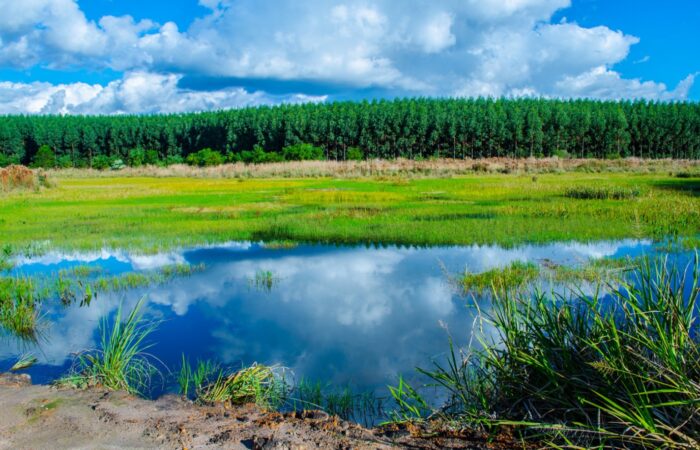
Agriculture is the foundation of Paraguay’s economy. The sector accounts for around 65% of total exports, with cooperatives playing a structurally important role across every major commodity. The federation of production cooperatives (FECOPROD) represents 35 cooperatives and around 200,000 members, accounting for 38% of national soy production and 36% of wheat exports – two of the sector’s key drivers. Celebrating 50 years since its founding in 2025, FECOPROD serves as an industry voice, a lobby group and a force for rural development, with extensive training and education programmes aimed at capacity building in the sector. The federation has also been central to the adoption of innovative methods such as no-tillage farming, in which Paraguay has become a regional pioneer: more than 90% of the country’s cultivated surface area now uses the system, preserving soil life, enabling crop rotation and raising yields consistently over decades. “Paraguay is a world champion in direct seeding, in adoption of the system,” says FECOPROD president Alfred Fast.
At the national level, the priority now is adding value before goods leave the country. Grupo Hilagro, which holds Paraguay’s largest wheat milling capacity, embodies that shift. In the mid-1990s Paraguay was a net wheat importer; today it processes around 60% of its domestic wheat harvest, selling the remainder to neighbouring countries for their own industries. A pilot export programme to Spain – two completed shipments – is testing whether Paraguayan processed food products can find a foothold in European markets. “We want to be a genuine partner in the supply chain, not simply a seller of raw materials,” says Christian Gossen, president of Grupo Hilagro.
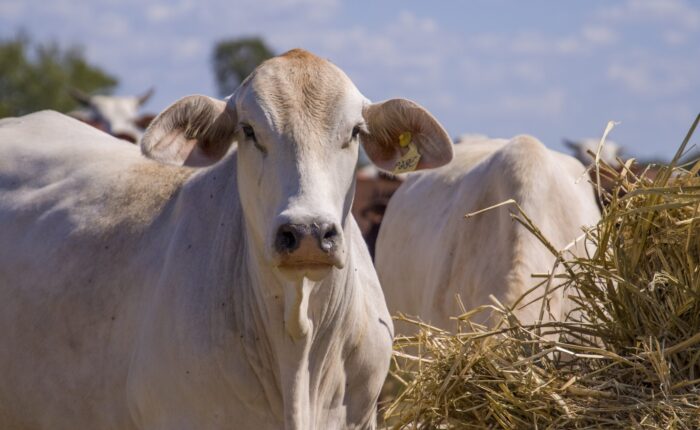
As well as value addition, expansion is high on the agenda, with the government identifying forestry as a priority sector within its industrial strategy. President Peña has pointed to timber clusters as a core element of the push to develop industry outside the traditional commodity base, with Silvipar among the most prominent projects to illustrate the ambition. Operating across 74,000 hectares in southern Paraguay, with around 35,000 trees already planted, the company is developing eucalyptus clusters designed to supply a range of industries, including pulp and solid wood. “Our vision is multipurpose: maximum economic impact, positive environmental impact and social impact,” says CEO Ramón González. Backed by Astarte, a London-based institutional fund manager, the project is moving from its research and expansion phase towards large-scale industrial processing – a process that aims to help raise forestry’s contribution from 0.06% of GDP to 4%, creating up to 40,000 permanent jobs. “The industrial phase is fundamental, because that is what will deliver the great leap in impact for investors and for the country as a whole.”
South Atlantic Company is an integrated fisheries and processing conglomerate with a global footprint. Present in markets including China, Spain, Morocco, India and South America, the group handles prawns, squid, tuna and hake and operates across the value chain, from catch and cleaning to logistics and packaging – with a focus on food security and quality. “We capture, transport and transform everything ourselves, all under the same care and vision,” says CEO Lucio Tortosa. The group’s newest facility – in Hohenau, in Paraguay’s Itapúa department – is the country’s first open-sea product reprocessing plant, representing a $45 million investment that will spur job creation and growth in the wider segment.
The choice of Paraguay for the plant’s location was based, in part, on significant operational advantages. Previously, species caught in South American waters were shipped to Asia for reprocessing before export to Europe – a route that took 90 days. “From Paraguay, we reduce the transit time of the goods from 90 days to three days,” says Tortosa. “With an annual business volume of around $1.5 billion, that saving represents a huge reduction in financial and logistics costs.”
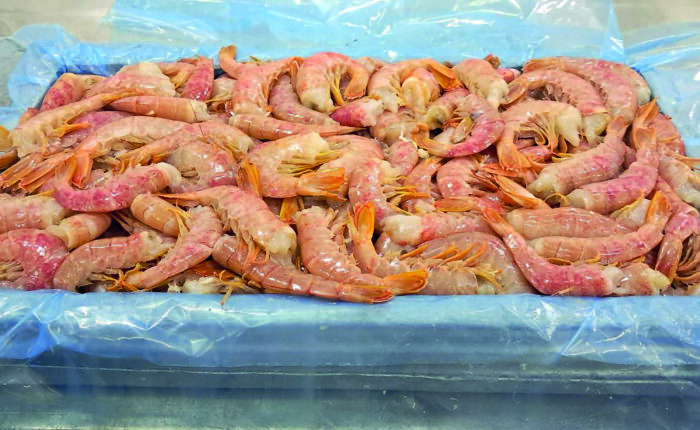
Added to this was the appeal of a country with a youthful, responsive workforce and a receptive business climate – as well as abundant potable water and clean energy, which the company views as important future commercial advantages. “We believe that within 20 years, water and its use in industry will be a major issue,” says Tortosa. “The fact that the energy used or the carbon footprint to bring a product to market is steadily shrinking will be an important differentiator.” For South Atlantic’s CEO, those long-term structural advantages should attract the attention of the wider international investment community. “Come to Paraguay and get to know the companies that are already here,” he says. “Don’t come to do business. Come as a tourist, get to know the people, the country, the culture.”
That reflects the company’s ethos that every country where it operates offers unique strengths which contribute to the business as a whole. With its headquarters in Vigo, Spain, South Atlantic’s wider group encompasses partners from China, Denmark, Ecuador and more – a network Tortosa is keen to expand. “The most viable approach would be to bring the owners together with whoever has the technology or the company that can develop sales of these products in Germany,” he says. “We are open to all kinds of partnerships.”

Q: How will the new plant contribute to Paraguay’s development?
This is the first investment of its kind here. Open-sea product reprocessing did not exist in Paraguay. The primary contribution is job creation, but also the opening of a path. In fact, other companies in our sector are already looking at Paraguay as a place to set up.
Our sector is interesting because everything can be learned. When a company teaches a community to handle certain foods and another company – even a competitor – then sets up, employees move on but the town already knows the business. That generates cultural and social knowledge that lasts a lifetime.
Q: How is technology shaping the company?
The new technology we are applying – and this plant is part of that – consists of reducing industrial processes. There is a new demand coming from the shelves and from consumers: chemical-free products and first-freeze-only.
Because we are integrated, we do not buy a product from anyone else. We have designed a logistics system in which the product travels on ice, with processes fully controlled and certified by the health authorities of each country. When it arrives at the plant it is processed, and that is the only day in the product’s life on which it is frozen. Afterwards, the consumer thaws it when they are ready to eat it. Consumers are beginning to attach real importance to this, to the point of paying a premium.
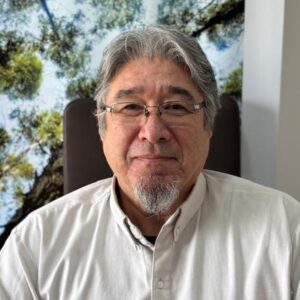
Ramón González, CEO of sustainable forestry firm Silvipar, discusses the company’s social and economic impact in Paraguay.
Q: What is your vision for Silvipar?
Our mission is to establish sufficient forest masses to attract large forest industries. High-quality plantations allow for the generation of a forest cluster, which is ultimately where the road leads for us, but it begins with the quality of the plantations themselves. We establish those plantations against environmental and social criteria, and we actively seek positive environmental and social impacts within that mission.
The vision is that, once that is achieved, Silvipar will deliver the greatest impacts in financial, economic, social and environmental terms. For me, it is clear that this will generate a transformation of the country: not only in specific aspects, but economically, socially and environmentally.
Q: What are Silvipar’s productivity advantages?
Today we are at 47–48m³ per hectare per year, which positions us above the Brazilian average. Brazil is the mecca of productive plantations, with tremendous industrial development – much of it built on European investment – so exceeding those indices through R&D is significant.
Q: What is the rationale behind a multi -product approach?
We explore materials that can feed not only pulp industries but also solid wood industries such as laminate and sawn timber. A pulp mill might involve investment of $4 billion, while a sawmill can start at $2 million or $10 million. The difference is dramatic, but the social impact and the returns at a smaller scale remain important, and by generating a cluster, we give the project greater social reach.