KGHM accounts for around 50% of copper mining production in Europe, drawn from its own deposits in Poland, and is the world’s second-largest silver producer. With a deposit base that secures production for another 30 to 50 years, the company has a key role to play in Europe’s future as it navigates energy transition. “That position brings both responsibility and opportunity, and we intend to preserve and strengthen it,” says KGHM President Remigiusz Paszkiewicz.
Copper sits at the centre of that transition. Grid upgrades, renewables and digital infrastructure all rely on copper, with global supply struggling to keep pace with demand. Silver, too, has seen demand push prices higher, as investors prioritise traditional assets in the face of global turbulence.
That helps define the company’s three strategic priorities: stability of domestic production, energy cost reduction and talent. Current operations consume approximately 3.2 terawatt-hours of electricity per year, and KGHM is investing in green energy generated at its own sites and connected directly to its operations – lowering costs and boosting resilience. “As the largest industrial consumer of electricity in Poland, we are highly motivated to reduce costs and improve efficiency,” says Paszkiewicz.
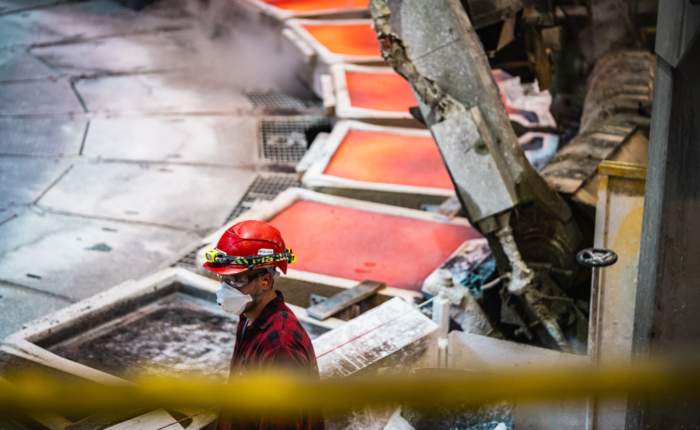
The group’s international operations provide additional market strength. The Sierra Gorda open-pit mine in Chile and the Robinson mine in Nevada account for roughly 20% of total group production but contribute approximately 50% of group EBITDA. “Open-pit mining is structurally lower-cost than underground mining,” says Paszkiewicz. “That financial performance gives us both the incentive and the capacity to expand further in the Americas,” he adds, with projects in South America, Europe and North Africa also under consideration.
That international cash generation feeds back into the core business. Germany is KGHM’s single largest export market for copper from Poland, and the company is actively deepening its relationships as European manufacturers prioritise reliable supply from within the continent. “The energy transition will not happen without copper,” says Paszkiewicz. “And for European industry, the most secure, cost-effective and regulatory-compatible source of that copper is right here in Poland.”
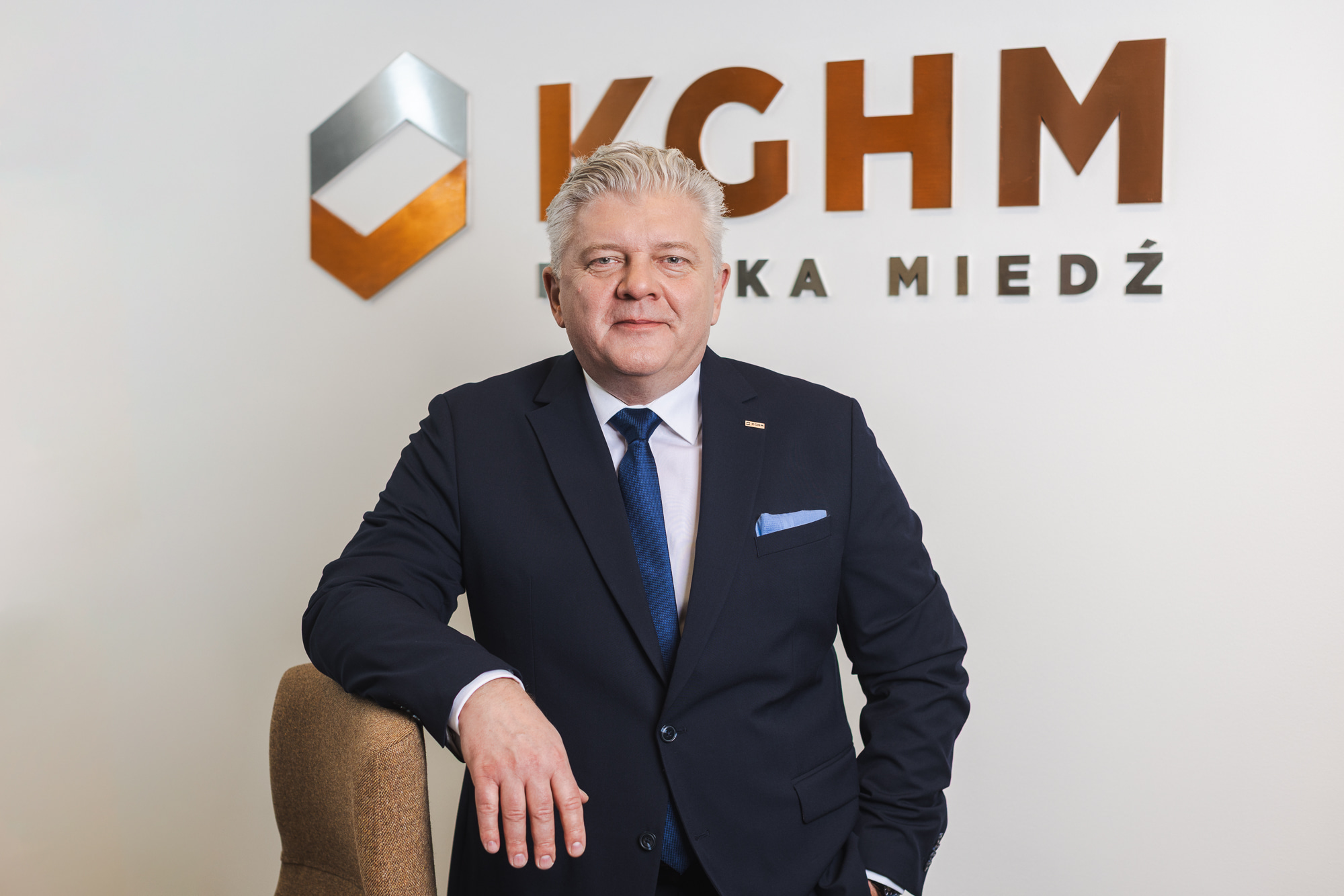
KGHM President Remigiusz Paszkiewicz on how Europe’s energy transition is driving copper demand, the company’s German partnerships and its investment in renewables to cut energy costs.
Q: What drives KGHM’s competitive advantage?
The copper market is being shaped by powerful structural forces – electromobility, offshore and onshore wind generation, grid modernisation and data infrastructure all require significant copper. An electric vehicle contains around 80 kilogrammes of copper; a single wind turbine can require up to five tonnes. Demand is growing consistently, and there is a modest global supply deficit, driven in part by China’s insatiable appetite as both the dominant producer and dominant consumer of copper. Silver benefits from a parallel dynamic: roughly half of global silver demand is investment-driven, and strong investment demand pushed prices higher last year.
Our competitive position rests on being a reliable, proximate, European-law supplier to European industry. When cable manufacturers in Germany, Sweden or Denmark are building out offshore grids or automotive supply chains, they value the assurance of a supplier operating under the same regulatory framework, without customs friction and with a stable long-term production horizon. Approximately 14% of our annual copper output goes to Germany alone, largely under long-term contracts. That relationship is stable and we expect it to deepen as the energy transition accelerates.
Q: How do you position KGHM for European industrial clients and partners, particularly in Germany?
Our proposition to European clients is built on three things: stability of production, reliability of supply and proximity. Germany is our single largest export market for copper from Poland, and we are deepening those relationships. We have recently signed new long-term contracts with German and Danish companies, and the consistent feedback is that customers are willing to accept a modest price premium for the security and simplicity of sourcing from within Europe.
For investors, the picture is equally clear. KGHM is focused on cost reduction – particularly through green energy self-generation – operational improvement and measured international expansion. We have agreed with the Polish government that the relief we have received on the mining tax will be reinvested entirely into stabilising and developing our domestic operations. That alignment between the company, the government and our long-term partners is a meaningful signal of strategic commitment.
We are also investing in operational sustainability. Significant capital and effort have gone into water management infrastructure around our Polish mines and into transitioning our underground vehicle fleet from diesel to electric. These investments reduce operational risk and long-term costs simultaneously.
Q: Why is now the moment for investors to consider KGHM?
Europe’s green transition and digital infrastructure buildout are fundamentally copper-intensive. Every grid upgrade, every offshore wind farm, every electric vehicle and every data centre requires copper, and the volumes required over the next two decades are significant. KGHM is Europe’s primary domestic source of that copper.
We offer something that is increasingly rare: a long-duration, stable supplier operating under European law, with a clear investment horizon, a balance sheet being actively strengthened through international cash generation, and a management team focused on efficiency, cost control and operational discipline. The reliability and security that investors and clients are seeking in the current environment is exactly what we have built over 65 years of operations.