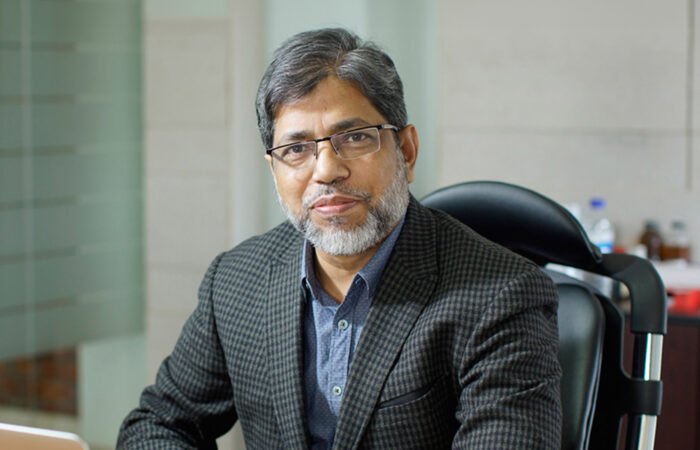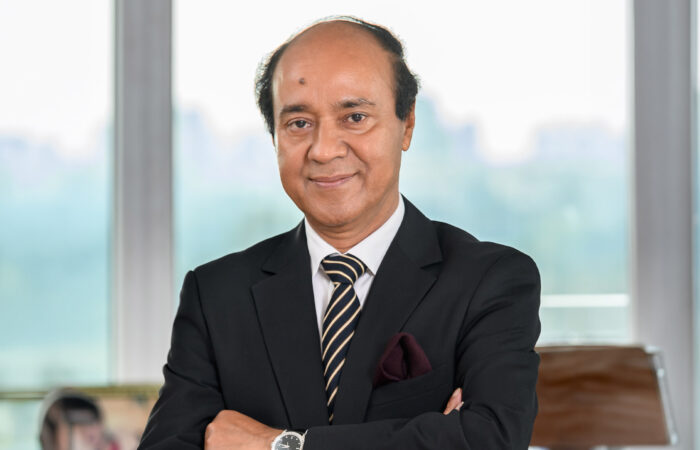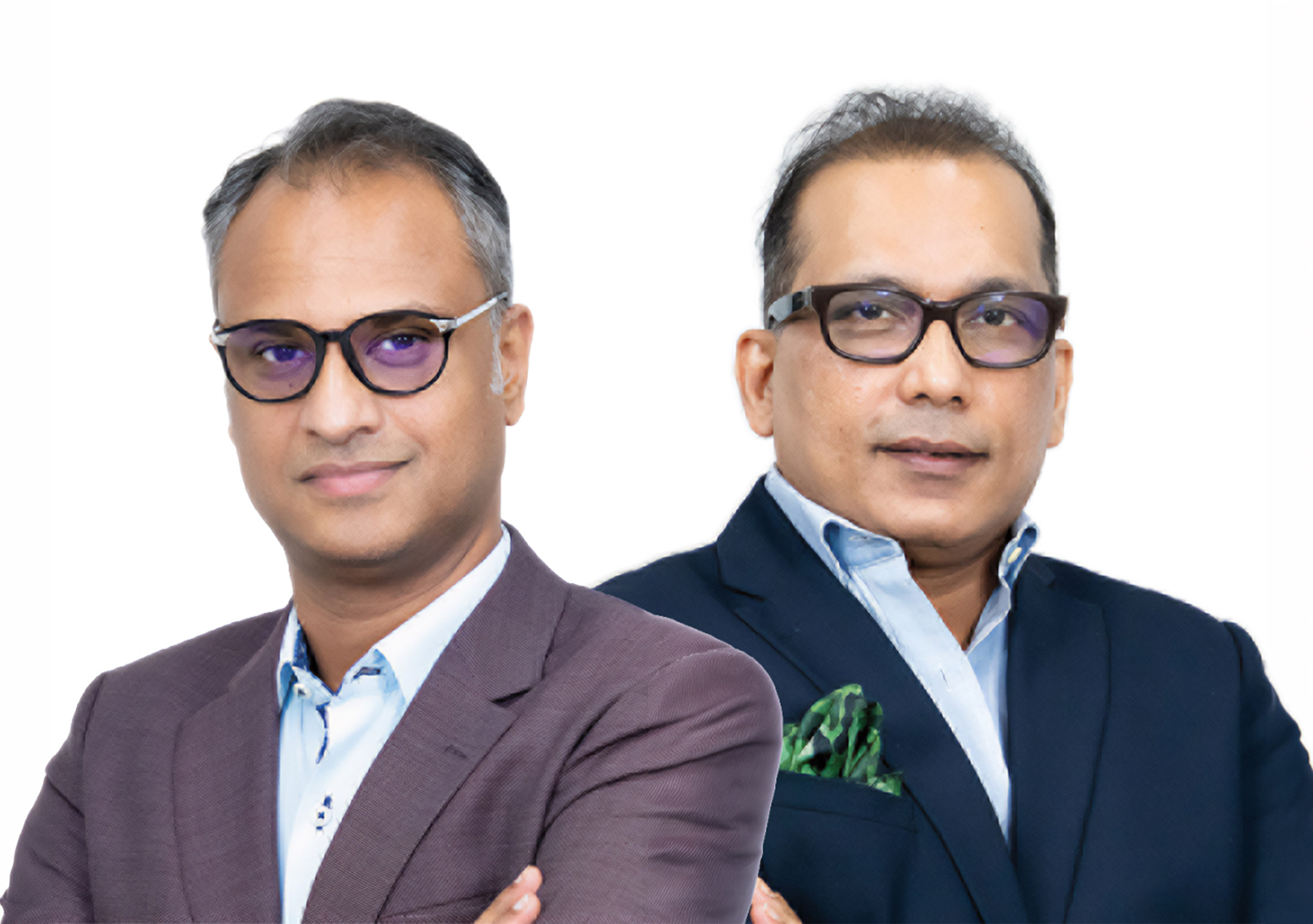

Bangladesh’s technology sector is expanding as government agencies, enterprises and international partners invest in digital infrastructure and system integration. Penta Global Ltd, founded in 2016, has positioned itself to support this increasing demand for both public and private sector clients. In an exclusive interview, Shaheen Alamgir, chairman and founder, and Mohammad Faysal Zaman, co-founder and managing director, discuss the company’s origins, its AI strategy, opportunities in the Middle East and why Bangladesh’s young technology workforce could become a powerful offshore asset for global markets.
Q: How did Penta Global’s original vision take shape, and how has it evolved since the company was founded?
Mohammad Faysal Zaman, co-founder and managing director: From childhood, Shaheen Alamgir was inclined towards business, having grown up in a business-oriented family. Both he and I worked in the telecom sector for many years. Around 2013–14, Bangladesh began undergoing significant digital transformation. With our telecom background and understanding of ICT, he saw a clear opportunity to contribute to this shift.
We recognised an emerging national need for new technologies, automation, e-governance and large-scale digital infrastructure. Many government agencies and factories were beginning to adopt automation, and international companies were showing interest in entering Bangladesh. These organisations needed strong local partners who understood both ICT and the local context, partners capable of project management, resource support, infrastructure development, logistics and language and cultural translation.
Seeing this gap, Shaheen founded Penta Global with a vision to support the country’s digital transformation. The mission was not just to build an IT business but also to contribute meaningfully to society by enabling modernisation, supporting government initiatives and facilitating knowledge transfer from foreign companies to Bangladesh.
The company began by focusing on government ICT projects, expanded into enterprise markets and is now building toward a broader global presence.
Q: What is the company’s mission today, and which markets are you prioritising for expansion?
MFZ: Our long-term mission is to become a global company. More specifically, our core mission is to help Bangladesh adopt emerging technologies. Looking ahead, the next region we are targeting is the Middle East. We are closely following developments there, particularly the rapid growth of AI, Dubai’s move toward blockchain-based fintech and initiatives to tokenize assets.
We are focusing on Web3 technologies and exploring how we can enter that market. We already have relevant in-house expertise, and we believe cultural alignment will also support our expansion, as many of our professionals share similar cultural and religious backgrounds with the region. This is the market we are prioritising next.
Q: Penta Global is one of the younger companies in Bangladesh’s ICT market. How do you assess its competitive position?
Shaheen Alamgir, founder and chairman: Many IT companies in Bangladesh have been operating for decades, while we are one of the youngest. From the start, we have had to compete with well-established, experienced firms. This is a highly competitive market, so we focus on identifying gaps and addressing them with new technologies.
One such gap emerged in the construction sector as BIM began to gain importance. Companies needed to convert their AutoCAD designs into 3D BIM models, so we began by supporting that transition. As our team grew, our core strength, our ability to learn quickly, became our key differentiator.
We built an internal AI team and recognised the potential to automate significant parts of the BIM workflow. While we initially produced 3D models manually, we soon began training AI models to automate these tasks. BIM typically involves four major steps; we have already automated three of them using our AI solution, reducing the work from several days to a few seconds. We are now training the model to automate the remaining step as well.
Our strategy is to adopt new technology as early as possible and apply it directly in practice to deliver faster, more efficient solutions.
Q: How is that innovation strategy changing the company’s delivery model?
MFZ: BIM refers to Building Information Modelling. Previously, we focused on providing skilled resources for offshore and outsourcing work. However, global trends began shifting last year. Productivity expectations have changed, where a person might previously deliver 10–30% productivity in a typical workday, AI tools now enable, and require, much higher output, often 80% or more.
We observed that many new AI tools were emerging to support this shift, helping professionals improve efficiency and streamline delivery. Realising this, we understood that we needed our own AI tools to enhance our team’s performance, reducing manual effort, accelerating delivery and handling many of the intermediate tasks through automation. This became a priority as we looked to expand globally.
To support this vision, we established an innovation lab led by an exceptionally talented team member, someone who received multiple international scholarships but chose to stay with us. The lab now consists of about 15 AI specialists whose primary focus is innovation. They have already produced nine international journal publications and conference papers.
This team is driving our AI development, and we will be unveiling our new tools at an upcoming expo in Japan, where our chairman will present how these in-house AI solutions significantly improve productivity in BIM and related domains. The goal is to demonstrate our enhanced efficiency and quality, supported by our own innovation ecosystem.
Q: Penta Global works in compliance-sensitive sectors, including defence, government and development partner-funded projects. How do you manage stakeholder confidence?
MFZ: Defence-sector companies in Bangladesh are highly compliance driven and require strict certifications and procedures before allowing partners to work with them. To qualify, we must meet international standards, particularly because defence projects often involve collaboration with global partners. This is why we maintain certifications such as ISO and CMMI.
Working in the defence sector also requires rigorous background compliance. If any individual or organisational background check raises concerns, we cannot participate. This necessity has helped us strengthen our internal structure, from human resources to organisational processes, ensuring full alignment with local laws, clean personnel records and strict adherence to all compliance checklists.
We also work with major government entities such as the Election Commission and projects funded by development partners like JICA. These areas demand highly competent and properly certified professionals. Our teams must hold up-to-date certifications in the technologies they implement or support. As a result, continuous training and professional development are essential parts of our operations.
Q: What has driven your international expansion, including work with US, European and Japanese partners?
MFZ: Our international motivation is straightforward. Since 2016, we have worked with numerous US and European companies, gradually building strong relationships. During COVID, these companies stopped sending their teams to Bangladesh and asked us to implement projects using our own resources. This became a turning point, pushing us to develop our internal talent and opening the door to broader global collaboration.
One of our partners in Silicon Valley, for whom we supported software development, helped us understand a major industry shift: post-COVID, many companies realised that software teams no longer needed to be physically present in an office. Work could be done from anywhere. Bangladesh already had a large pool of freelancers supporting international clients, so we began positioning ourselves more aggressively in offshore development.
As AI surged last year, we started recruiting young talent and preparing them to work with US and other international companies.
Q: Where do you see opportunities for UAE-based investors or partners in Bangladesh’s ICT sector?
MFZ: From an ICT perspective, we see significant potential for collaboration. The time zone difference is small, only about three hours, and there is strong cultural understanding between our people and those in the Middle East. We also have a large pool of young talent who can be trained and deliver strong results through collaborative projects.
The main gap on our side is domain expertise. For example, a company like DP World already has extensive in-house solutions and may want to build large-scale logistics or blockchain-based platforms. They could hire and train young Bangladeshi professionals to work offshore and contribute effectively. This kind of partnership is feasible and mutually beneficial.
There are opportunities in sectors such as ports and transport, though these fall outside our direct focus. Still, within ICT, the potential is substantial. Global trends are shifting, and many legacy systems will need to be replaced with AI- or blockchain-based technologies. This is precisely where our resources can support and add value.
Q: Penta Global has worked on a one-stop service platform linked to investment facilitation. What was the innovation behind that system?
MFS: OS refers to a one-stop service system. When investors enter the process, they typically need multiple permissions, from licensing authorities to environmental clearance, land acquisition and more. The OS platform allows them to complete all these steps through a single portal.
AI is not required for OS. However, an important feature we introduced is the ability to add new services without additional coding. Previously, developers had to redesign each service manually. In reality, every service is essentially a form that investors fill out and submit for processing.
We created a codeless “open form” module. It enables non-technical users to design and configure new forms independently, without writing code. This is a key innovation in the OS platform, making service expansion faster, easier and more efficient.
Q: Why do you believe this is an important moment for UAE companies to look at Bangladesh?
MFZ: Despite political or governance issues, the country is undeniably growing. We have a large young population, and GDP continues to rise.
Bangladesh is heavily focused on building infrastructure, much of it funded by donor agencies. Once these infrastructure projects are completed, the service sector will present new opportunities. But even today, many major infrastructure projects remain in the pipeline, offering significant potential for UAE companies.
In sectors such as seaports, airports and power and energy, opportunities exist but are limited to a small number of qualified international participants. Bangladesh has three seaports, but only two operate efficiently, which leaves room for improved management and investment. The same applies to airports. In the power and energy sector, licenses for terminals and related infrastructure are limited but still open at this stage.
This is the moment when large-scale infrastructure investments can have substantial economic impact. The companies that move first will gain the strongest advantage. It is the right time for UAE firms to explore opportunities, especially in public–private partnership models, which can be financially beneficial for both the country and the participating companies. In four to ten years, the market will likely become much more competitive. Now is the window to act.