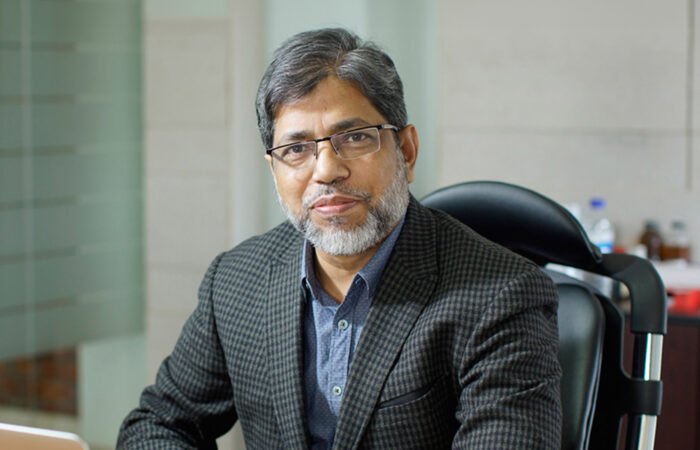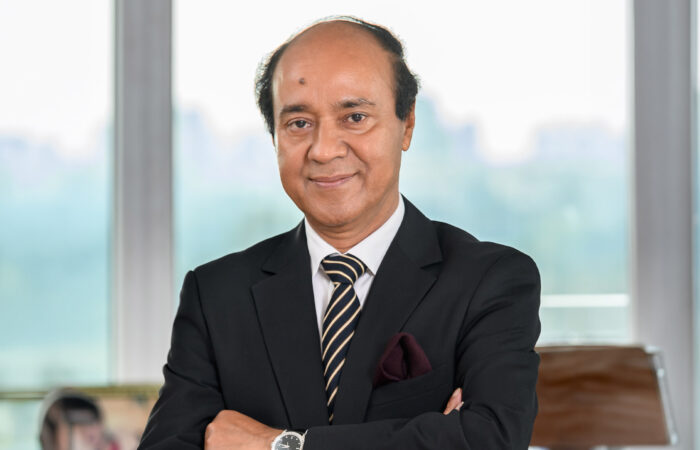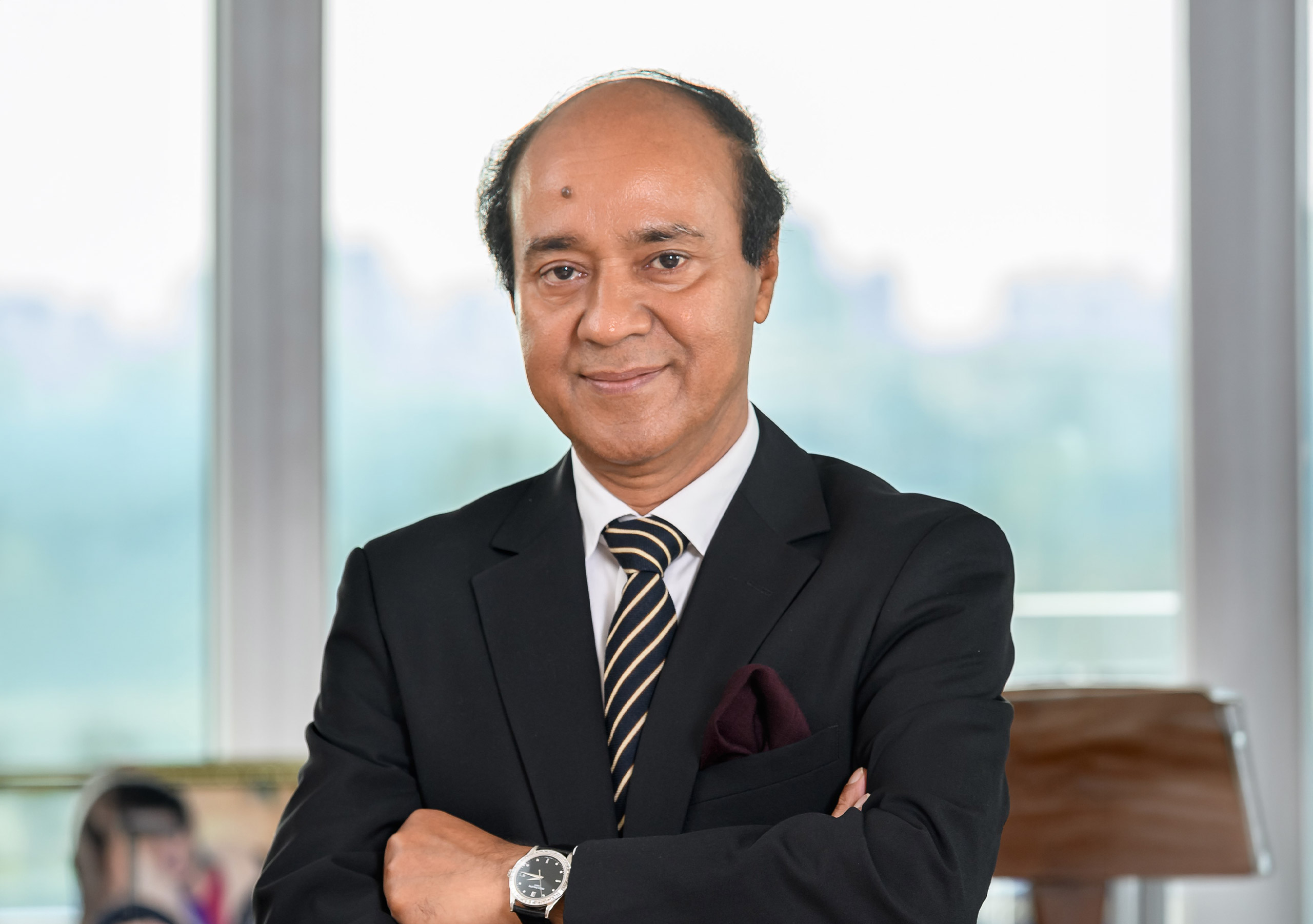

Meghna Group of Industries (MGI) is one of Bangladesh’s largest and most diversified conglomerates. Comprising 57 industrial units with a workforce of over 65,000, its operations span sectors from FMCG to logistics, energy, building materials and petrochemicals, exporting to 52 countries worldwide. In this interview, Mostafa Kamal, Chairman and Managing Director, outlines how MGI’s diverse operations are spurring national development.
Q: How has your vision evolved since 1989, and which decisions most defined the group’s direction and growth?
Mostafa Kamal, Chairman and Managing Director: Some people say I have led a revolution in industrialisation. I do not see it as a revolution; I see it as love for work, hard work, and building something step by step. My journey began in 1976 with a small trading business, but the inspiration started earlier, during the 1971 Liberation War. We lived near the border, less than one kilometre from the Indian border.
There was severe scarcity in the villages: no kerosene, no salt and frequent food crises, including famine in our area. People often ate rice with chili and salt because protein like eggs or chicken was considered unaffordable.
After that period, I completed the Secondary School Certificate (SSC), and I tried hard to get a bank job. At that time, Khondoker Mostaq Ahmad Khan was the Deputy Commissioner (DC) of Dhaka and very influential. Through a friend who worked as a clerk, I tried to approach the Managing Director of Uttara Bank, but meeting senior officials was extremely difficult without connections. I worked in a shop for one to two years, then started “flying,” meaning brokerage: bringing imported goods from Chittagong and selling them in Dhaka, including milk powder, sugar and other items.
Over time, I saved money and became a sub-dealer under main dealers. This improved my income significantly. While my salary from a job was about 170–175 taka per month, from sub-dealership I could earn around 1,500 taka per week. That allowed me to leave the job and focus fully on buying and selling. Through the government distribution work, I also handled soybean oil and other items. At that time packaging was done in tinplate containers because plastics were not common. I would distribute goods using a small truck to different areas and collect payments after one week.
After that, I decided to build an oil factory with 150 metric tons capacity. At that time, banks did not want to finance me; they said a trader would fail in industry. I approached a financial institution that supported entrepreneurs. I explained them that I had experience in the edible oil trade and wanted to establish a small refinery. Machinery and capital requirements were significant, but that is how we started. Today we have around 10,000 tons per day capacity.
Q: How do you maintain the group’s reputation, and how do you want UAE investors and readers to perceive the group given this diversification?
MK: Today we are celebrating 50 years, from 1976 to 2025. We have about 65,000 people, 57 industrial units and another three under construction. We focus on product quality and logistics so we can reach customers at their preferred time.
Bangladesh has severe traffic and other disruptions, so we are building storage capacity nationwide to ensure supply continuity in South Bengal, North Bengal and other regions through decentralisation. We have strong colleagues, but we always prioritise the customer. If there is a complaint, I instruct our people to continue improving, because customers look for quality products and many companies operate in the market with similar product lines.
At the end of the day, earning customer trust is essential to sustaining ourselves in the market. Therefore, we consistently try to understand customers’ needs, trends and what they truly expect from us. I believe that without customers’ endorsement, we cannot survive. Customers’ trust in us is our reputation. Accordingly, we are now focusing on research and development. It is still small and should be larger, but we have started and are progressing. We are preparing ourselves for next-generation customers with more diverse products.
Q: How do you want the group to be perceived by UAE investors specifically?
MK: Bangladesh still lacks heavy industry, so we require capital and technology, particularly for CAPEX-intensive projects. For example, a PVC project alone can require around $400 million, while backward integration into caustic soda can require an additional $250–300 million. PVC, PET and related projects together can total $700–800 million. Steel projects can require around $400 million, a glass factory around $200 million, and an economic zone a few hundred million dollars.
Overall, we are considering total investments of $4–5 billion. Bangladesh imports a large volume of oil, so building a refinery could involve an investment of $4–5 billion. We have land, and if a partner joins us through a joint venture, we are ready to move forward. We want UAE investors to see us as a reliable global partner. In our economic zones, we already host companies from Switzerland, India, Australia and Japan. International companies experience global-standard infrastructure and utilities, including gas and electricity. We want to be perceived as a dependable, global-standard partner and we are ready to welcome investors from countries like the UAE for both local and global markets.
Q: What explains your strong market position and your main competitive advantages?
MK: We focus on backward integration, which supports better quality and cost effectiveness. We always try to be cost competitive while maintaining good service, so we invest heavily in logistics and integration.
For any product we enter, we try to strengthen the entire supply chain. For example, if we need bottles, we also try to produce the raw materials required to make those bottles. We focus on the full value chain and process integration.
Q: What specific investment opportunities in your ecosystem offer the strongest long-term potential for UAE investors?
MK: Bangladesh offers broad investment opportunities because it is a large and growing consumer market. At the same time, the country needs CAPEX-intensive, technology-driven, automation-based and heavy industries, where we are still behind. Investment opportunities depend on the sector investors choose, including textiles and garments, consumer products and other diversified industries. UAE investors can form joint ventures with us or use our land and infrastructure to operate their own facilities. The government allows 100% repatriation of foreign investment and dividends, which makes economic zones particularly attractive. We want UAE investors to take advantage of these opportunities in Bangladesh.
Q: What is your group-wide innovation strategy for operational optimisation and value-chain integration, and how do you see innovation evolving moving forward?
MK: You are absolutely right. We have no option but to focus on innovation, because consumers’ needs are changing, and so is the market. Our engineers and in-house teams approach problems from a practical, operational perspective rather than relying only on textbook knowledge. We send our people overseas for training; more than 100 employees are currently training in locations such as the United States (Houston), China, Japan, Germany and other parts of Europe. We encourage them to troubleshoot, develop solutions and when something works in one area, we scale it across other parts of the group.
Q: How do initiatives like Bangladesh’s first climate smart steel plant producing 1.5 million metric tons annually, and green projects such as a flour mill, demonstrate your approach to sustainability?
MK: The steel project is financed by institutions including the World Bank group. IFC is involved, and financing also includes ING Bank and China Shore, which is linked to the Government of China.
Steel mills are classified as a “red zone,” so regulatory requirements are strict. We invest more than our competitors to control emissions. In many mills, fumes and smoke from scrap processing are released directly into the air. In our plant, emissions are processed, cooled and treated before being released.
We also reduce electricity consumption through equipment that uses about 30–35% less power. We have about 60 megawatts of solar power, and we use green energy in the gas factory and rolling mill. We are also building environment-friendly facilities, including sites in Bogura and our economic zones, with greenery, staff dedicated to maintaining trees and facilities such as mosques and a helipad. We have multi-story housing for female workers and education facilities in my village, from primary school to university, including a 12-story building for female students and a six-story facility with fire safety systems and stair access. In one of our economic zones, 13 foreign companies are investing, including European, Indian, Chinese and American companies.
Q: With Bangladesh’s projected GDP growth rising from about 4% to about 6.3% by 2027, why should investors act now, why now, and why Bangladesh?
MK: Bangladesh is a large consumer market, and its geography supports exports as well. We need capital investment for medium-, large- and heavy-industry projects, including machinery and equipment. Recently, Bangladesh Government has awarded foreign investors to develop and operate their ports. The government allows dividend transfer and 100% repatriation of foreign investment. The biggest advantage is the large market: around 180–200 million people, with about 70% in the young generation. Labour costs are low, and technical capability has improved. Engineering universities and polytechnics are producing more skilled people now than before. Even if growth is lower at the moment, the long-term prospect remains strong. Before COVID-19, growth was about 7–7.5%. Our people learn quickly. During the PVC factory project, many said it was impossible in Bangladesh without foreign technicians, but our people learned and now run it ourselves. We have also sent about nine people to the United States, and we see Bangladeshi capability and education as strong.
Q: How have your experiences shaped your leadership approach, from your early struggles to leading a large, diversified group today?
MK: My leadership became clearer around 2001 and was shaped by necessity during difficulties and struggle. The key is perseverance: never give up.
Over 50–52 years, many things have changed. You must accept change and adapt. I am friendly with my colleagues, and I do not take vacations. I spend two days in factories and five days in Dhaka working.
I love the work and feel relaxed in the factory. Every week I visit many factories, sometimes 10 to 17, to ask about problems, focus on excellence, modification and upgrading. It is continuous work, and you must stay on the ground.
I also make quick decisions, and my people respond quickly. When I receive messages, I reply immediately and issues get corrected.