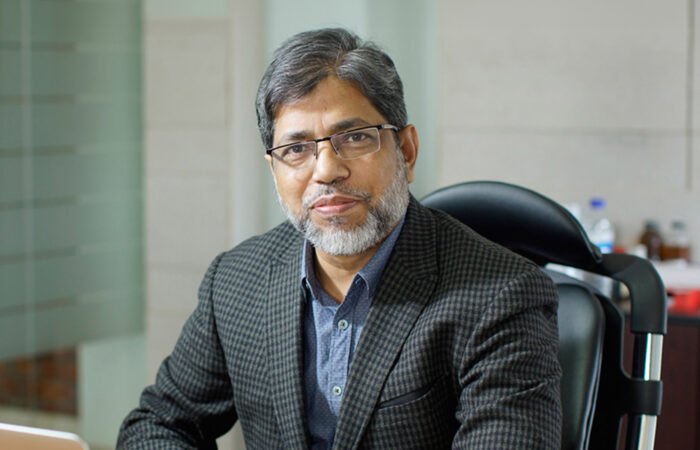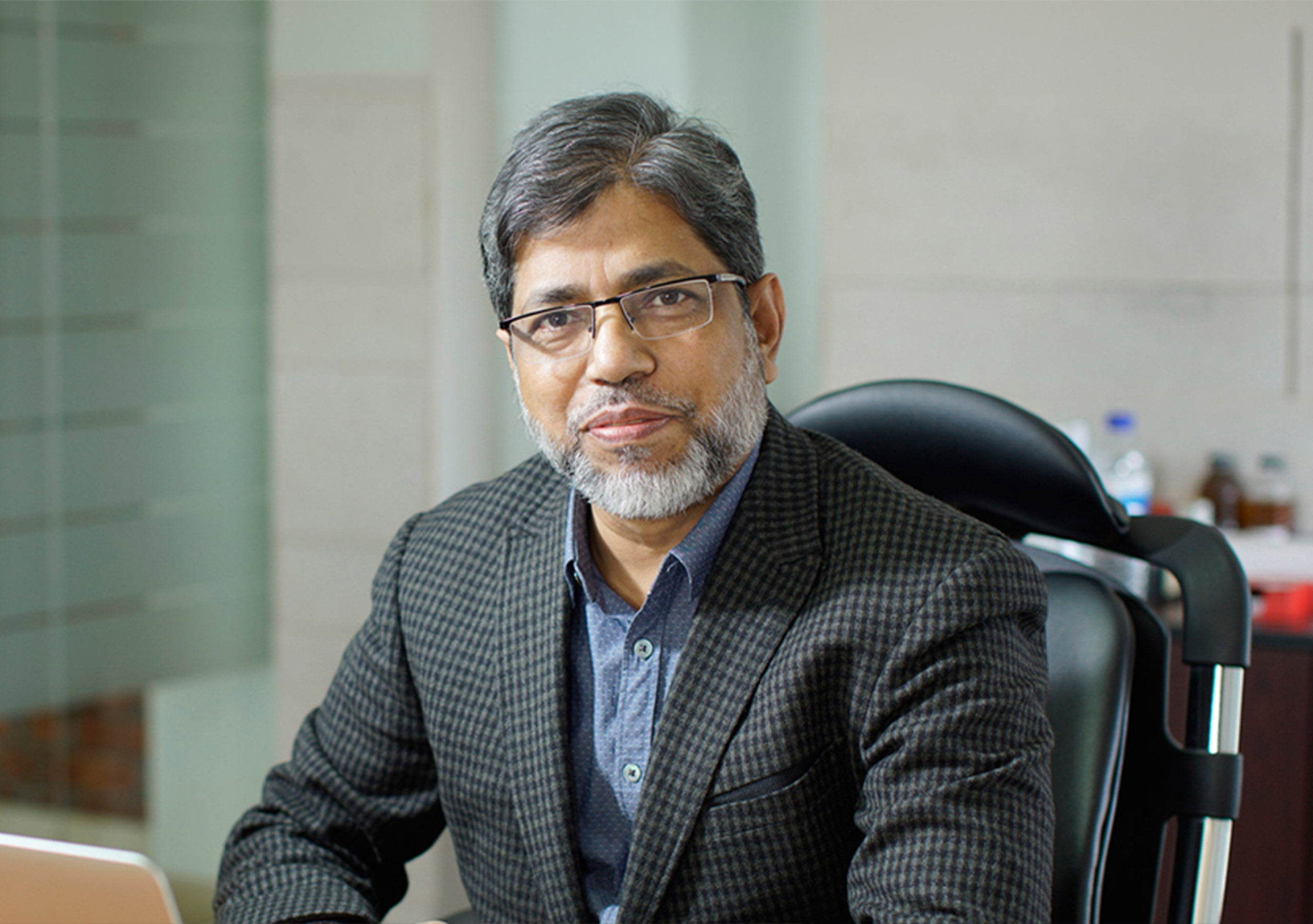

Founded in 2000 by Mostafizur Rahman, Smart Group of Industries has grown from a garment operation in Chittagong into a diversified group with 25,000 employees and annual revenue of more than $450 million. In this exclusive interview, Rahman discusses the strategic decisions behind this performance and the group’s approach to sustainability and governance while Bangladesh becomes more relevant for long-term foreign investments.
Q: How has your vision for Smart Group evolved since its founding in 2000?
Mostafizur Rahman, Founder and Chairman: From a young age, I was determined to go into business but, coming from a lower-middle-class family with ten siblings, I had no capital and had to focus first on education and employment. After completing college in the early 1980s, I joined a joint-venture factory in the Chittagong Export Processing Zone in 1984 as a probationary officer and became Production Manager within six years. Later, I worked with major European buyers through Dutch companies in Dhaka, gaining a strong understanding of the global apparel supply chain and international standards.
The turning point came in 2000, when I moved from being a salaried country manager to co-founding our first garment factory with foreign partners. We started operations on 11 October 2000 in a rented building in Chittagong with five sewing lines, then quickly expanded to ten lines and added a denim washing plant. By optimising costs and using rented premises instead of buying land, we were able to become efficient and competitive from the very beginning.
Over the next five years, we expanded to seven garment factories. I reinvested all my returns into the business and later bought out my partners’ shares, which allowed me to steer the group’s long-term direction. The next key step was vertical integration: in 2005 we established Chittagong Denim Mills, which began production in 2006. The mill rapidly reached strong performance and became one of the most sustainable textile facilities in the region.
From there, my vision evolved from running a successful apparel operation to building a diversified industrial group. With long-term partners, we entered logistics (BM Container Logistics), energy (BM Energy) and real estate (City Homes), and later expanded into chemicals, polymers, composite wood, packaging, media and brokerage services. Today we operate eleven divisions, and my focus is on strategy, new ventures and developing an integrated private economic zone with our own logistics and river access.
In summary, the most important decisions have been moving from employment to ownership in 2000, consistently reinvesting instead of taking profits out early, integrating into textiles and sustainable technologies, and diversifying into sectors linked to long-term demand such as energy, real estate and chemicals.
Q: What has enabled the group to reach more than $450 million in annual revenue?
MR: We had set an internal target of reaching USD 1 billion in turnover by 2024. Global shocks such as COVID-19, the Russia–Ukraine conflict and wider geopolitical instability slowed that trajectory. In response, we shifted from aggressive expansion to steady, sustainable growth, emphasising financial discipline and diversification.
Today, all our companies are on a solid footing. We have never faced complaints from banks about repayments, and we maintain a clean record with suppliers. The group’s reputation for reliability has been a major factor in reaching around 25,000 employees and more than USD 450 million in annual turnover.
Internally, our culture is driven by the same five principles: compliance, sustainability, transparency, quality and commitment. These are embedded in our operations, from garments and textiles to logistics, energy, real estate and chemicals. They underpin our relationships with international buyers, financial institutions and strategic partners.
Overall, our growth has been driven by disciplined financial management, a strong operational culture and a strategy of diversifying into complementary sectors and markets while maintaining long-term partnerships.
Q: How do you manage the company’s reputation across a diversified portfolio?
MR: From my first job in 1984, working with foreign joint-venture partners, I learned that reputation depends on a few non-negotiable standards. For me, there are five: quality, compliance, transparency, keeping our commitments and sustainability. If a project cannot meet these standards, we do not pursue it.
Quality is our primary reputation driver. We prefer to let product performance and service speak for us rather than rely on heavy advertising. If customers are satisfied, they return and recommend us to others; if quality fails, no amount of promotion can repair the damage. This philosophy guides our approach in garments, textiles, logistics, energy, chemicals, real estate, education and all other activities.
Transparency and compliance are equally central. I began my business journey with capital provided by my employers, who later became partners. That history keeps me conscious of our responsibility toward investors, banks, suppliers, employees and regulators. We operate in heavily regulated sectors and view strong compliance in safety, labour, environment and financial reporting as core to our reputation, not just a legal requirement. Keeping our commitments on delivery, payments and agreements is essential to building long-term trust.
Q: How are you positioning the group among UAE investors and partners?
MR: For UAE investors and partners, I want Smart Group to be seen as a reliable, serious and long-term industrial partner with a proven track record in Bangladesh. We are exploring opportunities to establish production in the UAE and have ongoing discussions with major real estate groups such as Emaar, Damac and Sobha. At the same time, we recognise that UAE regulations and approval processes are different from Bangladesh, so we look for strong local partners and take a cautious, long-term view.
These UAE partners are also studying whether elements of their real estate and service models can be applied in Bangladesh, including golf and medical projects. Discussions are at an early stage, and before any joint venture we prioritise understanding our partners’ character, capabilities and business philosophy. Our aim is to build relationships based on transparency and performance, not speculation.
Q: How is Smart Group working to maintain global competitiveness?
MR: Beyond the UAE, we are working to maintain global competitiveness through geographic and sectoral diversification. We are actively exploring basic chemical manufacturing opportunities in Kazakhstan, where energy prices are relatively low and the country has strong links with global technology, particularly through China. Kazakh authorities have indicated potential incentives such as free land and tax benefits for 10 to 15 years, depending on the sector, and we are assessing where our chemical capabilities can be most effectively deployed.
Historically, we also developed substantial business with Russia and were recognised there with awards for leadership and industrial performance before COVID-19 disrupted operations. Some of our long-term partners from that market are now involved in mining projects in Kazakhstan and Afghanistan, and they have invited us to participate. These opportunities are under study, but they form part of a broader strategy to leverage our industrial know-how in new geographies while maintaining prudent risk management.
Q: Smart Group has entered sectors with very different business cultures. How do you approach new industries?
MR: Whenever we consider entering a new sector or improving an existing operation, my first step is to learn the fundamentals. I study industry reports and technical material, and I consult with experienced professionals and partners in that field. I do not position myself as the technical expert; instead, I aim to understand enough to make informed strategic decisions and ask the right questions.
My formal education is modest, but I am disciplined about completing what I start. That discipline now applies to how I approach new industries. I listen carefully to my technical teams, whether chemical engineers, textile specialists or project managers, and combine their expertise with my experience in business structure, risk and long-term planning.
For example, as we explore opportunities in mining-related projects in Kazakhstan and Afghanistan, I have been learning the basics of different mining methods and operational models. The goal is not to become a mining engineer, but to understand the main drivers of cost, risk and sustainability in that sector. Similarly, when we develop projects in real estate or energy, I invest time in understanding the value chain from land or fuel sources to end users.
In our core industrial operations, especially textiles, chemicals and energy, I am closely involved during machinery installation and commissioning. Being present at that stage helps me understand how systems are configured and where potential bottlenecks or failure points might arise. Later, when a manager reports a technical issue, I can quickly grasp whether it is linked to a compressor, boiler, generator, reformer or another component, and assess the seriousness of the problem.
This combination of continuous learning, reliance on specialist teams and direct involvement at critical stages allows me to adapt across different industries while maintaining consistent standards and decision-making.
Q: How do Smart Group approach sustainability?
MR: Sustainability is a core part of our business strategy rather than an add-on. When we launch any environmental initiative, we look for measurable impact and long-term viability.
We started by installing a solar power system at one of our container terminals and tracked its performance closely, both in terms of power generation and cost savings. The results were positive, which led us to scale up. We have since opened letters of credit for an 11.6-megawatt rooftop solar installation and are discussing an additional 6-megawatt system. Together, this represents about 17 megawatts of rooftop solar capacity across our factories. Our objective is to eventually power all our facilities substantially through solar energy.
We have evaluated other renewable options. Wind power, for example, has been tested in Bangladesh, including at Kutubdia Island, but due to wind conditions and cost, it has not proved viable. Independent studies by international partners reached similar conclusions. As a result, we have prioritised solar as the most practical renewable solution for our context, benefiting from improving technology and falling costs.
In parallel, we run large-scale tree-plantation programmes around our industrial sites and nearby communities to improve local microclimates and air quality. We also work to minimise resource waste and manage emissions and effluents responsibly.
These efforts reflect a broader approach: as we expand industrially, we aim to reduce our environmental footprint, align with international sustainability expectations and create cleaner, safer surroundings for our workforce and neighbouring communities.
Q: Why should UAE investors consider Bangladesh?
MR: Bangladesh’s most important asset is its workforce. Beyond cost competitiveness, our strength lies in a disciplined, family-oriented labour force with a strong sense of responsibility. Many workers support not only their immediate family but also extended relatives, and this creates a high level of motivation to work hard and advance.
This work ethic is visible among Bangladeshis employed in the Gulf, where they often take on demanding jobs for modest wages and still manage to send significant remittances home. The same commitment exists domestically. With the right industrial investments and management, this human capital can generate strong and consistent output.
For UAE investors, the combination of projected GDP growth and this labour profile means there is a window of opportunity. As growth accelerates from 4% toward 6.3%, Bangladesh is deepening its industrial base in sectors such as textiles, chemicals, energy, logistics and services. Investors who enter now, build serious partnerships on the ground, and contribute technology and management expertise will be well positioned as the market continues to expand.
Q: What remains a priority for Smart Group as it continues to grow?
MR: I would like to highlight the importance we place on institution-building and governance. Smart Group began as a founder-led organisation, but our priority now is to ensure that each business can operate on clear systems and processes rather than relying on any single individual.
Over time, we have moved towards more formal structures: professional management teams, stronger internal controls and clearer policies in areas such as compliance, risk management and reporting. This is essential when operating in multiple regulated sectors and working with international partners and financial institutions.
Beyond growth and diversification, our focus is on building Smart Group as a well-governed, professionally managed institution that can meet international expectations for many years to come.