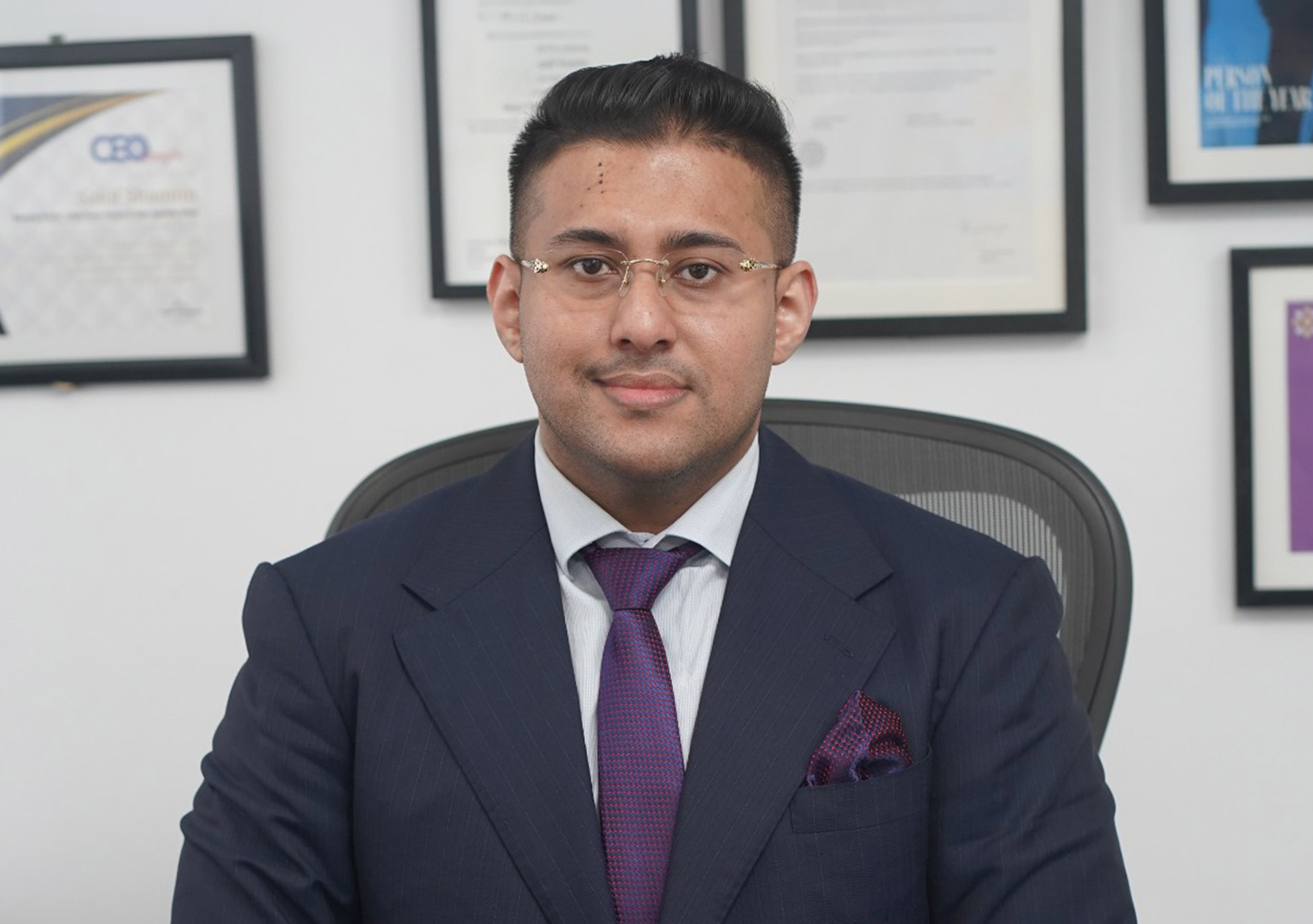

With over 300,000 patients treated to date, Labaid Cancer Hospital is among the region’s leading oncology centres. In this interview, Managing Director Sakif Shamim discusses the origins of the hospital and how it brings international standards to local care.
Q: how has your vision evolved since your appointment as Managing Director and Founder of Labaid Cancer Hospital and Super Specialty Center in 2021?
Sakif Shamim, Managing Director: Labaid Cancer Hospital is the brainchild of my father and me. We launched it in 2021 because Bangladesh has seen a rising cancer burden over the past decade, and many patients travel abroad for treatment, especially to India, Bangkok and Singapore, often due to limited trust locally. With Labaid’s more than 40-year healthcare legacy, I wanted to build something more critical.
From the start, I focused on three fundamentals: patient-centric care, ethical practice and state-of-the-art technology. We follow these strictly. We have treated more than 300,000 patients, and every new patient is reviewed through a multidisciplinary tumour board as a mandatory protocol.
Today, I believe we are among the best in the region in quality, cancer survival outcomes and the ability to manage complex cases and advanced operating theatres. We are also the only hospital in Bangladesh accredited by Joint Commission International (JCI) and certified LEED Gold. The facility reduces energy use by about 30% to 40% compared with a traditional hospital, and we prioritise risk management and safety.
Q: How do you protect Labaid’s reputation and position it for UAE readers, partners and clients?
SS: We follow Six Sigma and Lean management practices as a mindset to protect patient care. From the beginning, we have been strict about training and about handling complex patients, including highly technical services such as linear accelerators and brachytherapy.
To maintain international standards, we collaborate with the Singapore Government and Singapore General Hospital, and we have partnerships with American institutions. For UAE readers, Labaid is a trusted name beyond one hospital: we operate more than five hospitals, with another five upcoming, and we run 45 ambulatory care and diagnostic centres. We also have pharmaceuticals and a large healthcare platform with more than 10,000 partner pharmacies and providers.
This creates a 360-degree healthcare ecosystem, which we believe is the first of its kind implemented at scale in Bangladesh, and it can be replicated in other countries. Over the next five years, we plan to add more than 2,500 beds, including hospitals in Dhaka and outside Dhaka, and to build 30 satellite cancer centres nationwide. The cancer hospital serves as the hub, while satellite centres will provide care locally so patients do not need to travel to Dhaka, supporting decentralisation and affordability.
Q: What are your main strengths in Bangladesh’s rapidly advancing healthcare landscape and how are you positioning among leading medical institutions?
SS: Bangladesh has strong potential due to its geography and high population density, including a young population of around 50%. Healthcare demand is growing everywhere, and Bangladesh also faces significant outbound spending on treatment abroad, which can be addressed through reverse medical tourism by building high-quality facilities locally.
For example, Bangladesh has only about 30 linear accelerators, while the requirement is more than 200, which shows the scale of need. This is a major opportunity for healthcare investment and for building a model similar to India, where large groups and private equity have supported scale and quality. Healthcare requires significant funding and is becoming more expensive.
We have introduced several firsts in Bangladesh, including the first comprehensive cancer hospital and the first liver transplant, and we are also planning to established a bone marrow transplant centre and cell therapy for blood cancers. We invest in people and facilities and collaborate with different providers to improve national health outcomes.
Q: How do you manage research, development and training given the specialised equipment and rapidly evolving medical technologies?
SS: We reinvest from what we earn. We invest in people, research and development, and capabilities to compete with leading hospitals globally. We also conduct clinical trials with major pharmaceutical companies and work with experimental drugs. Each year, we publish articles in reputed medical journals.
Q: As the hospital prepares for an IPO expected to raise around $20 million, how are you positioning the group to capture growth opportunities in Bangladesh?
SS: We are targeting roughly $100 million to fund satellite cancer centres and reduce some loans. We estimate each satellite centre will require about $2 million to $4 million.
My father started this business in the 1980s. As a physician, he focused on improving lives, and that vision shaped my own. Over the years, I saw the challenges patients face locally and abroad, and I listened to their experiences.
Over 40 years, Labaid has grown beyond a healthcare group into a diversified conglomerate built around meeting needs: we built a cardiac hospital, then a cancer hospital, then specialised services including neurology and expanded into real estate. We also operate an agriculture system that supplies food for patients, attendants and consultants from our own farmlands.
Q: Which operational achievements were most essential in attaining awards, Joint Commission International (JCI) accreditation, and LEED Gold certification?
SS: Achieving Joint Commission International (JCI) accreditation was the toughest and most rewarding journey of the last four and a half years. JCI is not only an accreditation; it is a commitment to patients and a global recognition of standards.
It allows our hospital to be benchmarked against leading hospitals internationally because we follow those parameters. Quality is expensive and difficult to sustain, and many of our staff, including consultants, did not initially have JCI orientation. Over time, we trained and aligned everyone. Our consultants, nurses and employees were highly cooperative, and we achieved it as a team. I give full credit to my team.
Q: How do technology investments, like the launch of Labaid Artificial Intelligence, reflect your innovation approach and your view of Bangladesh’s healthcare future?
SS: We are entering the Fourth Industrial Revolution driven by artificial intelligence. Many large companies are investing heavily in hardware such as microchips and semiconductors, while we are focusing on large language models and applications through Labaid Artificial Intelligence.
We built a model with more than five billion parameters designed as a second-opinion tool for doctors. Clinicians can upload radiology and other reports and receive a second opinion, similar to a medical version of ChatGPT. Due to regulations around prescribing, we have made it available only to consultants and doctors.
We also launched LUNA, a general AI chatbot with eight-character modes, designed as a personal manager. With access, it can track behaviour patterns and purchasing behaviour to suggest needs, and it can support functions such as auto-checkout from a cart. We train these models continuously to improve capabilities over time.
Q: Why is now the right time to invest in Bangladesh, and what is your message to investors?
SS: Bangladesh is going through a major transition, which I describe as a “new Bangladesh” after the July Revolution. We lost many young lives during this period, and I believe it was driven by a desire to make Bangladesh better.
Bangladesh is now more open to investment across sectors, including government, healthcare, artificial intelligence, data services, data centres and even defence equipment. The country aims to position itself for sustainable growth, and I believe international communities and leaders are supporting this direction. Many investors are showing interest, although there are still bureaucratic challenges that we expect to overcome.
We have created a one-stop service platform for investors. Bangladesh has fertile land, a young workforce, ambitious people and an economy of around $400 billion. With international support and investment, Bangladesh can also become a trillion-dollar economy.
Q: How have your past experiences shaped your leadership style today?
SS: I have worked tirelessly for 16 to 17 years, and I focus more on quality hours than quantity. I prioritise giving quality time to people and to the business, because that is what drives growth.
I have learned that money is the least important part. What matters is patience and performing under stress and pressure. Over the past 15 years, I have managed pressure, stress and crises, including the COVID-19 period and severe liquidity challenges, and broader shocks such as the Russia–Ukraine war, currency pressures and inflation.
These experiences taught me to stay committed to goals, to complete priorities one by one, and to manage time carefully, because everyone has the same 24 hours each day.
Q: Is there anything else you would like to add about the hospital or your other ventures that we did not cover?
SS: We are developing a 750-bed super-specialty hospital as a project under $200 million. It is intended to be a quaternary-level facility comparable to institutions such as Mount Sinai in New York or Massachusetts General Hospital.
This is our next major investment and we believe it can attract not only Bangladeshi patients but also patients from nearby countries such as Myanmar and Nepal. We plan to recruit clinicians not only from India, but also from Singapore and the United States, with a model comparable to Cleveland Clinic Abu Dhabi.