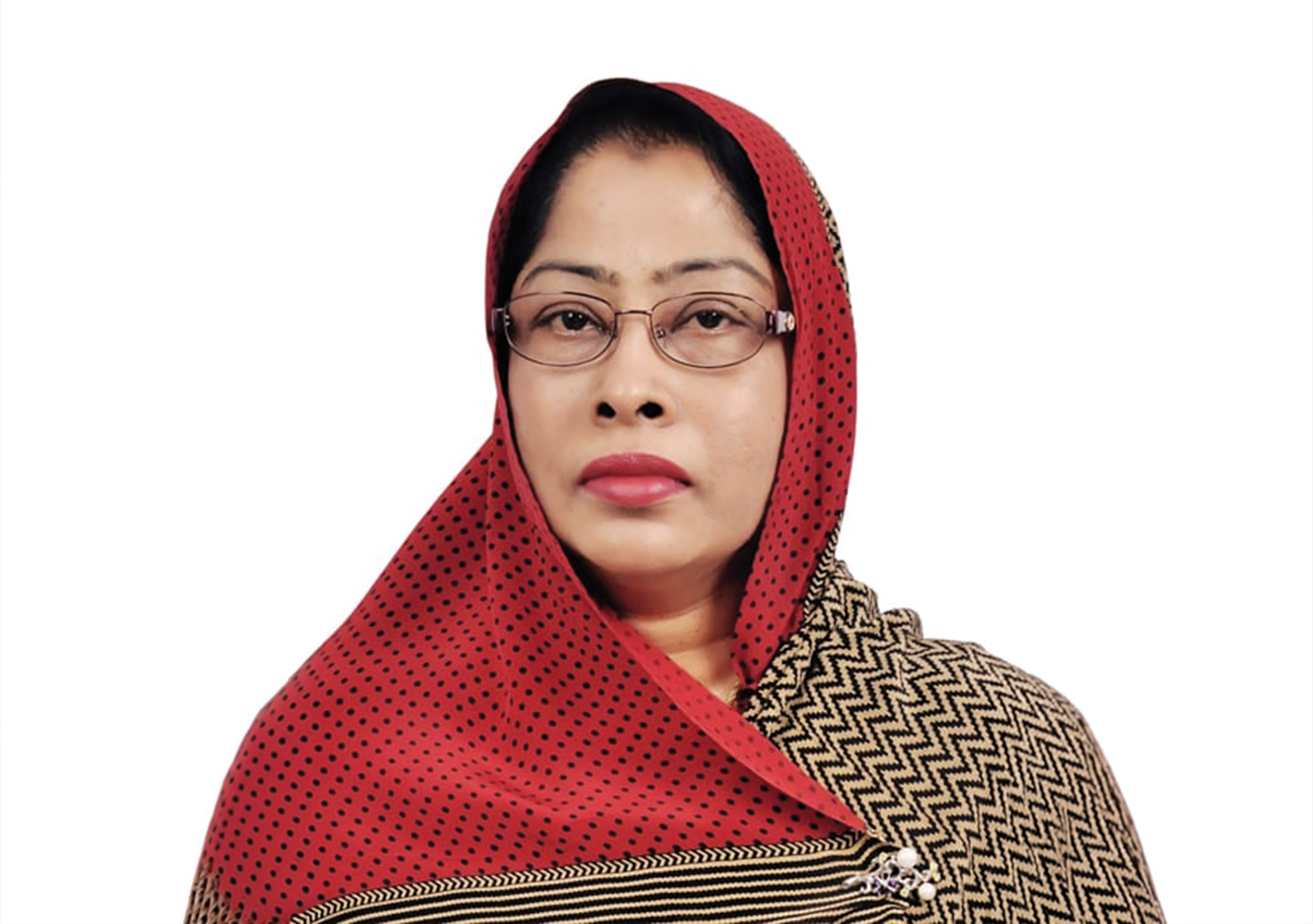

Bangladesh Thai Aluminium (BTA), which manufactures structural aluminium profiles for building glazing and interiors, has undergone a transformation strategy designed around three goals: brand value, domestic growth and sectoral diversification. In this interview, Chairperson Rubina Hamid outlines how BTA pursues growth built on modernisation.
Q: How has your strategic vision evolved since you were appointed Chairperson in 2015?
Rubina Hamid, Chairperson: It has been a long, eventful period of transformation, and we focused on a threefold strategy: first, to build and sustain our brand value; second, to make our products, as well as generic products, more popular in the domestic market; and third, to diversify our markets.
We initially focused on the structural aluminium market, then expanded into other areas. We went through a BMRE process (Balancing, Modernising, Restructuring Equipment) a couple of years back to modernise our facilities, and introduced different product options and alternatives for our valued clients.
We developed multiple product variations in colouring, composition, product use and surface finish. We also took extensive steps to make our products popular in the domestic market by bringing them to the grassroots level in semi-urban and village areas, encouraging people to use aluminium products in buildings instead of wood or steel.
This required extensive training for technicians because it is a specialised trade, and we organised those training programmes. We also arranged organised workshops and seminars for architects and developers, showcasing new architectural products and options they could use in their structural designs. In this way, our product gained the market quickly and the market grew.
We focused on both the premium and low-end markets: premium products for the premium market, and cost-effective solutions for the low-end market, which helped the industry grow significantly.
We have not only focused on the structural aluminium sector for buildings, doors, partitions and more. We have also produced sections for other sectors. Our profiles are used in the lighting sector, for shades and tube lights; these were developed through our R&D department. We also provided aluminium options for the garments and textile industries, the pharmaceutical industry and for household appliances and cleaning items such as mops and ladders, replacing steel and other materials.
Q: How do you manage Bangladesh Thai Aluminium’s reputation across this wide product range, and how would you like UAE investors to perceive the company?
RH: We have invested to modernise our production facilities for greater efficiency, cost-effectiveness and transparency. With this expanded capacity, we focused on new products and product variations. I believe it will be attractive for UAE investors to invest in the factory or work as partners without investing much, because the capability and latest technologies are already in place.
Importantly, we have a balanced factory, meaning we have everything under one roof: casting, die making, extrusion (including multiple extrusion lines), a production facility for large profiles and very thin small profiles, anodization of profiles giving different colours, wood-texture surface finishing, powder coating and packing. UAE investors can take advantage of these without long lead times, and we can arrange any customised extruded aluminium profiles.
Q: How do you define your market position today and which operational advantages most support your ability to sustain and expand it?
RH: My father, the Founding Chairman, was a visionary who established the organisation not only for profit but also keeping social responsibilities in mind. He understood the industry would help stop deforestation by reducing reliance on wooden doors and windows, and he founded the company to build a greener Bangladesh.
We expanded with social responsibility in mind and established a very popular and strong brand. Although the product is an aluminium profile, people commonly refer to aluminium profiles in Bangladesh as “Thai,” which is as per company name, “Bangladesh Thai Aluminium PLC”. People say, “Bring some Thai for our window.” This reflects the strength of the brand.
We used to be the number one brand, and we are still working to hold our market position. With strong brand value, our quality, certifications, enlistments across agencies, including the Public Works Department, and our product steel gets preference over the competitors’ brands. We have ISO certification and other required certifications, which support our ability to sustain and expand our market position and offer customised products.
Q: What revenue drivers, cost controls and decisions contributed to your total cash and short-term investments rising to USD 6.38 million in 2025?
RH: Our investment in BMRE process began two years back and was completed last year. Our factory was established more than 40 years back and over time we added production facilities and modernised plants; in the last one to two years, we invested significantly.
We did this to meet the incremental market demand, ensure delivery of quality products and maintain delivery commitments. Time is of the essence here because projects have a deadline for completion and if supply is short, market position suffers and the brand gets stained.
For UAE-based investors seeking local partners in Bangladesh, we see multiple attractive opportunities for investment in Bangladesh Thai Aluminium PLC. Investment in a publicly listed company at an attractive valuation offers strong upside potential, while providing access to diversified and scalable production capacity capable of serving both domestic and international markets competitively.
Investment in a listed company such as Bangladesh Thai Aluminium PLC also offers greater transparency, as well as statutory and regulatory control over internal affairs. In this way, the interests of foreign investors remain secured and protected. The company also has ample land and a skilled workforce available for expansion or joint ventures.
We have energy-efficient utility facilities, and our in-house power generation capacity helps mitigate power load-shedding issues, thereby ensuring stable and continued factory operations. The company benefits from professional management and strong corporate governance, overseen by an experienced board.
Bangladesh also provides robust FDI protections under law, including the full repatriation of capital and dividends. Government export cash incentives, such as duty drawback facilities and bonded warehouse benefits, also support exporters. These incentives vary from 4% to 15%, as per Bangladesh Bank Circular 28/2025, and enhance profit potential on international sales.
Aluminium products imported from Bangladesh also receive GSP benefits, including duty-free and quota-free entry into the EU, New Zealand, Norway and other countries. In Canada, South Korea and India, tariff concessions are also available, helping importers of aluminium from Bangladesh enjoy a more competitive position in their markets.
Q: How are sustainability practices embedded in your operations, and how do they shape performance and meet investor ESG expectations?
RH: Through the BMRE process we focused on recycling: how to recycle waste products in the best possible manner without compromising with quality issues and that system has been adopted.
We also have an ETP plant, and we expanded its capacity. We use generators with canopies to reduce noise pollution. The ETP process neutralises chemical waste before disposal, and we use our own dumping area; dumping into rivers is forbidden in our company. We stand for environmental protection and greenery, which is our slogan.
For transparency, we implemented an ERP system. Software existed before, but now we have an ERP system so that with one click everything is visible. Training of the people in our organisation is an ongoing process. We believe that if our people are skilled, motivated and happy, the company will become strong, and directors and stakeholders will also benefit.
Q: Why invest in Bangladesh now, given projections that GDP growth could rise from 4% to 6.3% by 2027?
RH: The time to invest in Bangladesh is now, because we are a listed company and the stock market index is very low now. Any foreign investment in the company can drive strong share performance, which is often the nature of developing-country stock markets. Listed companies have stronger regulatory control, transparency and corporate governance, which are also strong points for consideration while making an investment decision.
If overseas investors invest, they can benefit in two ways: firstly, in case of equity investment after a lock-in period of about three years, they can earn strong returns from share value appreciation; secondly, the company also receives funds for higher capacity utilisation, exporting, broader market coverage and more, ensuring higher revenue and profit for the investors.
Q: How have your past experiences and your academic work at the University of Dhaka shaped your leadership and career?
RH: I have been in business for a long time. I studied an MBA in Canada, and when I came back my father inspired me to join the companies. At that time, only one company existed, “Bangladesh Thai Aluminium”.
Teaching was my passion and I was offered a teaching position at the management department of the University of Dhaka and accordingly I joined there. I continued chairing Boards of multiple companies while keeping my teaching position active.
I have worked in the aluminium business for the longest period. After my father passed away, my brother chaired for a couple of years, then I became Chairperson for an extended period. During my tenure, we expanded into food and beverage, which is also a listed company.
We export beverage and juice products to America, Europe and the Middle East. Our juice is FDA-approved and is exported to America. We export lollipops to the mainstream market in England. We also supply Bangladeshi items in Middle Eastern markets, although our focus remains in the local market. We are open for foreign investors to invest in this food and beverage company which has huge potential in the export market as well.
I am also proud to be associated as a Board Director of Surjer Hashi Network, a non-profit organisation with almost 70 clinics giving healthcare service to the marginal people of Bangladesh. I served as Chairperson of that network for four consecutive years up to December 31st, 2025. The brand has very strong reputation in the local market for its quality service to the poor people. Previously it used to be funded by USAID.
My teaching supports my leadership skills. I focus in subjects like marketing management, human resource management and international business management. This keeps me updated and helps me apply the latest tools.