Poland’s state-owned companies play an increasingly important role in national development. Positioned at the centre of one of Europe’s largest investment cycles, the institutions are set to receive more than PLN 800 billion (around €190 billion) in public investment over the next 10 years. Under the direction of the Ministry of State Assets, key priorities include energy transition and defence investments.
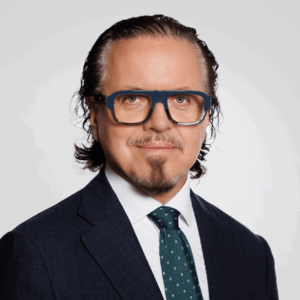
For Wojciech Balczun, minister of state assets of the Republic of Poland, the scale of that programme ultimately aims to build long-term resilience. “If you look at our portfolio, you are looking at the largest and most strategic companies in the Polish economy – entities in energy, oil, financial services and defence,” Balczun says. “They are, in effect, the engines of the economy as a whole.”
The ministry oversees many of Poland’s most strategic state-controlled enterprises, including energy groups such as PGE and Tauron, major financial institutions including PKO BP and Pekao, insurer PZU and the defence holding PGZ. The office does not set sector policy alone, but it exercises ownership supervision over companies that shape investment and employment.
This role gives the ministry a direct link between corporate performance and public finance. Dividends from the portfolio flow into a dedicated ministerial fund and provide support to the national budget. “Financial performance matters enormously,” Balczun says. “Profitability is not optional.”
The market has already registered the shift in expectations. In July 2025, the stock market value of companies within the State Treasury portfolio rose to nearly PLN 150 billion (€35 billion), up 43% from the start of the year. Balczun attributes that performance to greater confidence in management boards, clearer supervision and the perception that strategic companies are being run with a more professional investment approach than in previous years.
Balczun says Poland’s coming decade of investment should not be seen only through the balance sheets of large groups. The objective, the minister argues, is also to draw small and medium-sized Polish companies into procurement, services, engineering and manufacturing linked to the scaling phase.
Energy remains the defining test. Poland is managing a complex transition away from coal while building new capacity in renewables, nuclear energy and modernised generation. Each major energy company under the ministry’s oversight is planning investment of around PLN 100 billion (€23.5 billion) over the coming years, directed at facilities and infrastructure. “Energy transition is absolutely central to Poland’s security and long-term competitiveness,” he says. “This is not incremental improvement; it is structural transformation.”
Meanwhile, coal is not treated as a simple phase-out. Balczun distinguishes between thermal coal and coking coal, the latter of which remains central to Europe’s steel industry. The minister argues that the current geopolitical moment has reinforced the need for secure European access to critical industrial inputs and reduced dependence on single external suppliers. “Coking coal is a strategic commodity,” he says. “It is essential to the European steel industry, and the war in Ukraine has made clear that Europe cannot afford to rely on single sources of supply for critical inputs.”
The same strategic logic runs through defence. PGZ, the main Polish defence holding, is being positioned as a more competitive international player, supported by demand for armoured systems and other equipment tested in demanding operating conditions. Balczun says the next stage is organisational: strengthening the holding’s structure, leadership and ability to respond to international interest.
That ambition is also linked to Poland’s broader economic standing. The country is commonly described as the EU’s sixth-largest economy, while its participation in G20 discussions has underlined its increasing weight in global economic debates. Balczun holds that some international perceptions still lag behind Poland’s current scale and institutional maturity. “Poland’s standing has changed,” he says. “Investors are noticing. The question is whether we can match that financial credibility with operational delivery, and that is what we are focused on.”
Balczun’s own leadership profile is unusually broad for a senior economic policymaker. Before government, he built a career that included executive roles in business and a successful music career, recording albums and performing internationally alongside household names such as the Red Hot Chili Peppers, Metallica and Guns N’ Roses. For the artist turned minister, that creative discipline is part of how he approaches decision making under pressure: “Creative intelligence and business leadership reinforce one another.”