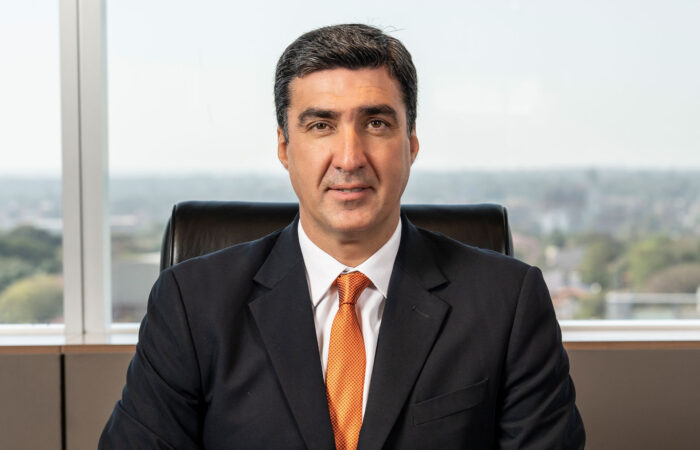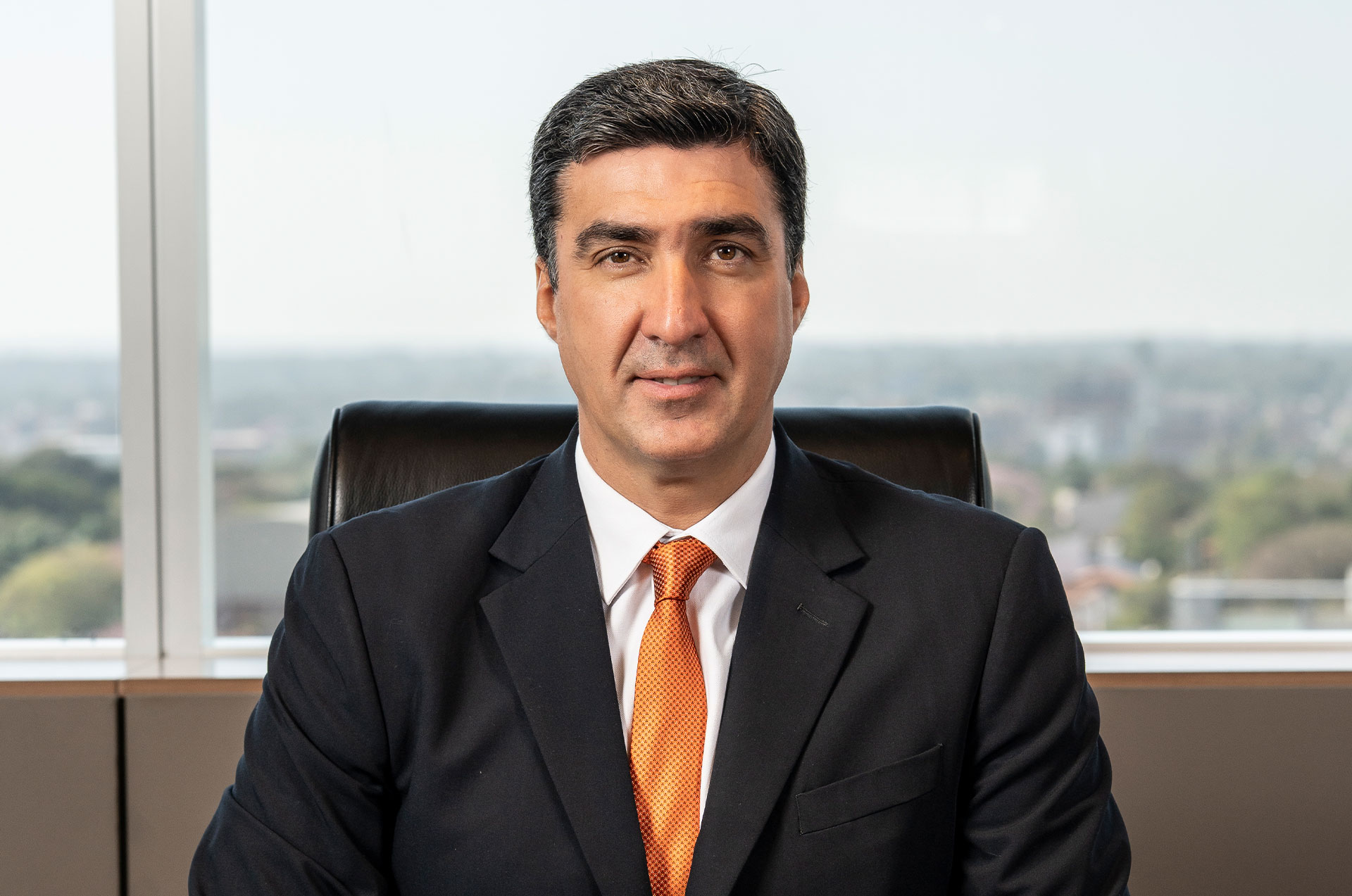

José Brítez Infante, the first Paraguayan to lead Banco Itaú Paraguay, is positioning the bank as the regional partner for investors arriving in the country. Here, he explains its digital and AI transformation and why Paraguay offers opportunities for German companies.
Q: How has your strategic vision evolved since you became CEO in December 2020?
Itaú had always been recognised in Paraguay as a disruptive bank in the digital space. We were the first bank with a website, the first with an app, the first with a fully digital, multi-transactional platform. The “what” of the strategy has not changed. The logic remains the same: to position ourselves and stay positioned as a leading bank in Paraguay, operating across all segments and offering a full range of services. What changed significantly is the “how”.
Post-pandemic, many things accelerated. The digital world experienced a tremendous surge in Paraguay because many tools had to be developed at pace. We had to give all of that absolute priority, and that meant an important shift in our day-to-day approach – what we call the Everyday Bank.
Today we are executing that transformation with a much more intensive use of data. We have moved beyond hearing “this is the trend” to actually deploying use cases involving artificial intelligence.
A further catalyst was Paraguay’s growing profile internationally, and this is a genuine merit of this government. The number of investors arriving from across the globe – principally from Brazil, due to proximity and scale – gave our strategy as a regional bank new relevance. Itaú is the largest private bank in Latin America. We are working to become the natural vehicle for the foreign investor – not on the credit side alone, but as an integral solution: M&A operations, infrastructure financing, payments and traditional credit. Our 2022–2025 strategy was executed as planned; the 2025–2030 strategy builds on that with heavy investment in technological modernisation – moving fully to the cloud to deliver faster microservices with greater use of data and artificial intelligence.
Q: How do you manage Itaú’s reputation and what does it mean for German investors?
We have been present in Paraguay for almost 50 years. That longevity gives us something very valuable: we know the country and its culture deeply, and investors know that we know it.
One aspect that matters greatly today is that I am the first Paraguayan to lead this bank, alongside a largely Paraguayan leadership team. That makes our conversations with investors considerably more authentic. We provide the macroeconomic and microeconomic context, and we offer that grounding in a credible private-sector voice.
For German investors, what we want to convey is straightforward: Itaú can open doors not only in Paraguay but across the entire region – Brazil, Chile, Uruguay, Argentina, Peru, Colombia, Panama and, in the near term, the US. Paraguay is a $50 billion economy with 6.3 million inhabitants, but it sits inside Mercosur, a market of over 300 million people, and within Latin America, which represents more than 500 million. The platform we offer is Paraguay as a launchpad, with Itaú as the regional partner best positioned to leverage that.
Q: What competitive advantages sustain Itaú’s leadership?
Our regional scale and the integral solution we offer investors are central to it. That differentiates us well beyond traditional lending.
We have also invested heavily in the infrastructure that sustains this position. Paraguay passed a rigorous FATF examination on anti-money laundering and financial crime prevention, and the country performed very well. Itaú’s compliance, governance and audit standards frequently exceed local regulatory requirements, because we operate to the standards of an international group. That positions us as a trusted entry point for large investors who need certainty about where they are placing capital.
Q: What opportunities does Paraguay offer German companies?
Germany, given its economic profile, can find an excellent solution in Paraguay.
Clean energy is something deeply valued by the European Community, and by Germany in particular. Paraguay has that today. The country also has significant productive capacity in agro-industry, and Germany is one of the world’s largest consumers of agro-industrial products. Then there is the maquila framework – a legal structure that allows companies to operate with an effective tax burden of around 10%. Germany is a major player in the automotive sector, and Paraguay can serve as a production base for auto parts under the maquila law, as other companies already do for the Brazilian market.
What also makes Paraguay compelling is simplicity. One country, one tax system, centralised. A company can be managed with a single accountant. Paraguay’s logistics are highly competitive: the Paraguay and Paraná rivers handle a large share of cargo flows, and the bioceanic route connecting the Atlantic to the Pacific is nearing completion. When you combine clean energy, sustainable agriculture, competitive taxation and logistics infrastructure, Paraguay has the conditions to be extremely competitive for German companies – both as a direct investment destination and as a hub for strategy across the Latin American market.
Q: How is digital innovation changing the bank?
We do not define ourselves as a digital bank. We define ourselves as a phygital bank – present in both the physical and digital worlds, with the client choosing which channel they prefer. The objective is for the client experience across all channels to be equal to or better than any competitor in the system.
What we are building now is the foundation for the next phase. Between 2026 and 2030, our focus is the modernisation of our technological platform – moving to a fully cloud-based infrastructure over four and a half years, with modular components that make any change in client experience significantly easier to manage. That directly improves our NPS, reduces our acquisition cost and allows us to scale products far more efficiently.
Q: How does artificial intelligence fit into your innovation strategy?
We have moved from discussing trends to executing them. Artificial intelligence is already live in our credit models and behavioural analytics. That represents a fundamental shift in how we operate, grounding decisions in data that were previously based on intuition or broad observation.
The goal is a dramatically shorter time-to-market and a client experience that is genuinely better across every channel. It is not a separate digital strategy. It is the business strategy for 2026–2030.
Q: How does sustainability fit into Itaú’s business strategy?
Sustainability is not a peripheral commitment for us – it runs transversally through everything we do. We are signatories to the Net Zero 2030–2050 programme at group level, and I personally serve as vice-president of the UN Global Compact in Paraguay.
Every project the bank finances must comply with our internal requirements linked to that programme, often at standards that go beyond what local regulations currently require.
On the ground, we have been working with Brazil on the Reverte project – the reconversion of degraded pastures through high technification while protecting the environment. Paraguay already has more than 95% of its agricultural area under mechanised and sustainable farming, and this work reinforces that trajectory.
Through the Itaú Foundation, we invest approximately $2 million annually, split roughly equally between education and culture. Sonidos de la Tierra operates music schools across all 17 departments of Paraguay, where children build their own instruments from recycled materials. More recently, Jóvenes Conectados – a public-private initiative involving around 15 large companies – has made nearly 40,000 Coursera licences available to final-year public school students, with an ambition to reach 80,000. The principle behind all of it is measurable impact. We want to know what actually changes.
Q: Why is now the moment for German investors to act?
The investments are ready to happen. We have done the promotional work, brought the data and are seeing real conversions – from roadshows in São Paulo and Curitiba, from a delegation of 30 Brazilian businesspeople who visited Paraguay just weeks ago to explore specific industries and from conversations already under way.
Paraguay offers something increasingly rare: a competitive cost structure, clean energy, sustainable agricultural production and logistics advantages – all within a simple, centralised tax system, backed by two investment grades and a government that has made investment facilitation a national priority.
For German investors, the opportunity works on two levels. Directly, in clean energy, agro-industry and maquila production. Strategically, as a hub: Paraguay sits inside Mercosur and the broader Latin American market, and Itaú is the bank best positioned regionally to help German companies navigate and scale across it. We can open the doors to Brazil, Chile, Argentina, Colombia and beyond. The platform is in place and the conditions are right.