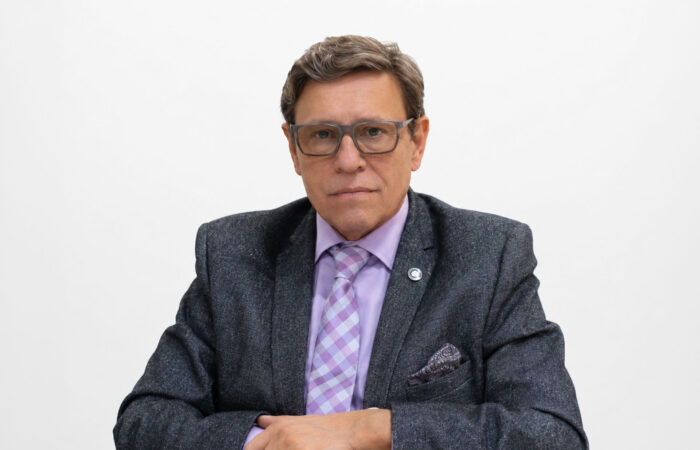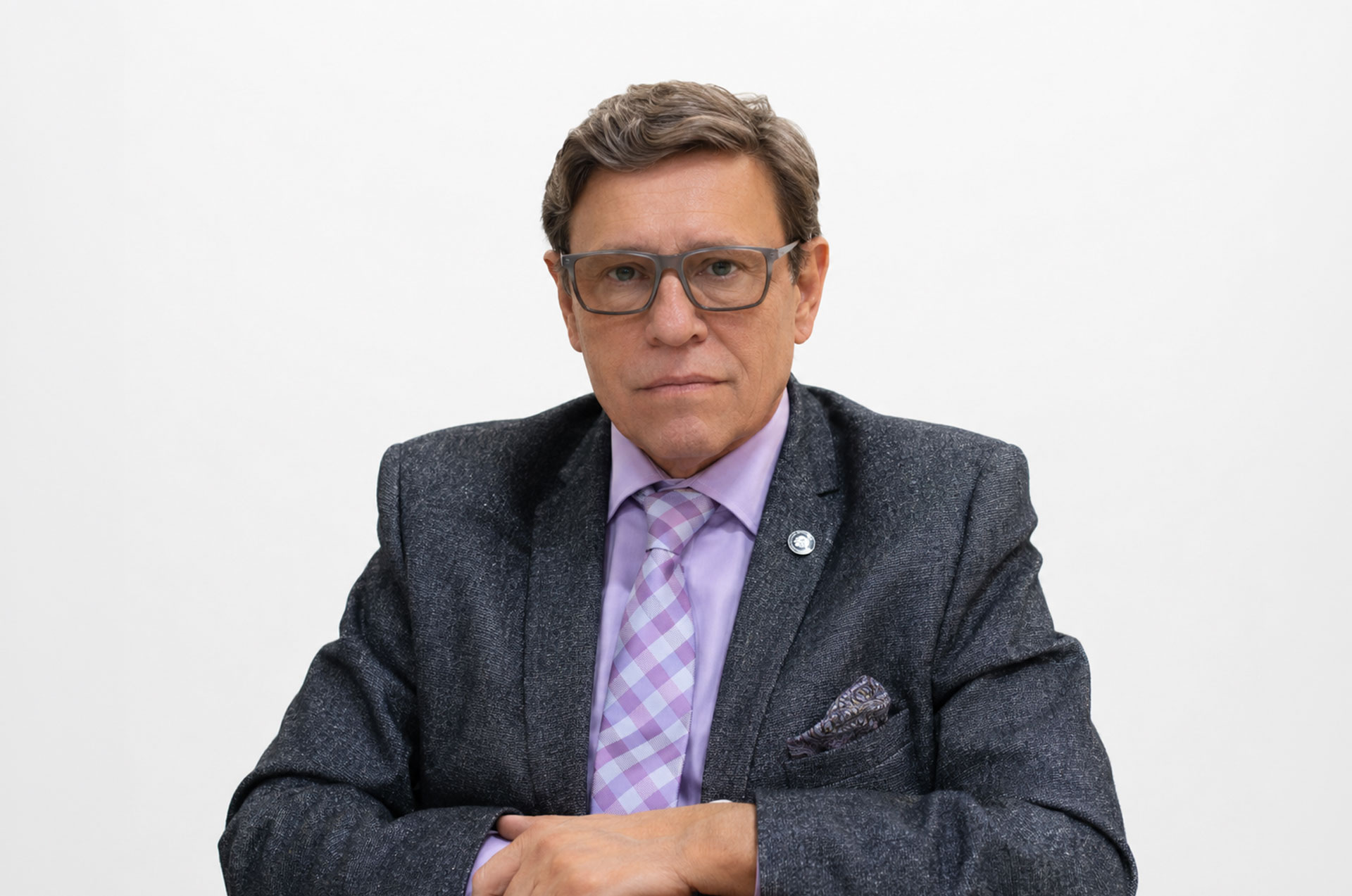

Eduardo Felippo, President of the Superior Council of Universidad Paraguayo Alemana (UPA) and Paraguay’s former Minister of Science, founded what remains the only German university operating outside Germany. Here, he explains UPA’s German academic model and its role in building Paraguay’s next generation of talent.
Q: How have curiosity and creativity shaped the institutions you have built?
Creativity has always been the thread running through everything I do. From my first year at university, I was already working as a teaching assistant, changing study methods, finding different approaches. My instinct was never to lead for the sake of leading – it was to do things differently.
That same instinct is what led me to become, as far as I am aware, the world’s first producer of organic sugar. I was travelling through Europe when I began noticing the early signs of what would become the natural products movement – small shops, unusual ingredients, a growing interest in food produced without chemicals. At the time, organic sugar simply did not exist. I returned to Paraguay, ran tests, developed production standards by studying existing certification frameworks in Germany and Switzerland and established that a sugarcane plantation had to undergo at least four years of independent inspection before it could be certified organic. That gave me four years as the sole producer in the world.
I tell that story not to speak about sugar, but to illustrate a way of thinking. When you see something before others do, and you are willing to build the infrastructure around it, you create your own space.
Q: How did that same instinct lead you to found a university?
It came from a conversation with the Paraguayan ambassador in Berlin. We were talking about what more we could do for our country. He mentioned that Germany had tried several times to establish dual education programmes in Paraguay – combining classroom learning with practical factory training.
I told him we should not be thinking about a training programme. We should build a university. I only play in the first division.
The ambassador connected me with SRH Holding, a German civil society organisation that had begun in healthcare and had later expanded into higher education. When I met the CEO, I recognised immediately that he thought the way I do. He told me he had always wanted a German university outside Germany but had never found the right conditions. I told him those conditions now existed. And that is how UPA – Universidad Paraguayo Alemana – was born.
We remain, after 12 years, the only German university operating outside Germany.
Q: Why is German engineering at the heart of UPA’s model?
I grew up around a German engineer. My father was the director of a brewery, and the man who ran the workshop there had come directly from Germany. When a machine broke down, we went together to fix it. That experience shaped everything I believe about engineering. German engineering teaches you how to think, not just how to assemble.
I want Paraguay to learn how to make the components, not simply put them together. That is the difference between a maquila economy and an industrial one.
Q: How does UPA contribute to Paraguay’s industrial development?
What I want is for our graduates to enter companies, learn those processes from the inside and then take that knowledge further. Not just assembling what others design, but eventually designing what others will assemble. That is Paraguay’s industrial trajectory if we are serious about it, and it is what UPA exists to support.
President Santiago Peña has spoken about doubling the size of the economy within ten years. That kind of ambition requires a talent base. We are building it.
Q: How does UPA’s teaching model differ from conventional universities?
In most universities, a professor delivers a subject for 40 or 50 minutes, and the next professor arrives for the next subject. The student accumulates fragments. Here, a professor arrives on Monday with a subject and does not leave until that subject is complete – whether that takes five weeks, eight or ten. Eight hours a day, fully immersed with the students. The depth of understanding that creates between student, subject and teacher is genuinely different.
We also integrate artificial intelligence and machine learning into the curriculum. We are among the first institutions in Paraguay to have dedicated AI faculty. Education systems often lag behind what society actually needs. Our size and structure allow us to move faster.
Q: UPA is a non-profit institution. What does that mean in practice?
The ownership structure is straightforward: Unión Industrial Paraguaya holds 50 per cent, and a German foundation holds the other 50 per cent. I wrote into the statutes from the beginning that there would be no profit distribution. Every surplus is reinvested into the university.
That places us in a category of our own. Every decision we make is oriented towards educational and industrial outcomes.
Q: How does UPA’s laboratory work support SMEs?
Our laboratories are not conventional academic facilities. They are applied development spaces oriented towards small and medium-sized enterprises. A woman came to me recently – she had a plantation, a good product, but was selling it at low prices because she did not know how to process it. We can help her develop that product here. Another producer whose goods were not selling well – we looked at the packaging, the presentation, the product characteristics. These are solvable problems.
Paraguay’s industrial base has to be built from the ground up. The pyme – the small and medium-sized enterprise – is where that energy lives. Every person who starts a small business has already demonstrated something important: initiative, a willingness to take risks. That is the population we want to support, and that is where our laboratory work is focused.
Q: What does UPA’s membership of WITRO mean for the university?
That connection came partly through my time as Minister of Science, a role I held for five or six years. During that period I was responsible for CONACYT, the national science and technology council. I restructured it significantly during my tenure, and those relationships gave UPA its connection to the international technology development network.
I go to Granada, where I am establishing a relationship with a Spanish university, and I intend to follow that with a visit to the Complutense in Madrid. By building Spanish university partnerships, I can open pathways for students to complete postgraduate studies in Spain, particularly in business and administrative sciences. We are also preparing to launch Paraguay’s first fully in-person doctoral programme, developed in partnership with NABA and certified at European level.
Q: What legacy do you want to leave through UPA?
I am not trying to teach anyone anything. What I am trying to demonstrate is that it can be done – with the same people, the same resources, the same country. Our two deans are both Latin American, one Bolivian, one Puerto Rican, both educated in Europe, both fluent in German and English. The message is simple: anything is possible. That is what I want students to carry with them when they leave here.