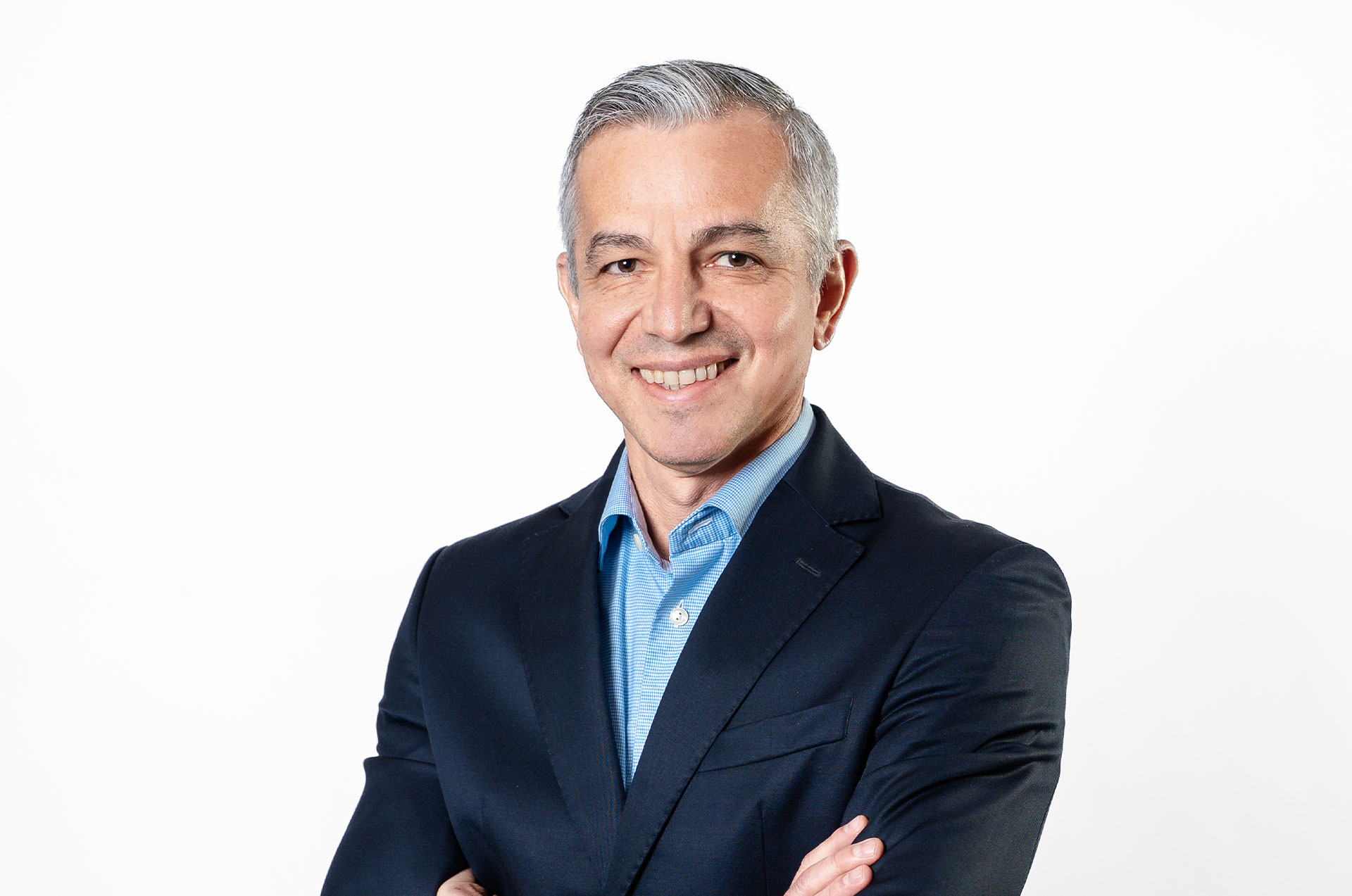

Since becoming CEO of Paracel in 2023, Flavio Deganutti has been developing Paraguay’s first pulp mill and an industrial hub linked to its forestry operations. Here, he explains the country’s potential and why its land, logistics and investment conditions create opportunities for German and European investors.
Q: How has your vision for Paracel evolved since you became CEO in 2023?
My background is in the pulp and paper industry. My whole career has been shaped by that context. When I look at what Brazil, Uruguay and Chile have built, industries that underpin social stability, environmental resilience and sustained economic growth, the question that struck me when I arrived in Paraguay was simple: why not here?
Paraguay has aspects even more favourable than its neighbours. There are lands absolutely suited to forest growth. Rainfall is distributed evenly throughout the year; the climate is predictable, and there is a young population eager to work and be trained. The logistics are excellent, both for bringing raw materials to an industrial site and for reaching a maritime port via the Paraguay River, which is also highly competitive from a carbon emissions standpoint.
What surprised me is that this potential is not a decade away. It is right here, and Paraguay itself has understood that balancing its business areas, including the forestry sector, makes perfect sense. The country is already moving forward with strong strides.
Q: How should German and European investors perceive Paracel?
Paracel is recognised by the European Community as a flagship project, and that recognition reflects the standards we apply. Our infrastructure is financed by the IDB and IDB Invest, which involves extensive environmental and social due diligence. We have an important Swedish partner and an Austrian partner with factories in Germany, Austria and Estonia, people who know this industry well.
What I want international investors to understand is that we are not simply building a pulp mill. What we are building is the first phase of something considerably larger. Paraguay has the forestry potential to support at least three factories of our scale, perhaps more.
Alongside Paracel 1, we have an industrial park within a free zone that invites wood board manufacturers, pellet producers and green steel precursor industries, all of them synergistic with our core operations. Many of those players are European.
Q: What does Paracel’s $1.5 billion investment say about the company’s standing?
Ours is a capital-intensive industry by nature, and capital intensity demands a very particular kind of conviction. The companies I admire most in this sector are 100 or 127 years old. That is the lens through which I think about Paracel: we are here for life, and the investment reflects that. When you commit at this scale, you commit to the society around you, to the environment and to the generations of workers who will follow.
What those figures also reflect is the strength of Paraguay as an investment destination. The country holds investment-grade ratings from two agencies. The cost of capital here is more attractive than in many comparable markets. And in our sector specifically, when I calculate the full logistics chain from plantation to maritime port via the Paraguay River, we are 30% more competitive than neighbouring countries. That is not a marginal advantage; it is fundamental.
Q: How do you envision the future of Paracel and the broader forestry sector?
In ten years, I want to be thinking about Paracel 3. What success looks like is demonstrating in practice that we have balanced social, environmental and economic objectives, and doing so well enough that the logic of expansion becomes clear.
What I am confident about is the direction. We will grow bigger, integrate more technology into a large forest base and transform our output into increasingly innovative products. The creation of a forestry ecosystem in Paraguay is under way, and in ten years I believe we will be thinking about it on a considerably larger scale.
Q: What competitive advantages does Paraguay offer German investors?
If I had to identify three factors specific to our sector: the first is the land. There is availability, excellent forest growth, competitive costs and a clear respect for private property. In Paraguay, that foundation is solid.
The second is logistics. The country is flat, which reduces construction costs for access roads to production sites. The Paraguay River is a genuine blessing: it allows us to reach a maritime port from our operations in a way that is extremely competitive from both a cost and a carbon emissions perspective.
The third is the cost of capital. Paraguay holds investment-grade ratings from two agencies. For a capital-intensive, long-duration industry like ours, one that needs to think in terms of four, five or six generations, that matters enormously. Together, these three conditions make for an impressive and rare combination.
Q: What role does innovation play in Paracel’s production chain?
Being a young company is genuinely an advantage here. We can observe the best practices across South America’s established pulp and paper industries, learn from them and then challenge them. We are not constrained by legacy protocols or entrenched systems.
In practical terms, that means deploying AI tools across procurement and operations. It means developing genetic materials specifically matched to Paraguayan soils and climate conditions rather than simply transplanting approaches from neighbouring markets.
Q: How do you integrate sustainability into an investment of this scale?
Sustainability and the business are not separable for us, and I say that not as a communications position but as an operational reality. We have to plant, harvest and replant in seven-year cycles for 100 years or more. Environmental and social investment is not a cost we absorb; it is what makes the business viable over its true horizon.
The evidence of that is measurable. We established a biodiversity baseline before entering our operational areas and have since observed a net gain in biodiversity. We designed our plantations to interconnect national parks and native forest areas, preserving wildlife corridors. We have also built firefighting infrastructure that simultaneously protects those native forests. On carbon, we are converting degraded pastureland into productive forest in seven-year cycles – the transformation in carbon capture relative to the prior land use is significant.
On the social side, we work directly with indigenous communities in our area of influence, supporting them in adopting more modern techniques and in marketing their products more effectively. We generate quality employment with full social security. We actively build women into a workforce that has historically been male-dominated.
Q: What should German investors understand about Paraguay today?
What investors need to understand is that there is no other forest area in South America that is not already associated with an existing factory and an existing demand. We are perhaps the only competitive, certified forest area that is yet to be developed.
The country’s fundamentals are strong: available land, a predictable climate, competitive logistics, a young and growing workforce, controlled inflation and a cost of capital that compares very favourably internationally. The opportunity does not sit in isolation – we have an industrial park alongside us in a free zone, ready to accommodate European manufacturers in wood boards, pellet production and green steel precursors. The synergies are real and they are accessible now.
Q: What is your message to international investors?
My invitation is simple: come and see. Come and compare what a field looked like before Paracel arrived and what it looks like today. I extend that invitation to colleagues across the industry, to investors and to potential partners.
Paraguay offers something that is genuinely rare in today’s investment landscape: an investment-grade country with excellent fundamentals, significant logistical advantages, clear respect for private property and a forestry potential that has barely been touched. Paracel 1 is the first phase. There is room for Paracel 2 and Paracel 3, and there is a free-zone industrial park beside us ready for synergistic investment. The window to be early in this story is open.