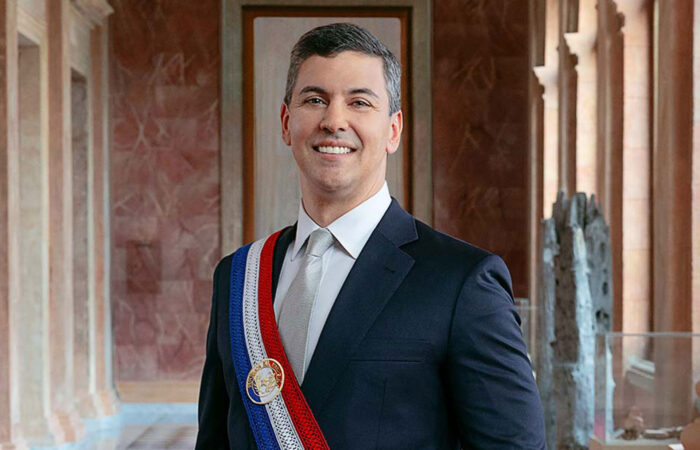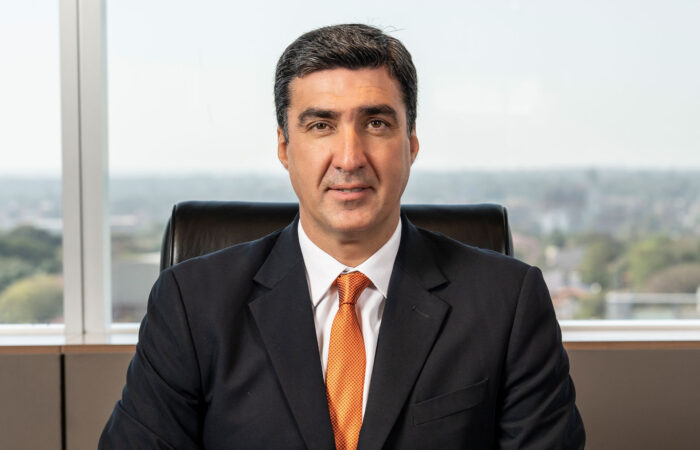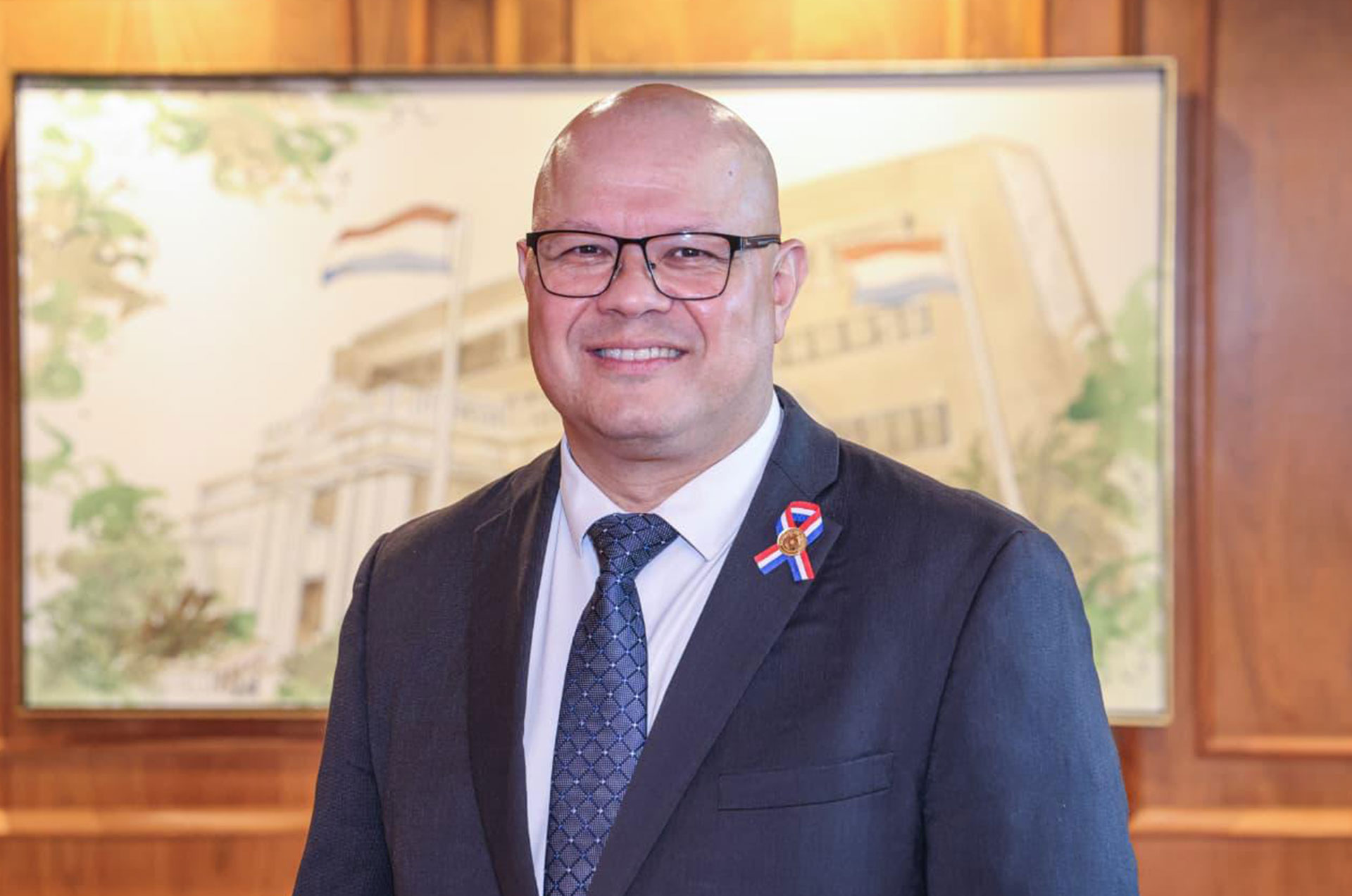

Minister of Economy and Finance Óscar Lovera is focused on strengthening Paraguay’s economy through investment, renewable energy and access to international markets. Here, he explains how Paraguay is attracting long-term investment and building its position as a regional industrial hub.
Q: What is driving Paraguay’s economic momentum?
2026 will mark the fourth consecutive year of economic growth sustained above 4% – a trajectory not seen since the construction of the Itaipú dam in the late 1970s and early 1980s.
What is fundamentally different today is that Paraguay is no longer dependent on a single sector. For many years, a poor harvest meant a poor economic year. That is no longer the case. The commercial and manufacturing sectors have strengthened considerably, and the economy now has multiple engines of growth. That resilience is new, and it is significant.
Q: What opportunities does the Mercosur–EU agreement create?
For Paraguay, this agreement represents a genuine strategic opportunity. We are a landlocked country, and access to a combined market of 700 million people – across Mercosur and the European Union – is transformative in scale. The tariff dimension is real, and it will allow Paraguayan products to enter the European market under more competitive conditions. But equally, European exporters gain improved access to our market, and that creates its own incentives for deeper commercial engagement on both sides.
What we are most focused on, however, goes beyond tariffs. This agreement is an opportunity to introduce Paraguay to the world – to demonstrate what this country genuinely offers today. We have abundant renewable energy, a young and trainable workforce and a competitive tax environment. Our intention is to be seen as a credible, reliable partner – not simply a destination for short-term financial investment, but a country where companies and industries can establish a long-term presence, generate quality employment and benefit from a stable operating environment.
That is the investment we are seeking: substantive, structural and lasting. Investment that adds value to Paraguayan production and improves the quality of life for our citizens.
Q: How are you funding social programmes while maintaining fiscal discipline?
This government, under President Peña, established ambitious social objectives from the outset, and chief among them is the Hambre Cero – Zero Hunger – programme, which provides school meals across all 200 days of the academic year. We set a target of 100% coverage, and we achieved it.
The programme moved from approximately $60 million to around $380 million in a single year – roughly six times the previous allocation. We are convinced it is the right path. We are also opening, in the coming months, five early childhood development centres for children from six months to four years of age – a programme we call Semillas del Futuro, or Seeds of the Future.
At the same time, we have undertaken structural reform of tax administration – without introducing any new taxes or raising existing rates. Through improved compliance and collection efficiency, we have increased tax pressure from 10.2% to 11.2% of GDP. That additional point of GDP is generating the fiscal space to fund these social commitments sustainably. As economic growth continues, this model becomes more viable, not less.
Beyond direct social spending, we are convinced that the most effective social policy a government can pursue is the creation of quality employment. That means enabling the private sector to invest with confidence, to generate jobs and to become the primary engine of long-term prosperity.
Q: How has Paraguay’s relationship with Taiwan evolved?
Our relationship with Taiwan is longstanding and has evolved considerably over time. What began as a primarily diplomatic relationship has developed into a substantive commercial and technological partnership. Taiwan is now one of our key export markets for beef – alongside Israel – and the relationship has opened doors that would otherwise have remained closed.
Beyond trade, Taiwan has invested in human capital development in Paraguay. We have a Taiwan–Paraguay Polytechnic University – a government-to-government initiative – whose new campus is currently under construction, fully financed by Taiwan. More recently, both governments signed a memorandum of understanding for the establishment of Iguazú Digital, a computing facility for artificial intelligence, powered by energy generated at Itaipú. That represents a qualitative shift in the nature of the relationship.
Q: What opportunities do you see for German investors?
We recognise Germany as a strategic partner.
In practical terms, we have recently modernised the legal and institutional framework for investment. Last year we updated our investment incentive law – originally from 1990 – to provide fiscal exemptions for investments made on Paraguayan territory. We also updated our maquila regime, which now covers both manufacturing and services and provides a single tax payment of 1% on net revenues. Even outside these special regimes, Paraguay’s standard tax rates are among the most competitive globally: a flat 10% across VAT, personal income tax and corporate income tax.
For those considering establishing a physical presence, we have introduced the Investor Pass, which provides residency to investors – whether in industry, real estate or other asset classes – with minimal administrative burden.
In terms of sectors, the availability of 100% renewable energy, generated entirely through our hydroelectric plants, is a decisive competitive advantage – particularly for energy-intensive industries and for companies that need to meet the sustainability standards now required in European supply chains. The forestry sector also presents exceptional opportunities: trees that take between 20 and 60 years to mature in northern Europe reach full growth in approximately seven years in Paraguay. And across food processing, advanced manufacturing and digital infrastructure, the conditions are in place.
Q: How central is the Itaipú energy surplus to your industrial strategy?
It is central. Itaipú is a binational facility – the second-largest hydroelectric plant in the world – and Paraguay is entitled to 50% of its generation. At present, we do not have the domestic capacity to consume that full allocation, so the surplus is sold to Brazil at rates fixed in 2009. Our strategic objective is to redirect that energy towards domestic industrial development.
That surplus is not a problem to be managed – it is an asset to be deployed. Energy-intensive industries, digital infrastructure, artificial intelligence computing, advanced manufacturing: these are all sectors that can be built around a reliable, renewable and competitively priced energy supply. The Iguazú Digital project is one expression of that strategy. The broader ambition is to make Paraguay’s energy surplus the foundation of its next phase of industrial growth.
We have also committed to generating 500,000 new jobs over the course of this administration – equivalent to approximately 16% of the economically active population. As of now, approaching three years into the government’s term, we have created 245,000 of those positions. The trajectory is encouraging.
Q: What does economic success look like for Paraguay by 2035?
My vision for Paraguay in 2035 is a country recognised internationally for the quality of its products – a country that has completed the transition from developing to developed status. A country with strong industries, a more significant economic weight in regional and global negotiations and a well-established position as a strategic hub for installation and distribution across Latin America.
We want investors and partners – particularly those in Europe and Germany – to understand that Paraguay is a reliable country. We offer stability: not only economic stability, but political stability at a time when so much of the world is marked by uncertainty and rapid change. In that environment, Paraguay offers certainty. That is what we want the world to understand. Paraguay is dependable.