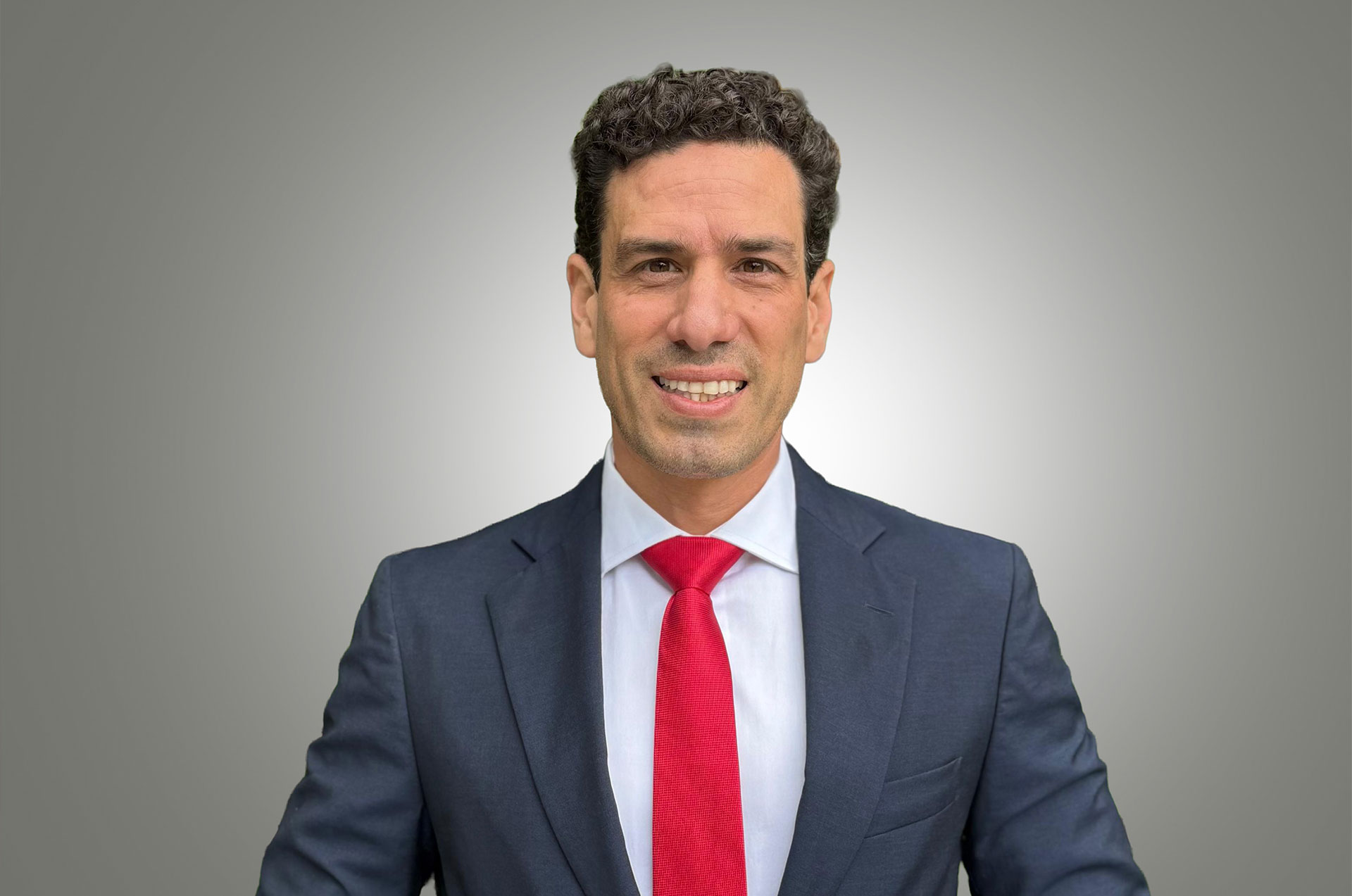

Jorge Raúl Talavera, President of Grupo Azeta, leads a group of 20 companies across telecommunications, retail, agribusiness, real estate and financial services that has doubled in size over the past three years in revenue, EBITDA and net profit. As the group turns 80, he explains how connected ecosystems, collaboration with partners and regional expansion will drive its goal of doubling again before 2030.
Q: Is diversification a competitive advantage for the group?
It is a constant discussion on the group’s board. What there is, though, is a clear consensus: the businesses in which we continue to grow have to be synergistic with the current ones.
We have defined four platforms or ecosystems: financial, home, real estate and services. Many of our 20 companies fit precisely within those ecosystems. When we decided to bring in Biggie or Sueñolar, for example, it was because they fit into the home ecosystem and also had a connection with the financial business. Today we do not think in terms of isolated companies; we think in terms of ecosystems and the platforms that enable them.
In that sense, yes: the conglomerate is a competitive advantage, because we look at it with that vision of connected ecosystems.
Q: What role does internationalisation play in the goal of doubling the group before 2030?
To keep growing at the speed we have planned, expanding beyond the Paraguayan market is a necessity. And that expansion has to happen in the sectors where we already operate. What we would do is take to regional or global markets what we already do well in Paraguay.
The most critical capability to achieve this is talent. It is the people.
There is a personal conviction that guides much of what we do: I am obsessed with growth because I believe it is a hugely important virtuous circle – for the country, for our teams, for people. And I am convinced that there are real opportunities for local conglomerates to take their products, services and ideas to regional markets.
Q: How can Grupo Azeta benefit from the EU–Mercosur agreement?
What the agreement can bring us, and this is more of a personal opinion, is that borders will be geographical landmarks, but they will no longer be commercial limits. When you look at southern Brazil or northern Argentina, they are markets that resemble Paraguay’s much more than São Paulo or Buenos Aires do. That creates a natural opportunity for integration.
Where the group has its sights set most clearly is on nearshoring. Paraguay can be a strategic partner for major operators looking to diversify in the region.
The group views all of this from the perspective of collaboration, because we are aware that we need regional or global partners for larger-scale investments. Today we live in a world more linked to collaboration than to competition. We have partners from Ecuador, from Argentina, local partners. In five or six of our 20 companies we have external partners.
Q: How does the group decide where to invest the next dollar?
It is not an exclusively financial answer. If you look only at returns, the financial sector businesses clearly have better returns than real estate, for example. But part of diversifying is also assessing how strategic a project can be. We often back a real estate development because that project will add value to areas where we already have other investments. If I look at the full picture, the assets in the area that will appreciate in value, the analysis changes.
The businesses compete for capital, but there is no single KPI that defines it. It is a constant exercise of assigning value and weight to different indicators: financial return, strategic return, synergies generated. And that dashboard cannot be static.
Today the group has a director of synergies – a person whose exclusive focus is building the platforms so that those synergies happen.
Q: What is the focus of the group’s ESG strategy?
Employees can be an expense or an investment – and that decision is directly linked to how the social pillar is managed. Millennials and centennials value working in organisations with purpose, which reduces turnover and, therefore, costs. The efficient use of energy and resources also has a measurable impact in the medium term.
The group turns 80 this year and we are at the moment of laying common foundations for all the companies. We have B Corp-certified companies that work on the circular economy in an advanced way, and others that are just incorporating these concepts. The task is to create minimum standards for the whole group. When we talk about doubling in size before 2030, we have to grow the right way – and growing the right way means being responsible for our environmental, social and governance impact. That, moreover, is what investors look at.
Q: How does Grupo Azeta define innovation?
We are a group that is permanently looking for benchmarks, generally in other markets. We look at who the best are in each sector and work to close the gap with them. Our innovation challenge is closing gaps all the time with the best.
In parallel, we pursue continuous improvements in processes: cost efficiencies, on the one hand, and differentiated offerings for our customers, on the other. We have an obsession with being on a par with the best benchmark in every sector where we compete.
Q: How was the decision made to acquire 50% of Sueñolar?
The first thing, always, is the partner. The person or company joining the group has to share the same values and principles. That is the first decision, and it often comes before the analysis of the business itself.
In the case of Sueñolar, in addition to having a partner who shares those values, the deal strengthened our presence in the home channel. Sueñolar operates in mattresses, home furnishings and everything related to residential comfort, and it complemented what we already had with Ferrex, Nueva Americana and Biggie. The idea is to offer a complete solution: we sell the apartment through Mueblería del Este, we furnish it with Sueñolar, and we complete the experience with the rest of the brands in the ecosystem.
In addition, Sueñolar brings an industrial dimension to the group. Going forward, it brings relevant synergies in logistics, distribution and raw material imports.
Q: What message would you send to German investors?
Beyond the macroeconomic indicators they already know – inflation below 5%, public debt under 35% of GDP, sustained growth above 4% – there is something I consider equally important.
Paraguay has a natural simplicity in its way of life and also in its way of doing business. There is an openness of mind: we want to learn, we want to do things differently, we want a better Paraguay. And all of us – regardless of political or sectoral differences – agree that by attracting foreign investment, Paraguay will be better. Capital will come, knowledge will come, new opportunities will come for Paraguayans and opportunities will also come for foreign businesspeople to learn from what works here.
Expatriates who come to Paraguay often say something that sums all this up well: you arrive crying and you leave crying. You arrive crying because you do not know the destination. And when they want to transfer you, you say you do not want to leave. That is perhaps the best indicator of what Paraguay offers.