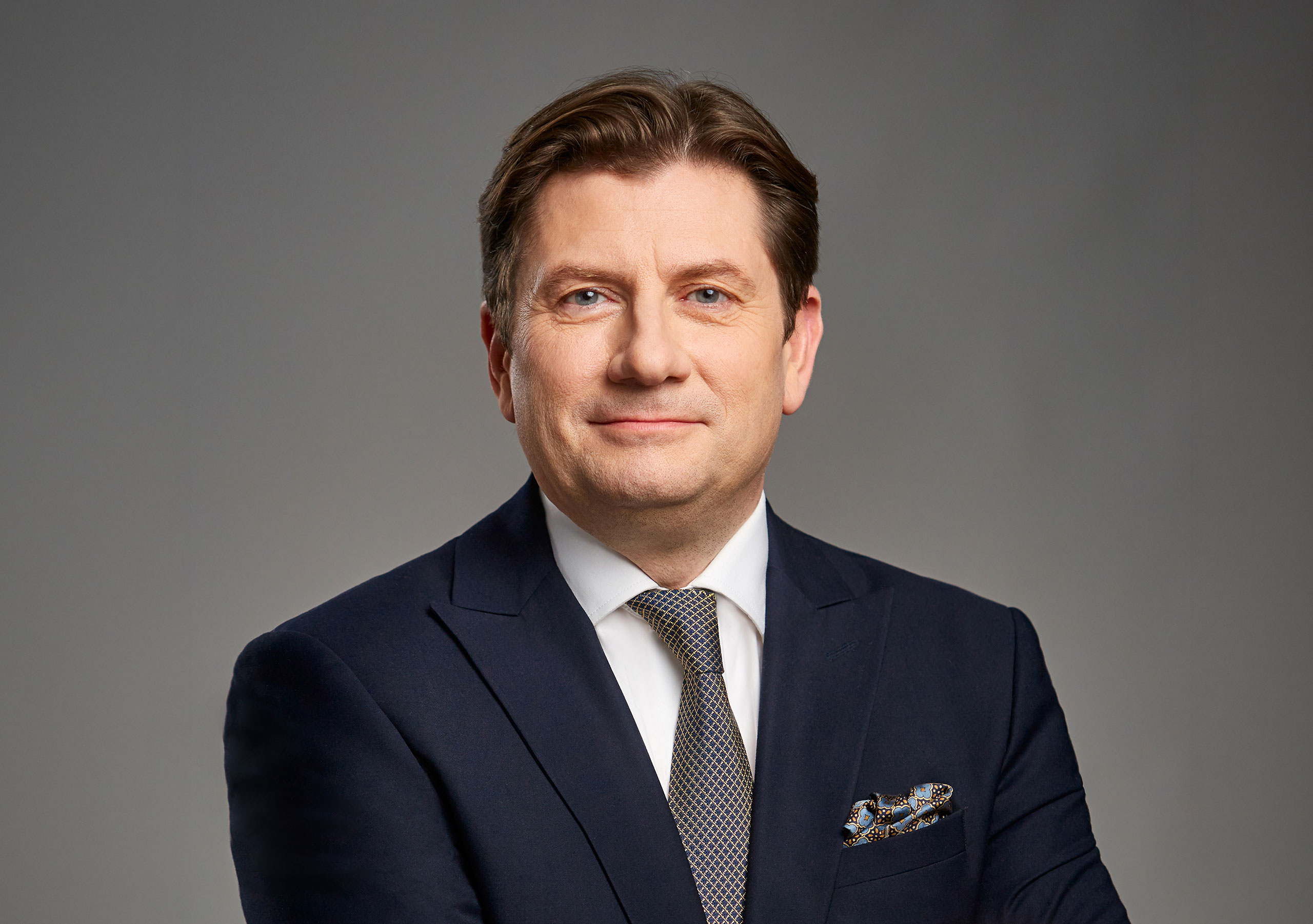

LipCo Foods CEO César Lipka discusses the company’s multifood strategy, tightening Germany–Poland ties and rising demand for green initiatives and circular economy models across the food and beverage sector in Europe.
Q: You became CEO in April 2024. What vision did you bring to the role?
My appointment as CEO was a natural evolution of a journey that began when I first joined the family company as an adviser to SuperDrob in 1998 and progressed through to board level over the years. The business started building full integration around chicken and, later, the arrival of our Thai partners from CPF opened a wider ambition: to move from poultry producer and processor to a genuine multifood group. After a few years, we decided to build LipCo Foods as the umbrella for that vision, and it is the vision I was brought in to accelerate.
The strategic priority has been to build LipCo Foods into a one-stop-shop for our partners – one that can offer complex, value-added products across multiple proteins and categories, rather than competing on commodity volume.
Q: How does integration create competitive advantage?
Vertical integration gives us something that is very important: control over safety, quality and regulatory compliance at every stage of the supply chain. That consistency is a prerequisite for the kind of tailored, premium products our partners expect.
What really distinguishes LipCo Foods Group is our approach to market. We do not apply a single template globally. We invest in understanding each market – its tastes, regulations and cultural nuances – often by hiring local people on the ground. Our product development team of 50 experts works closely with customers to co-create products that are precisely calibrated to what each market is looking for.
Q: What sustains LipCo’s market position?
From the outset, the founders made a deliberate choice to compete on value rather than price. That philosophy is embedded in how we operate. We are not the company you approach for cheap, standardised product; we are the company you approach when you need something complex, calibrated and done properly.
Q: Where do you see the strongest Germany-Poland opportunities?
The relationship between Poland and Germany is, at its core, a natural fit. Since Poland’s transition from communism, Germany has been a consistent and important partner to Poland.
The opportunity ahead lies in deepening that integration – moving from transactional trade towards genuine co-investment and co-development. Just as Germany and France built an economic relationship that became foundational to European prosperity, I believe Germany and Poland have the same potential.
Q: What does co-creation mean in practice for LipCo Foods?
Co-creation means identifying a genuine unmet need, committing resources to develop around it, and accepting that the path will not always be straightforward. Two of our most instructive examples are Brainer and Gyoza dumplings.
Brainer is a functional drink brand built on the insight that the market had energy drinks and hydration products, but nothing that genuinely addressed cognitive performance. We co-founded the company with a specialist, and we now have three products in the range, including distribution in Spain.
Gyoza dumplings began with a conversation about the growing European appetite for authentic Asian cuisine. We partnered with a Taiwanese company and helped them establish a factory, creating a joint venture on the basis of shared expertise: their culinary authenticity, our production capability and European market knowledge. Both companies are stronger for it.
Q: How is LipCo approaching the circular economy?
We have been building our circular economy infrastructure for several years, with biogas and biomethane in the future at its core. The ambition is genuine self-sufficiency: our biogas plant generates energy for our factory, enables water reuse and converts production waste into a resource rather than a cost.
What we are particularly proud of is that this work has attracted international recognition from day one – our first biogas plant won an award for innovative construction in its opening year – and it has made LipCo a knowledge-sharing hub. Japanese and Korean teams visit to study our approach.
Q: Why should German investors consider Poland?
The Poland I arrived in during 1998 is barely recognisable today. There were no motorways, the infrastructure was embryonic and the competitive proposition was primarily low-cost labour. None of that is true any longer. Poland now offers world-class logistics, a highly educated multilingual workforce and a legal environment that is increasingly investment friendly.
Poland is not a low-cost manufacturing alternative. It is a high-capability partner economy. The companies that will benefit most from this moment are those that come not to extract efficiency but to build something together. That is exactly the kind of partnership LipCo is designed to enable.
Q: Where do you see long-term growth?
The structural opportunity we are building around is clear: younger generations across our key markets have less time to cook and increasingly want convenience without compromising on quality or health. That demand for complex, nutritious, ready-to-eat products plays directly to what LipCo Foods Group does best within its 22 specialised segments.
We expanded beyond the product itself into broader food solutions – working with quick-service restaurant groups and the HoReCa sector to offer integrated supply and development capabilities, not simply ingredients.
We are also using our network to open doors for partners in markets where we already operate, whether that means placing a German chocolate producer in Asia or facilitating an Asian food partnership in Europe.
Underpinning all of this is our commitment to the innovation ecosystem. We do not see innovation as something that happens only inside our own walls. The multifood vision my father and uncle started with – and that I have carried forward – remains the compass: a group that can offer diverse, high-quality, health-conscious food solutions to partners across the world, built on relationships of genuine mutual benefit.