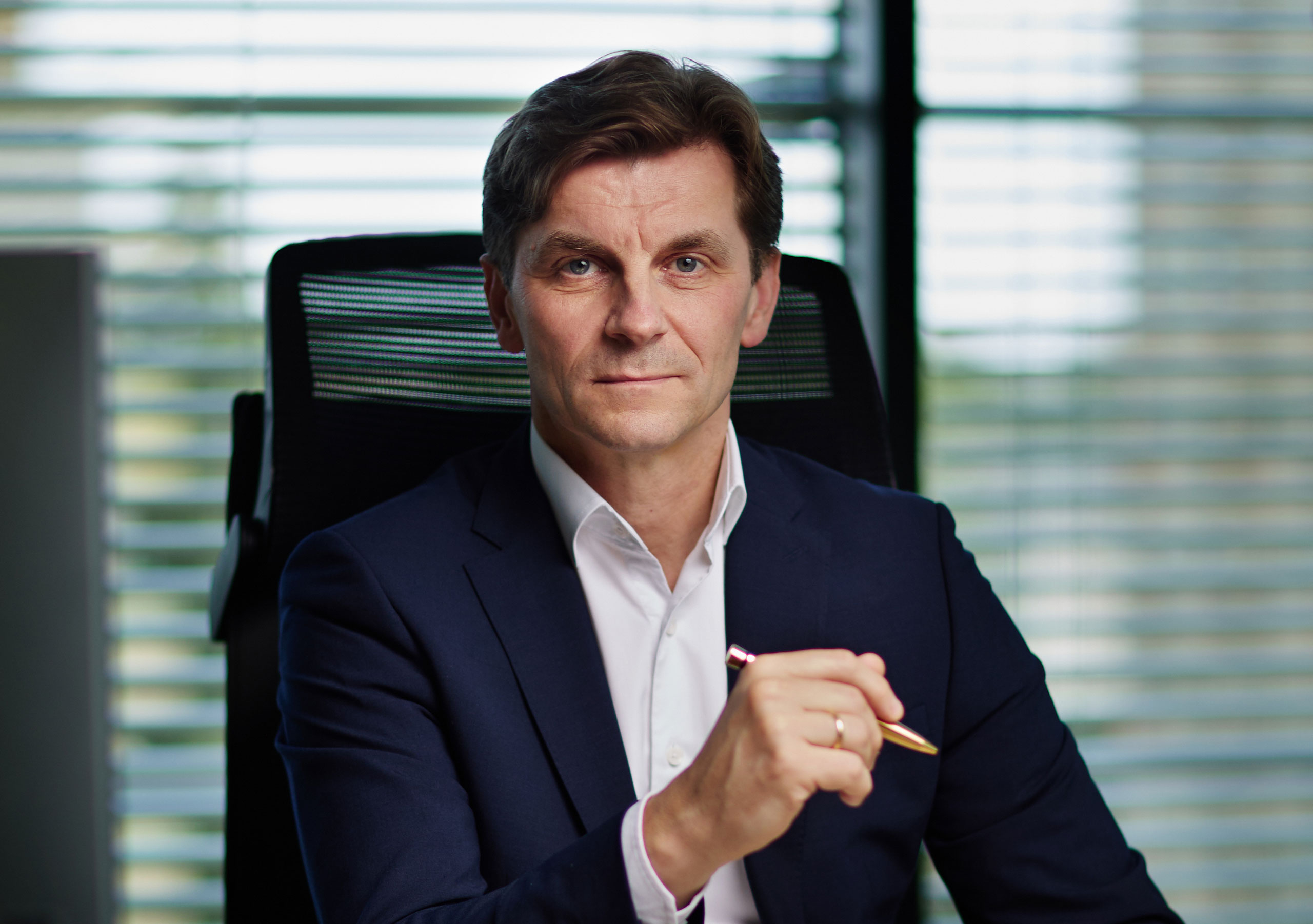

Polskie Elektrownie Jądrowe is building Poland’s first nuclear power plant (NPP). CEO Marek Woszczyk explains the project’s significance for regional energy security and supply as Poland transitions to a low-carbon landscape.
Q: What is your core mission?
The mission is straightforward, if not simple: deliver Poland’s first nuclear power plant, Lubiatowo-Kopalino, on time, on budget and with the maximum use of local, or more broadly European, industrial content. We are not competing with anyone. There is no market to win. There is a single objective, and every decision we take is tested against it.
We have chosen the AP1000 technology, developed by the American company Westinghouse. It is the most modern commercially available reactor design – a Generation III+ plant equipped with fully passive safety systems. The physics of the design make a Chernobyl-type event structurally impossible. That is not a marketing claim; it is an engineering fact. The plant is modular, which accelerates construction timelines and contains costs. At over 1,000 megawatts of installed capacity – 1,250 in our case – it delivers the economies of scale that only large conventional nuclear can provide.
Q: Poland has historically relied on coal. What has changed?
Nothing has changed suddenly, but everything has been moving in one direction for a long time. Coal has served Poland well. We have abundant reserves, and our coal fleet provided the baseline stability that kept the lights on through every crisis. That will remain true for some years yet. But coal is finite, and its long-term role in Poland’s energy mix is limited, both by resource depletion and by the direction of European and global policy.
At the same time, the transition to renewables – however necessary – does not by itself resolve the baseload question. Wind does not always blow. The sun does not shine at night. In a continental grid without the interconnection density of Western Europe, intermittency is not an inconvenience; it is a structural risk. You must be able to guarantee power in every second, in every season. Nuclear is the only low-carbon technology that can do that reliably at scale.
Poland’s future energy mix, as we see it, rests on three pillars: renewables to provide cost-effective generation at the margin; nuclear to anchor baseload reliability; and storage solutions – not limited to batteries as they exist today – to absorb surplus capacity and deploy it when needed. Coal will remain part of that picture in the near term. But the direction is clear, and Lubiatowo-Kopalino NPP is the decisive step in that direction.
Q: To what extent did geopolitical factors influence the decision to work with an American consortium?
The choice of technology is also a geopolitical choice, and it was made consciously by the Polish state. Deepening our strategic relationship with the US within the NATO alliance is an important dimension of this investment, and I think it should be for Europe more broadly.
There is also a more specific security argument for nuclear that is often overlooked. During the war in Ukraine, electricity generated by nuclear reactors actually increased, while generation from other sources fell under attack. The reason is not complicated: adversaries understand that destroying a nuclear power plant creates consequences that outlast any military campaign. The facility is effectively deterred from attack in a way that a gas plant or a coal unit simply is not. Lubiatowo-Kopalino NPP is not only energy security – it is security in the broader sense.
On fuel supply, nuclear also offers a form of independence that fossil fuels cannot match. We can hold a decade’s worth of fuel in a relatively small space on site. That is resilience of a qualitatively different order.
Q: What is the economic case for the investment?
Nuclear is capital-intensive. That is not a secret, and I will not pretend otherwise. The upfront cost is large, and that is precisely why it has historically been a state decision rather than a purely private one. No individual investor can absorb that level of capital risk; the project serves the entire society for 60 to 80 years, and potentially longer.
The argument for cost discipline runs through the project’s DNA. Shorter supply chains mean lower costs and greater resilience to the kind of disruptions we have all seen in global logistics.
Local content – Polish where possible, European more broadly – is not protectionism. It is cost management and risk management simultaneously. When we talk about delivering on budget, we are talking about every component of the supply chain being as close and as controllable as possible.
The long-term economics are compelling. The capital is large; the fuel costs are low and stable; the operational life is extraordinary. Spread across 60 or 80 years of generation, the unit cost of electricity from a well-run nuclear plant is among the most competitive available.
Q: How are you managing the relationship with local communities?
With great care and considerable respect. The location was selected primarily on technical grounds – geology, proximity to cooling water from the Baltic Sea – but we are acutely aware that we are arriving in a community of fewer than 5,000 people whose livelihoods have depended on tourism for generations. Tourism has historically accounted for 35 to 40% of that community’s income. We are changing their world, and we have an obligation to make that change a positive one.
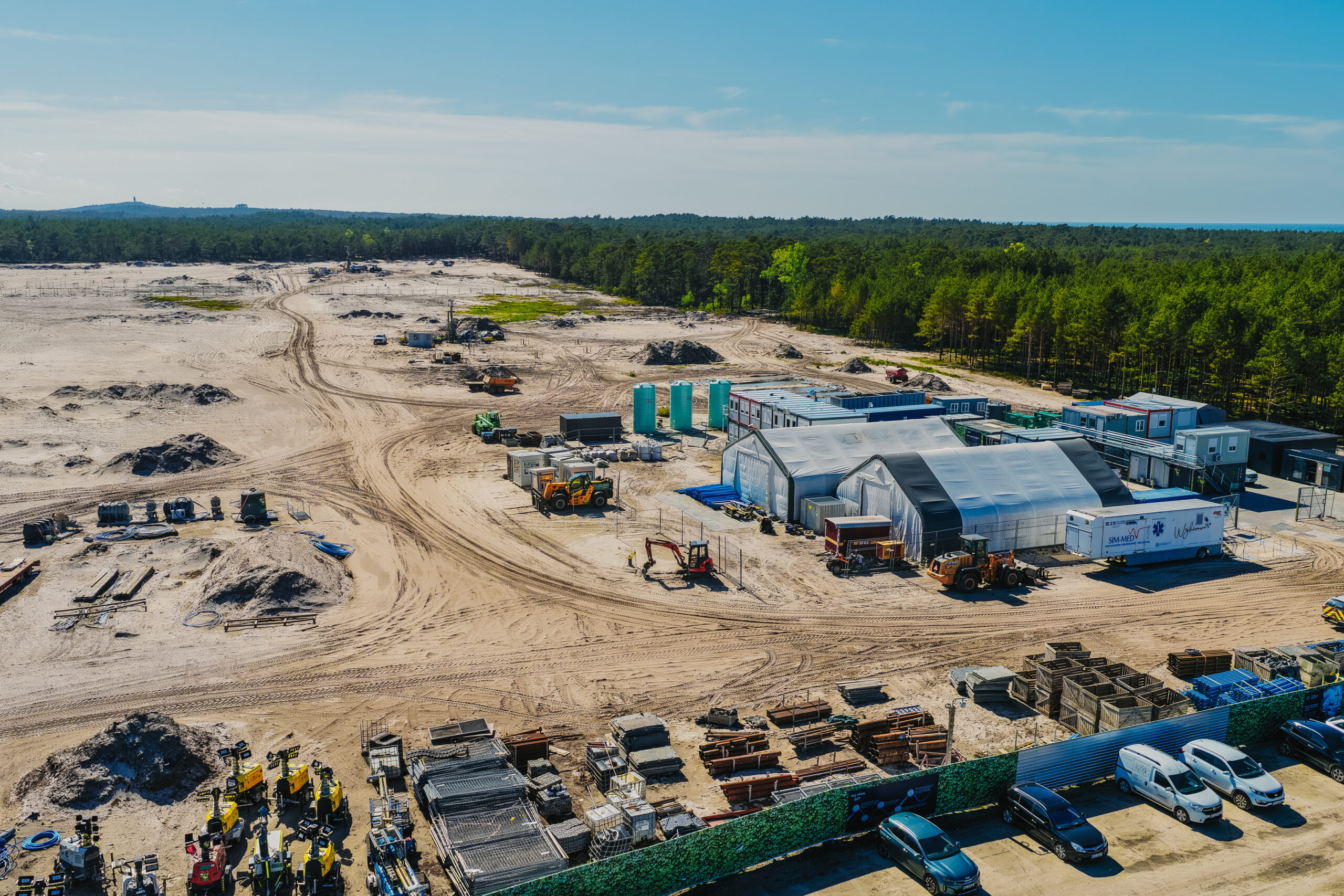
At the peak of the construction phase, we will employ more than 10,000 people on site. We are conducting detailed analysis of accommodation capacity in the region and working with the communes to fill any gaps.
Once operational, the plant will employ nearly 2,000 people directly – around 300 in technical and managerial roles, around 1,500 in operational and maintenance functions in a shift work system. With their families, that represents 4,000 to 5,000 additional residents – effectively doubling the current population of the commune. The dialogue is ongoing. These communities will live alongside this plant for generations.