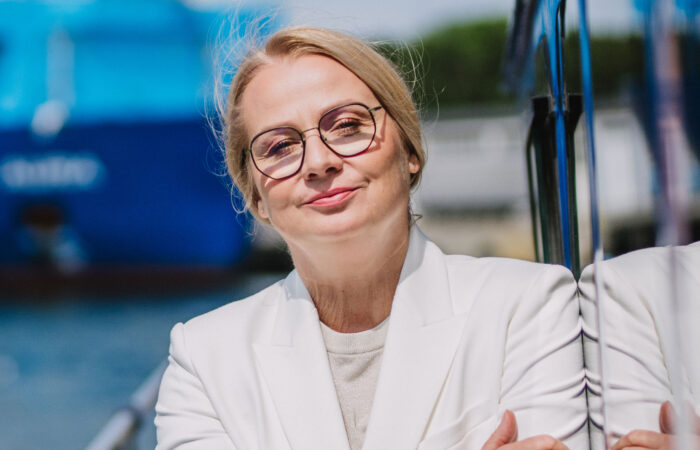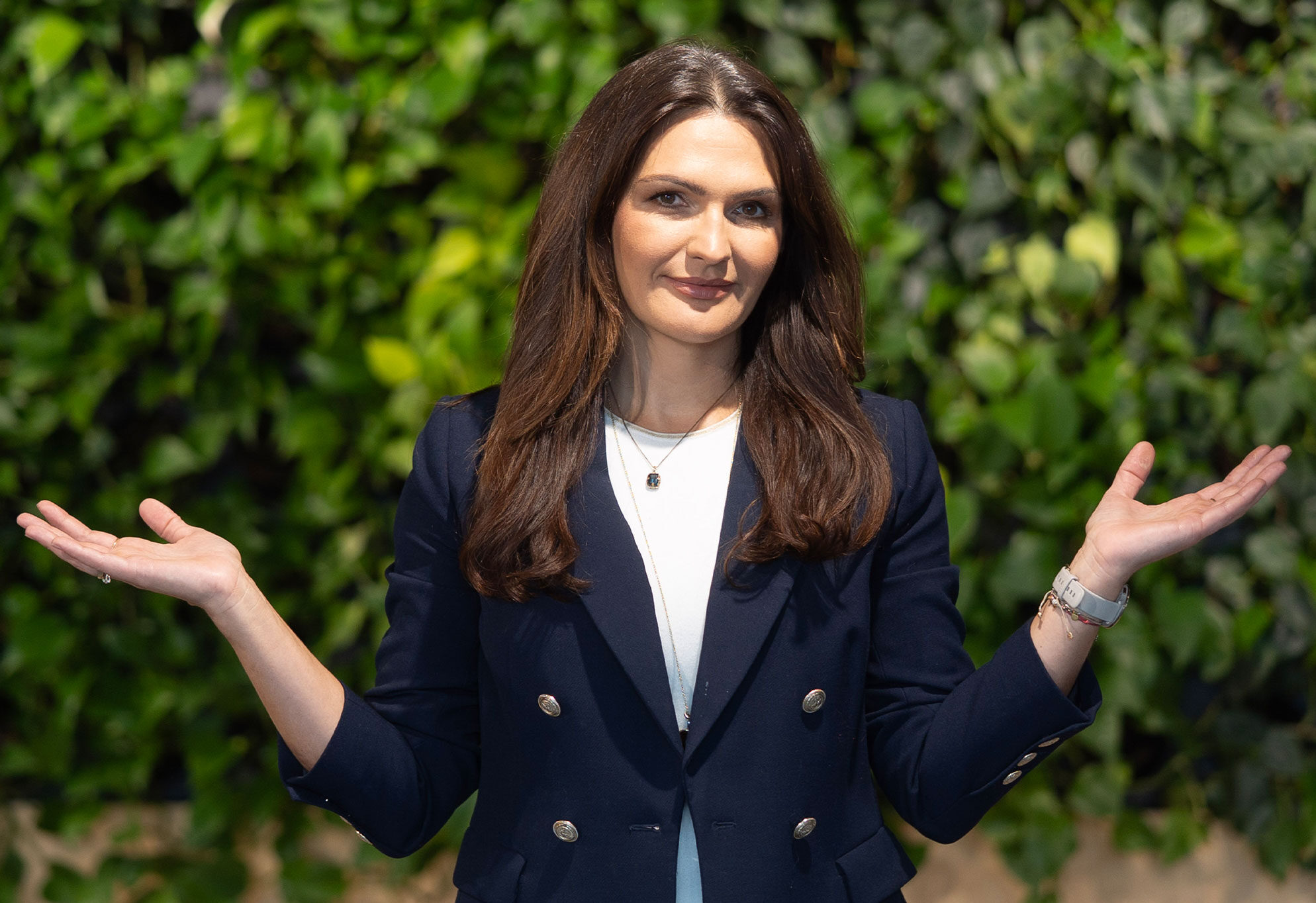

Skanska Commercial Development Europe has built its reputation on transparency, sustainability and long-term value. In this interview, CEO and Business Unit President Katarzyna Zawodna-Bijoch outlines key opportunities in Poland’s real estate market.
Q: What have been the key strategic decisions of your tenure?
Katarzyna Zawodna-Bijoch, CEO and business unit president: I have been with Skanska since 2006, and for the last 10 years I have served as Business Unit President. When I took over, the focus was on growth, stability and stronger synergies across countries, but the years that followed became much more about resilience, humility and responsibility.
Leadership today is less about having all the answers and more about making good decisions with limited visibility, guided by strong values and different perspectives. At the same time, the market itself has changed. We have continued to launch and deliver projects, but the office has evolved. Today, it is not just about a desk. It is about culture, experience, community and amenities. People still need offices, but they need different offices: premium, high-quality assets in central, well-connected, vibrant locations. That is what we focus on.
Q: How has your approach shaped Skanska’s growth?
KZB: We are not a cyclical player focused on short-term profit. Our strength lies in credibility, quality and a long-term vision. A key decision was to focus on the best locations in every market. We chose central, well-connected areas with strong surroundings, and we benefit from that today because our land bank is in the right places. Location remains the foundation of a good real estate project. Then it is about design, the human experience and sustainability. Sustainable buildings are better for people, cheaper to operate and better protected against future regulation. They hold value over time. It is also about resilience and future-readiness.
Q: What is the future for sustainability in office developments?
KZB: Buildings will play an important role in energy security. They can produce energy, store it and balance it across connected systems. I believe this will lead to more self-sufficient, resilient building ecosystems and microgrids. In projects such as Wave, Studio and Nowy Rynek in Poznań, we aim for net carbon neutrality in operations. Nowy Rynek will be the first office building in Poland to achieve net-zero carbon emissions at an operational level, while also being independent of municipal district heating. For investors, that means quality, future relevance and long-term value. For tenants, it means lower bills and better workplaces, which is increasingly important for attracting and retaining talent.
We certify our buildings through LEED, WELL and Buildings Without Barriers, and we are working more deeply with neurodiversity to create more inclusive spaces. We also use WiredScore to strengthen digital connectivity and cybersecurity. Real estate today is evolving through both human-centric design and embedded technology. Buildings are no longer just architecture, concrete and steel. They are increasingly intelligent systems. For example, Studio uses a digital twin supported by artificial intelligence to monitor occupancy, weather and energy use every 15 minutes, adjusting heating, cooling and ventilation accordingly. That makes the building more responsive and efficient.
Q: What opportunities do you see for partnerships with the German market?
KZB: Germany and Poland already have one of the closest economic relationships in Europe. Poland and the wider CEE region are major business services hubs, and more than 70% of companies in knowledge-intensive business services here serve German companies. The connection is already very strong.
Poland offers strong fundamentals: stability, transparency, EU-based regulation and consistent growth. It is a stable, predictable market, but one that still has room to grow. That combination is very attractive. The same applies to real estate. Poland has a deep talent pool, strong internal demand and significant growth potential. Despite comparable population levels, Warsaw’s modern office stock is still nearly three times smaller than Munich’s, yet the demand and quality of assets are on par with Western standards. Supply is historically low, rents are rising and long-term value prospects are strong.
Geographical proximity to Germany also reduces complexity, and the markets are culturally and regulatorily aligned. Poland also offers very strong infrastructure, from transport to urban safety. As for Skanska, we can be a partner across construction, residential, infrastructure, offices and rental residential. What we offer is credibility, strong values, Nordic governance and a long-term approach combined with the growth potential of Poland.
Q: How important are trust and reliability as long-term foundations?
KZB: They are fundamental. The more unpredictable the world becomes, the more important stable and reliable partners become. We are not a short-term player. We are here to build lasting relationships. Transparency, credibility and a strong financial position are what make Skanska a strong partner.
Q: How do you want Skanska to be perceived?
KZB: According to our latest global market perception survey, we are seen as the number one developer in terms of sustainability and quality. Our ambition is not to be the biggest or the most aggressive player. It is to remain the most trusted one: a reliable long-term partner with whom people can build lasting relationships.
Q: How do you see Poland’s market developing?
KZB: Many international clients now say their offices in Poland or CEE are among the best they have globally. What we deliver is a premium product, but one aligned with client budgets. Warsaw remains the strongest office market, with low supply and strong tenant and investor demand. Poland also has unusually strong regional office hubs such as Wrocław, Kraków and Poznań. Major global players such as Google, BNY Mellon and Franklin Templeton have established some of their largest European operations here, which says a great deal about Poland’s position.
We also see strong opportunities in rental residential and student housing. Rental housing remains underdeveloped, urbanisation is still rising, immigration has increased demand and home ownership is expensive. Student housing is also a major opportunity, with approximately 1.28 million students in Poland and a shortage of modern accommodation. Poland offers strong fundamentals, growth potential and an increasingly high quality of life. That is why I believe the market still has significant room to grow.