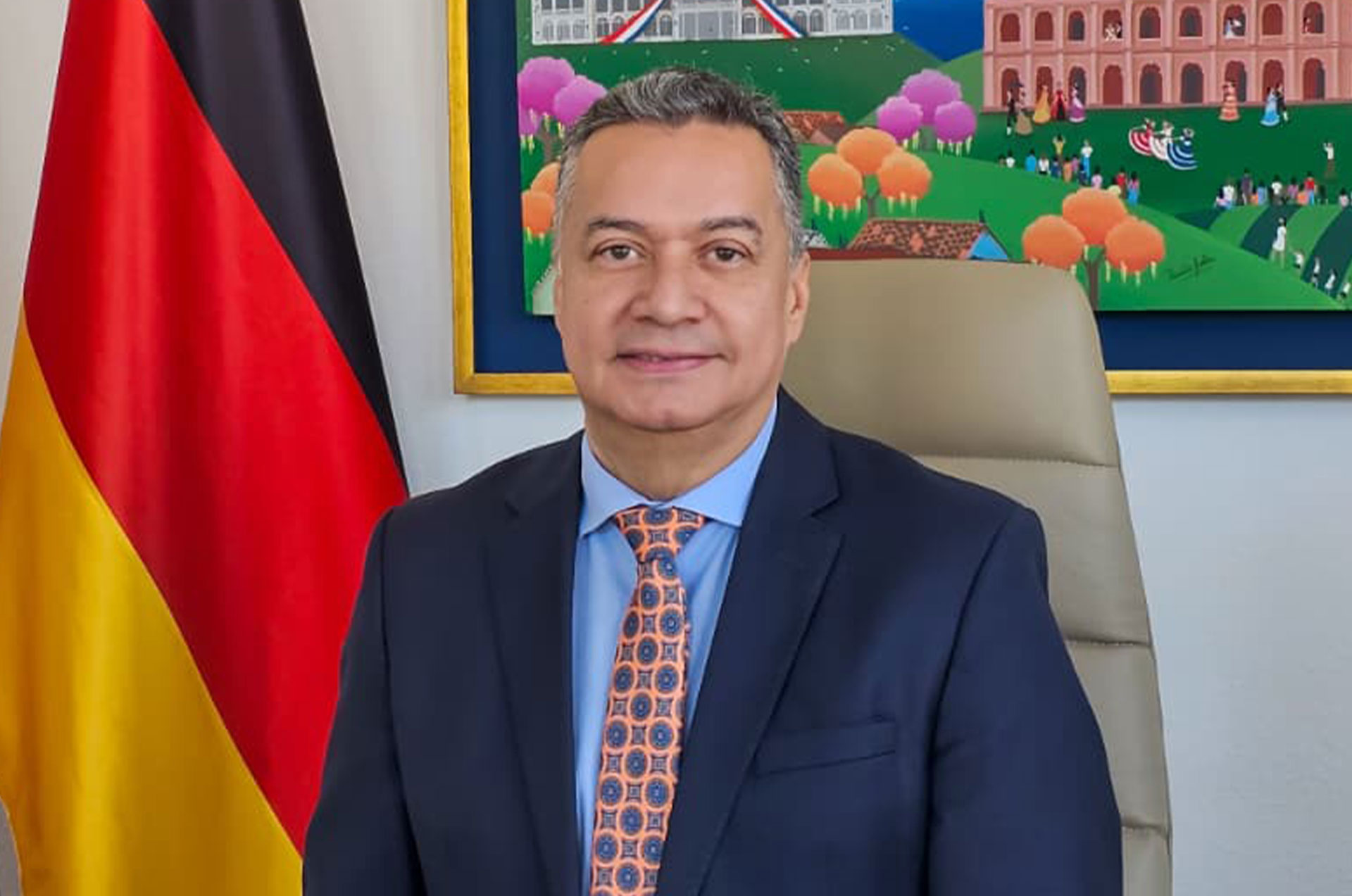

H.E. Fernando Acosta Díaz has served as Paraguay’s Ambassador to Germany since 2024, working to make Paraguay’s advantages better known across Europe. Here, he explains how clean energy, logistics, industrialisation and access to the Mercosur market are creating opportunities for German investors, and why now is the time to look at Paraguay.
Q: How is Paraguay strengthening its economic profile?
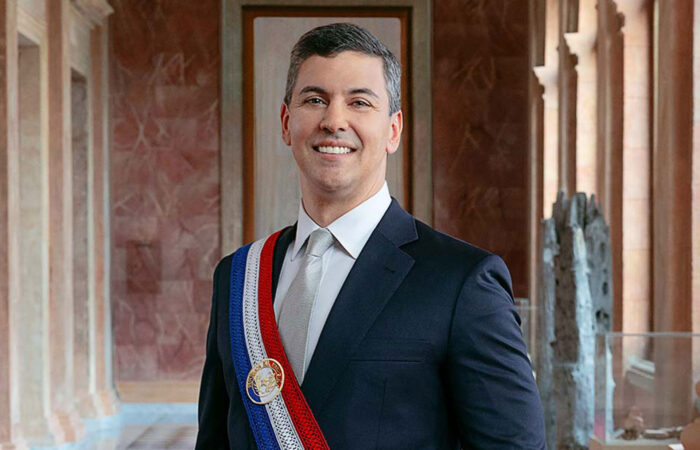
The overriding priority is dissemination – making Paraguay’s advantages genuinely known. A great deal remains unknown about what the Republic of Paraguay offers investors: its sustained growth trajectory, its fiscal framework, its strategic location. President Santiago Peña himself has been the most visible ambassador for this effort, leading trade and investment delegations to countries that Paraguayan heads of state had never previously visited, accompanied by business leaders, sector ministers and representatives of export chambers.
On 16 August, the day after taking office, President Peña outlined his vision in a landmark address he called “the rebirth of a giant” – a phrase that captures the ambition of this government period. Paraguay has been among the world’s leading food producers for decades, with significant positions in soy and beef exports. The focus now shifts towards industrialisation: converting raw resource strength into finished-product capacity and high-value sectors. Alongside this commercial and economic promotion, Paraguay is pursuing a parallel strategy in tourism, positioning the country as a venue for international events, conferences and sporting competitions.
Paraguay recorded the highest tourism growth rate globally last year, a distinction confirmed by international tourism organisations. We are also among the candidates to host venues for the FIFA World Cup. These are not isolated achievements – they reflect a coordinated national strategy to place Paraguay on the world map not only as a place to do business, but as a country worth knowing.
Q: Which sectors offer the most attractive opportunities for German businesses?
The range is genuinely broad. Logistics and international transport are among the most immediate opportunities, reinforced by Paraguay’s position at the heart of the Mercosur bloc and by the Bioceánico Corridor, an infrastructure project now in advanced construction that will connect the Pacific port of Iquique in Chile with the Atlantic port of Santos in Brazil, cutting maritime transit times by approximately 14 days and reducing shipping costs by around 25%.
Beyond logistics, there is strong interest and active German presence in the chemical industry, auto parts manufacturing, corrugated cardboard processing and the oil sector. Sustainable agroforestry and bovine genetics are areas where bilateral collaboration is already under way. Clean energy is perhaps the most compelling single opportunity: Paraguay is the world’s leading exporter of clean, 100% renewable electricity, a distinction that is generating increasing interest among German investors.
Green hydrogen, biofuels and the broader sustainability transition are sectors where Paraguay’s natural resource base and energy surplus create a structural competitive advantage. The government’s industrialisation agenda is specifically designed to add value to these assets rather than export them as raw materials.
Q: How does industrialisation fit with sustainability?
Environmental protection is a foundational pillar of the industrial strategy, not an afterthought. Paraguay has strict conservation legislation, and any vision of an industrial revolution must operate within those legal and environmental guardrails.
The goal is to ensure that the development of biofuels, green hydrogen and downstream energy processing is carried out in a way that is both economically viable and environmentally responsible. These are not competing objectives; Paraguay’s competitive advantage in clean energy actually reinforces the sustainability case.
Q: How would you describe the framework for German investors in Paraguay?
Even before the Mercosur agreement, Paraguay offered a highly competitive regulatory environment. The country operates a simplified tax structure, what we refer to as the triple-A system: 10% value-added tax, 10% corporate income tax and 10% personal income tax. The maquila regime and Law 60/90 provide additional investment incentives with established legal frameworks and protections.
The EU–Mercosur agreement now adds a further dimension. Through Mercosur, investors in Paraguay gain access to a market of approximately 300 million people, with clearer and more harmonised rules on both sides. Specific mechanisms such as the Hilton quota for beef will be expanded.
The underlying legal environment has been stable and investor-friendly for many years. Paraguay holds two investment-grade sovereign credit ratings and is actively working towards a third. The combination of a simple tax regime, a growing economy, Mercosur membership and now the EU trade framework makes this, in our view, the strongest moment in the bilateral relationship’s history – a relationship that stretches back to 1881.
Q: What are Paraguay’s main advantages as an emerging tourism destination?
Several factors converge. Cost is perhaps the most immediate: Paraguay is significantly more affordable than most countries in the region, whether for accommodation, hospitality or general living expenses. Security is equally important. Paraguay is a peaceful and stable country that offers legal and personal security, a combination that matters greatly for tourists and investors alike.
Beyond cost and safety, there is the character of the country. The warmth and hospitality of the Paraguayan people consistently surprise visitors, including those attending international sporting events such as Copa Sudamericana finals. That intangible quality is harder to quantify, but it is real and it is increasingly recognised.
Paraguay is also leaning into its cultural and natural richness. The country is diversifying away from purely commercial or shopping tourism towards a model built around international conferences, summit meetings and major sporting events. The World Cup hosting candidacy is part of that ambition. It is a coherent strategy, one that complements, rather than competes with, the economic and investment promotion agenda.
Q: What role has Germany played in Paraguay’s institutional stability?
Paraguay’s democratic credentials are underwritten by its citizens, not merely its institutions. Germany has been an important partner in this process, cooperating with Paraguay across sensitive institutional areas including the strengthening of democratic governance and the rule of law. That cooperation has contributed to the stable environment investors now find. Paraguay’s two investment-grade ratings are a direct reflection of macroeconomic discipline and institutional credibility built over many years.
For German investors in particular, the values alignment matters. Transparency, predictability and respect for contracts are foundations of the Paraguayan system, and they are values that resonate with how German companies approach international engagement. The regulatory framework is conducive, and we are actively working to earn that third investment-grade rating, which would further cement Paraguay’s position.
Q: How has your diplomatic career shaped your approach to this posting?
Experience is irreplaceable. The diplomatic academy and formal education provide the foundation, but it is the years of practice – negotiating across cultures, managing bilateral relationships, navigating moments of difficulty and opportunity – that develop genuine judgement.
This posting covers not only Germany but eight concurrent countries managed from Berlin – a scope that requires both strategic clarity and operational flexibility. The ambition is straightforward: to leave this post with Paraguay meaningfully better known across Europe than when I arrived. Not only as an investment destination, but as a country with a rich culture, a hospitable people, a dynamic economy and a clear vision for its future.
Q: What is your final message to German investors: why Paraguay, and why now?
Because Paraguay is ready. Paraguay sits at the heart of South America, with direct access through Mercosur to a combined market of approximately 300 million consumers. The EU–Mercosur agreement is entering into force. The Bioceánico Corridor will transform regional logistics. The energy surplus is real and renewable. The tax environment is simple and favourable.
Paraguay has sustained average annual growth of between 4% and 6% for roughly 20 years. In 2025 that figure reached 6%; the projection for 2026 is 5%. President Peña’s government is intensifying that momentum with a clear push towards industrialisation and diversification.
We invite German investors to come and see Paraguay for themselves. Whoever comes to invest will find a country that is prepared to receive them with all the guarantees, the incentives and the competitive advantages they need. And whoever comes simply to visit will find a country that will treat them very well, because that is what Paraguay does.