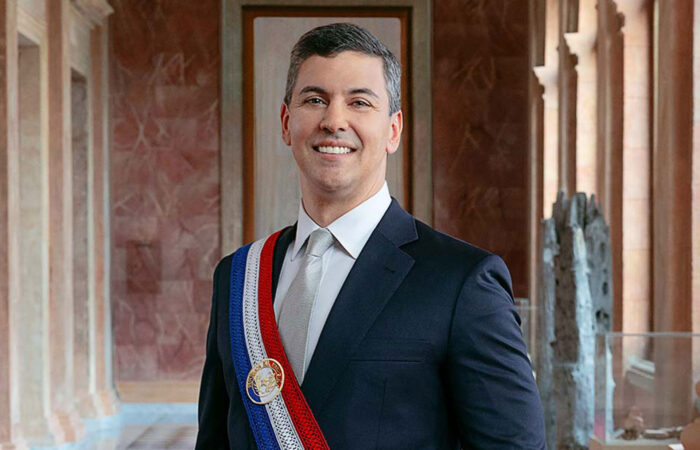

Carlos Carvallo Spalding, President of the Central Bank of Paraguay, oversees an institution key to Paraguay’s economic stability. Here, he discusses monetary policy, financial reforms and the conditions supporting long-term investment.
Q: How has Paraguay built its reputation for economic stability?
The story of Paraguay’s economic institution-building is one of persistence and gradualism. At the start of the 2000s, we faced significant uncertainty: inflation was running above double digits, we were close to a suspension of payments on both domestic and external debt, we had difficulty meeting public-sector payroll obligations and poverty rates were above 50%.
From that point, Paraguay made the right decisions. The country signed a standby agreement with the International Monetary Fund – one it never actually drew on, but which served as a platform for institutional and economic transformation. Economic management began to be placed in the hands of technical experts, and a process of insulating the institutions responsible for economic policymaking was set in motion.
Twenty-four years on, following a process that was gradual, persistent and respected across successive governments, Paraguay holds a double investment-grade rating, issues debt in its own currency and has maintained a long-standing record of low and stable inflation. Over the past three years, inflation has remained broadly consistent with the Central Bank’s target. Poverty, meanwhile, has fallen from above 50% to below 20% over the same period.
In an environment of international uncertainty and volatility, Paraguay’s economy has grown at an average rate above 5% over the past three years.
Q: Why does that stability matter to investors?
What I believe the country has genuinely understood – and this is embedded in the collective consciousness of the population – is that low and stable inflation and responsible fiscal management are public goods. That understanding is now reflected in the political platforms of actors across the spectrum, because society demands it. Macroeconomic stability has become, in effect, an unwritten rule of the state.
That is why Paraguay is increasingly prominent in international forums. At meetings of the IMF, the World Bank and other multilateral institutions, Paraguay stands out as an example of a country offering something that is very much in demand: predictability in economic policy. An investor who knows this country can be confident that economic policy conditions will remain predictable over time. A responsible fiscal stance and an autonomous, independent central bank extend well beyond any single political cycle.
The great challenge now is how to build on that necessary foundation – which is, to a meaningful degree, already in place – to create the conditions for a genuine qualitative leap in socioeconomic development. These processes of reform take time and span multiple governments. Each administration must build on what the previous one left behind.
Q: How can the EU–Mercosur agreement create new economic opportunities?
For a small, open economy like Paraguay – and openness has always been a defining characteristic – international markets are fundamental. It is challenging to imagine sustainable economic growth without recognising that international trade and market access are essential conditions for achieving our development objectives.
The EU–Mercosur agreement goes well beyond simply providing a destination for Paraguayan exports. The European market is demanding in terms of standards and highly advanced in technology and innovation. The real gains from this kind of agreement are therefore not only commercial. They include improvements in productivity, education, technology, knowledge transfer and institutional quality that come from deep economic engagement with a more advanced partner.
Paraguay is already efficient at exporting products where it holds comparative advantages – competitive costs, productive land. What agreements of this nature can add are competitive advantages: higher-complexity production that requires greater knowledge and technical capacity. That is the qualitative step forward.
Q: What does Paraguay offer German investors?
To attract European investment – and given the audience, I would speak specifically about German investment – Paraguay needs to continue advancing on two fronts. First, sustaining the reforms that improve productivity, labour conditions and market standards to bring them closer to what demanding markets such as Germany’s require. During the current administration, significant economic reforms have been implemented with precisely that objective. Second, maintaining the predictability of economic policy over time, which is the foundation of the credibility that this calibre of investment demands.
It is also worth noting the scale of what is already being built. Paraguay generates practically all of its electricity from renewable sources, given its hydroelectric generation capacity – an attractive proposition for companies seeking clean, affordable energy and for countries that prioritise decarbonisation, as European nations do. We have a demographic dividend that, while gradually narrowing, continues to support sustained investment and growth over the medium and long term. We have a low level of political and social conflict. And we have a simple tax system – simplicity being something investors value enormously in an increasingly complex world.
Q: What underpins the credibility of Paraguay’s monetary policy?
The Central Bank is, I believe, a key anchor of macroeconomic stability in Paraguay. The institutional construction and strengthening that has taken place here over this period – both in terms of the Bank’s modernisation and the legal and regulatory framework that guarantees its autonomy – cannot be separated from the country’s economic credibility. The Central Bank is credible precisely because the policies it has pursued have been effective.
Three elements underpin that credibility. The first is an autonomous central bank, independent of the political cycle, whose board members are appointed on the basis of technical qualifications. The second is the quality of the Bank’s technical staff. When people ask me what truly defines central bank autonomy, I tell them: the laws are strong, the tradition is strong, but what most fundamentally guarantees our autonomy and independence is the quality of our technical team. The third is the inflation-targeting framework itself, which has delivered concrete results over time and has held firm even through periods of international crisis.
What this means for investors is straightforward: someone coming to Paraguay can make a 20- or 30-year investment with confidence in a low and stable inflation environment and in the consistency of economic policy. The only question they need to focus on is whether their cash flow makes the investment viable. The institutional framework provides predictability over the long term.
Q: How are financial reforms strengthening Paraguay’s investment environment?
Beyond monetary policy, the Central Bank has recently introduced two reforms of considerable significance. The new Payment Systems Law, which provides a modern framework for the payments system, and the new Capital Markets Law are both administered within the Central Bank, which regulates both markets. Together, they will make Paraguay more attractive for both physical investment and portfolio investment. They create the conditions for international capital to operate directly in the Paraguayan market and to integrate into a payments ecosystem that I believe will become one of the most advanced in the region.
We recently received the Central Banking Payment and Market Infrastructure Development Award – recognition of the progress that has already been made.
Q: How does the Central Bank approach exchange rate policy?
The exchange rate is a price like any other – it is the price of an asset. The Central Bank has no exchange rate target. More fundamentally, under an inflation-targeting regime, a freely determined exchange rate is an important buffer for absorbing external shocks. It must be free to move – upward or downward, depending on the nature of the shock – to prevent volatility from transmitting to the real economy: to growth and employment.
On competitiveness more broadly: the competitive position of an economy should not rest on transitory or conjunctural factors, or on policy decisions that cannot be sustained over time. Competitiveness must be grounded in structural factors – improvements in productivity, better microeconomic policy conditions, advances in education, streamlined investment and production processes and more effective public institutions.
Q: How would you describe your leadership approach at the Central Bank?
The Central Bank is not simply an institution – it is a deeply rooted culture. Decisions are taken in a highly informed manner, grounded in evidence and data. The institution is, by nature, conservative – in the best sense of the word. It does not take steps without being certain of where those steps lead, because the Central Bank’s business is precisely the provision of credibility and predictability.
My leadership style at the Central Bank is, I think, what the culture demands. We work as a team, and what is valued here is knowledge and technical rigour. Discussions are guided by informed, data-driven analysis that takes into account all of the relevant evidence.
That is precisely what gives the Central Bank its institutional strength – and its capacity to contribute to stable, attractive economic conditions for the country.