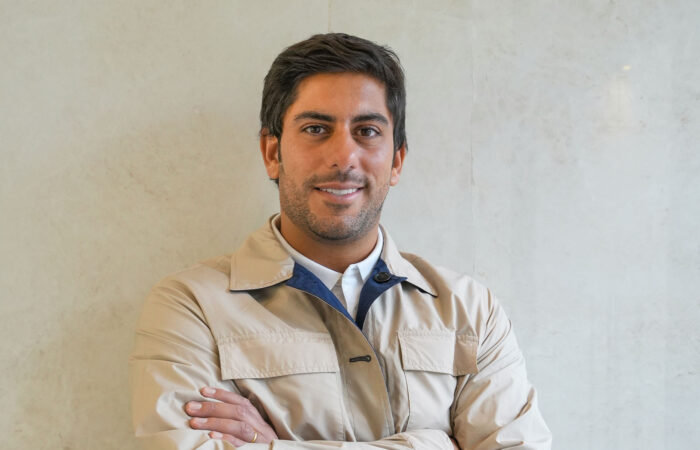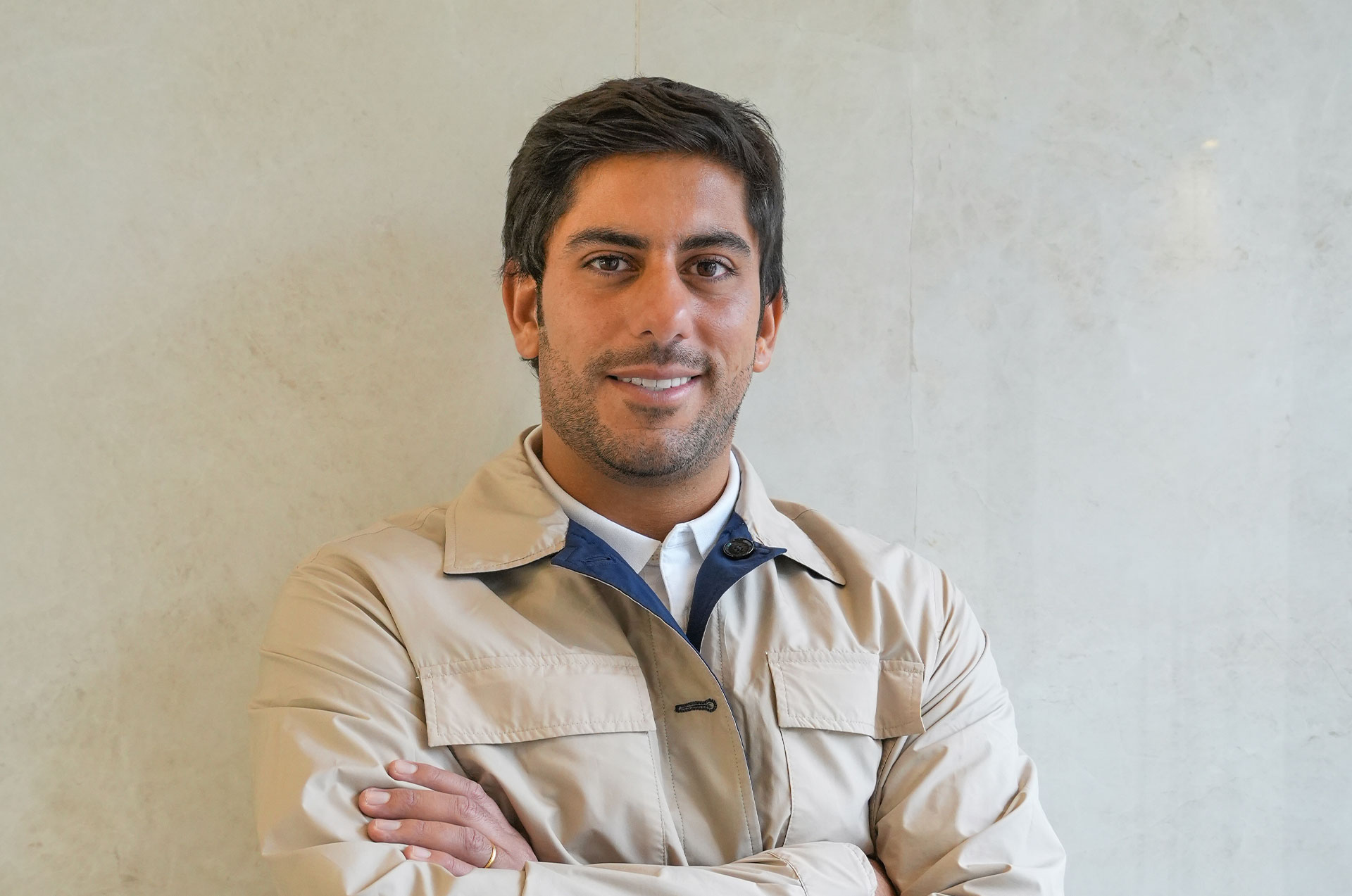

Sebastián Benítez Bittar, Director of Benítez Bittar Constructora, leads, alongside his father, a company of around 3,500 people that Forbes Top Development recognised for having reached more than 255,000 square metres of completed projects. Here, he explains why Paraguay’s real estate and logistics sectors offer opportunities for European investors, and how the company has diversified into the ferrosilicon industry.
Q: What value does the company bring to Paraguay’s development?
We see ourselves as a company with a strategic vision of our country. That vision starts from knowing it deeply, and from that knowledge two strands emerge: our core business, which is construction, and the economic development of the country, understanding what attracting investment means.
Today we have a remarkable demographic dividend: 70% of the population is under 40. It is a young, active population that needs a place to live.
The roles have to be separated: the development company identifies land, defines products and carries out the economic and financial analysis; the construction company brings that vision to life. Our difference lies in having a hybrid vision that allows us to interpret both worlds. We analyse, we evaluate and we do reverse engineering. We identified that there is a deficit of 1 million homes in the country and that 100,000 new units are needed every year. So we asked ourselves: what is the largest share of that deficit? How much does the Paraguayan middle class earn? We found that many earn around $1,200 a month and are willing to put 40% of that income towards their home. From that reality, we built the product. The result is that today we have more than 4,000 to 6,000 apartments already sold through our partner developers, and between 3,000 and 4,000 under construction.
Secondly, we understand that Paraguay is today a jewel, a hidden diamond. We work exclusively with the private sector. Paraguay offers macroeconomic, political and social stability, and above all predictability. Paraguay can be a natural complement to the reality of each neighbouring country, with all the conditions that Mercosur offers and with bilateral agreements.
Q: Is the real estate sector’s growth solid and sustainable?
Our real estate sector has been in a genuine boom for no more than 15 years, and in that time the bar has been raised constantly in terms of product sophistication. Before, there was experimentation and the product was gradually perfected. That learning curve, to a large extent, has now been completed. Today the product is being improved.
Our sector is objective by nature: you see sales, you see physical progress, you see occupancy. Today, what is delivered gets occupied. Occupancy rates for apartments on variable rent exceed 90%, and on fixed rent they are above 82%, according to the latest data I have seen.
Added to this is the growth of corporate tourism, which rose 54% last year. When an investor arrives in a new country, the first thing they analyse is the real estate sector, because it is a tangible, noble, traditional asset that offers security.
Q: What explains the company’s fortyfold growth in volume over eight years?
The answer has to be split into two parts. On the one hand, the country and the private sector had a positive influence on the macro environment over these two decades, creating the conditions for those with vision to seize Paraguay’s moment.
On the other hand, in our particular case, there was a strategic union between two generations: my father and me. He has a technical profile, as a civil engineer, and he is the one who brings every project to life, ensuring that we keep our word beyond any contract. I dedicate myself to the company’s corporate development. We have a very clear line between the technical world and the corporate world, and that specialisation means we can strengthen each other without interfering in each other’s area.
The projection for this year is to build triple what we built in the last three years combined, in terms of hectares. That growth comes because we have clearly defined roles at board level and because we are very clear on the strategy: we do not think of ourselves as a local construction company; we think of ourselves as a construction company in Paraguay that travels South America selling the country. With that regional mindset, and understanding that borders are today increasingly permeable thanks to technology, we continue to grow steadily.
Q: What role do technology and innovation play in the company?
We are in a process of developing talent, consolidating the organisational structure and documenting processes across departments. Digitalisation is advancing in parallel, with the implementation of the ISO 9001 standard and vertical integration into companies that supply us. The goal is for the company to depend not on people but on processes, and for everything to be systematised.
We are a company of around 3,500 people, with a team of between 450 and 500 professionals: architects, engineers, economists and administrators. There are people on our team who have worked on 30 or 40 buildings. That accumulated experience is refined over time, and when processes are repeated, you systematise and optimise them. In addition, we have operational predictability. We have already mapped out the number of projects we will carry out over the next 12, 24 and 36 months, which allows us to plan and invest with certainty.
Q: How do you see Paraguay’s potential as a logistics and industrial hub?
The industrial logistics sector is one of our most important strategic focuses. We were founders of, and are partners in, the country’s first listed real estate investment fund, focused on industrial warehouses and logistics parks, through a company called Reisa, structured similarly to a REIT.
We are a young population. The level of qualification required depends on the industry and on the time available for training. The Paraguayan workforce absorbs knowledge quickly, something recognised by both local and foreign companies.
Q: What concrete opportunities are there for German and European investors?
The first recommendation is for the large German industrial companies that export to the region, to Brazil, Argentina, Chile or Bolivia: that they evaluate Paraguay as an industrial and logistics hub, as a regional supply point. In the context of post-pandemic decentralisation of production, Paraguay is a strategic location for supplying the large neighbouring economies, taking advantage of the country’s tax regimes and the Mercosur agreements. I am convinced they will find economic, financial and logistical advantages.
The second opportunity lies in real estate as an instrument for portfolio diversification. Depending on the product, yields of between 8% and 12% can be obtained, with the prospect of additional capital appreciation. We are a small market, but a market in which everything is still to be done. The timing is very interesting for taking advantage of this vein of growth.
Q: What is the company’s main challenge for the next 10 years?
One of the main challenges I have as director is managing the transition from a first- and second-generation company to an organisation that can operate autonomously. In a sector as traditional as ours, the real asset is knowledge. My father is 63, and the challenge is to transfer that knowledge in an orderly way to a professional team we are developing, so that the company can run on its own.
Q: How did the diversification into ferrosilicon come about?
Through my relationship with João Camargo, who is linked to major business groups in Brazil, I was asked about our experience in the energy sector, particularly in substations. From there we began to collaborate, facilitating the landing of the operation in Paraguay: raw materials, permits, energy. In the end we came in as partners in this industry alongside the Pfeffer family and a group of South American business families. The industry produces ferrosilicon, a steel-sector commodity that acts as an antioxidant and is a step prior to the production of polysilicon, a key raw material for semiconductors.
The plant is due to open in September. The plan is to expand with a second furnace and move towards a third, fourth and fifth in the following years. This project perfectly reflects our vertical integration strategy: we did the construction business, we created value as developers through the fund and we came in as partners in the industry. A complete exercise.
Q: What is your final message for German and European investors?
For a business culture as developed and disciplined as Germany’s, there is no stronger argument than data. And Paraguay’s data speak for themselves: sustained growth, predictability, the backing of rating agencies such as S&P and Moody’s. Paraguay is the springboard to the region’s large economies: Brazil, Argentina, Chile.