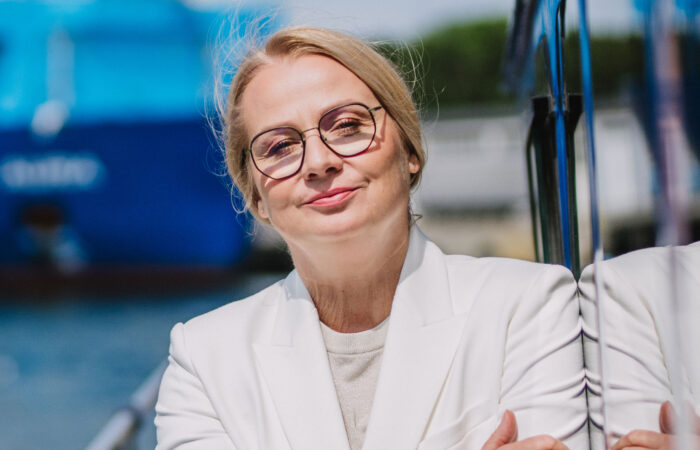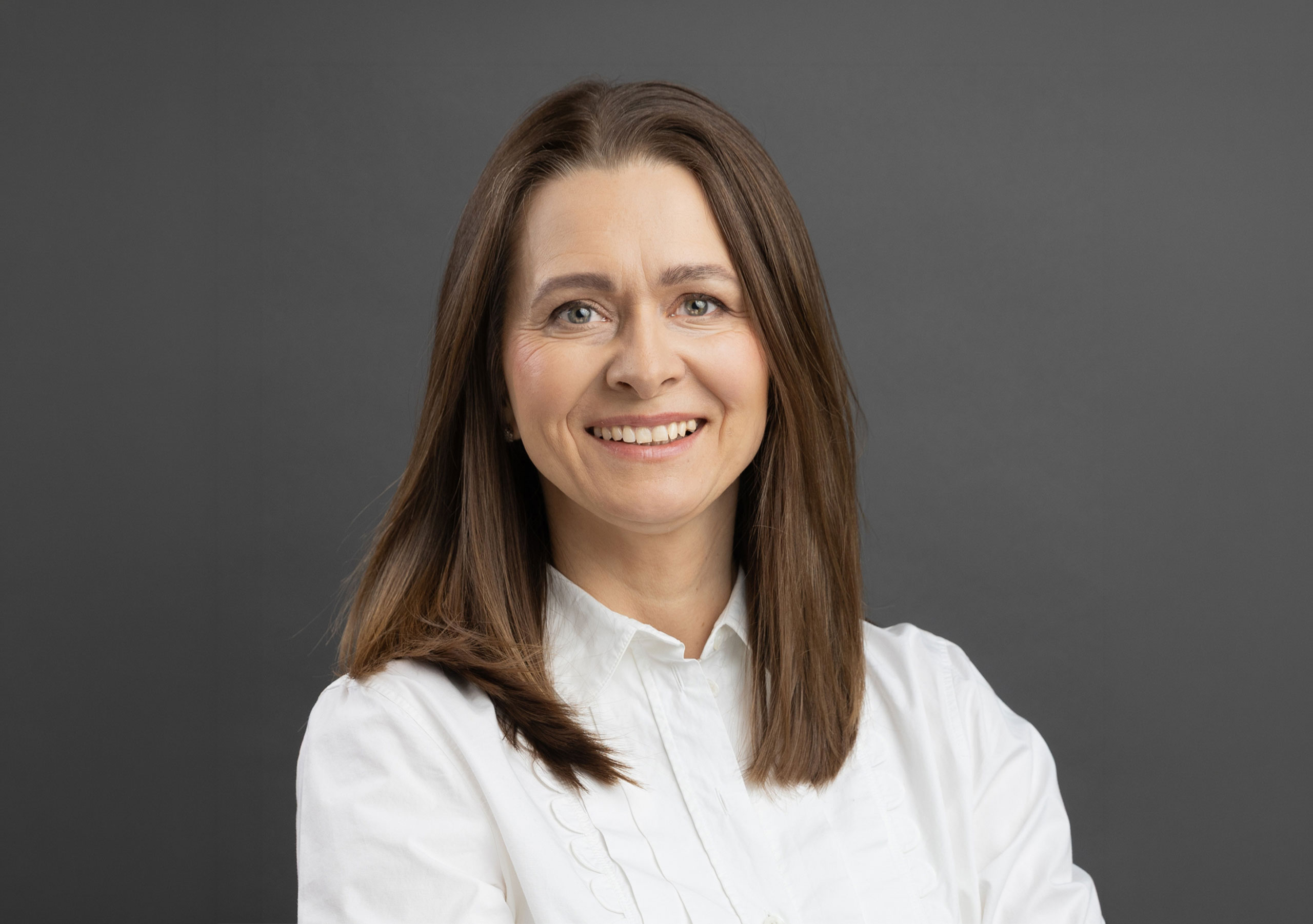

CLIP Group President Agnieszka Hipś discusses how integrated logistics, investments in green energy and rail infrastructure are bolstering Poland’s industrial role and deepening ties with German partners in supply chains.
Q: What is your vision and strategy for CLIP Group?
I have been with the companies of the group since 2008, so by the time I took on the presidency, I already had more than a decade of deep familiarity with what had been built. The group itself was founded on a very clear and far-sighted vision: to create a fully integrated platform for production, logistics and supply that could serve customers and industries across Europe. What makes CLIP Group distinctive is that it was never conceived as a collection of isolated services.
That systemic thinking has proven its value in every crisis we have faced. During COVID, our trains ran without interruption. Our facilities absorbed the logistics flows that had previously moved through Russia and Belarus.
We invested seriously in our own energy production. Today we operate with entirely green energy by virtue of our own generation capacity. When there is a crisis on the grid, we keep running.
Q: How do you manage scale?
Scale in logistics infrastructure is extraordinarily difficult and expensive to build. To hold the three largest inland intermodal terminals in Poland – in Silesia, at the Belarusian border and in Poznań – requires hundreds of millions of zlotys in capital expenditure, years of operational expertise and very precise decisions about location and connectivity. That kind of entry barrier does not disappear.
Beyond the terminals, we have invested in a fleet of nearly 700 wagons for multimodal and automotive transport, and in multi-system locomotives that can move across European borders without changing equipment. That means we can run four trains a week to Barcelona, six to Duisburg and a daily connection to the port of Rotterdam – entirely with our own assets.
We also handle more than 50% of new car deliveries in Poland, serving all the major German brands: Volkswagen, Mercedes, Opel and others. That contract has been openly tendered every three to four years for three decades, and we have won it each time. You do not hold a relationship like that on the basis of price alone. You hold it through punctuality, precision, zero damage and absolute reliability.
Q: How would you describe your relationships with Germany?
The relationship is deep, long-standing and, I believe, structurally sound. It began more than 25 years ago when German companies started looking east for better cost structures and a skilled, adaptable workforce, and it has grown into something far more integrated than a simple cost arbitrage. Almost half of our group’s revenue comes from cooperation with German companies. Volkswagen’s partnership with our automotive logistics operation dates to 2001 and remains ongoing.
We are now developing Poznań Nord Economic Zone, which is set to become the largest economic zone in this part of Europe: a 1,000-hectare site located around 40 km north of Poznań and approximately 160 km from the German border. It is designed for production, logistics and advanced industrial use, with full utility connectivity and access to Poznań’s pool of 100,000 university students.
Q: How do you approach innovation and ESG goals?
Our warehouses are built to carry photovoltaic installations on the roof, which means we designed the structures to bear that load long before the first subsidy programmes appeared in 2018. We have invested in energy storage, in EV charging infrastructure and in semi-autonomous crane systems operated remotely by staff working in a comfortable office environment rather than in a cab 30 metres in the air.
We converted to 100% green energy in 2024, and our investments in rail-based decarbonised transport are not peripheral to the strategy – they are central to it. Rail takes 40 containers or trailers with a single driver, produces a fraction of the emissions of road freight and has become increasingly aligned with where European regulation is heading.
On the technology side, our terminal visibility systems and EDI data exchange infrastructure are essential to the service we provide. A customer whose container is delayed at a German rail crossing needs to know immediately, needs a replacement wagon activated immediately and needs a confirmed new departure time. That requires live data, automated alerts and the operational depth to act on them.
Q: How do you view the strategic value of dual-use logistics infrastructure?
It has become an organic part of our offer, though the investments were made entirely for civil reasons. Our specialised wagon fleet – including the Laados platform wagon, produced in Slovakia – was developed to carry high and heavy loads: electric trucks, agricultural machinery, construction equipment, oversized industrial vehicles.
The broader point is that resilient civil infrastructure and defence-relevant capability are increasingly the same thing. Heavy rail platforms, secure border-crossing terminals, energy-independent logistics hubs – these are valuable in peacetime and strategically significant in periods of instability. We have built them because they make commercial sense. The fact that they serve a wider European security interest is a consequence of taking the long view.
Q: How would you describe your leadership?
In a company like ours, with 15,000 people working across our ecosystem, I have to be visible and honest about where we are going and why. Beyond the internal dimension, I think leaders today – in business and in government – have an obligation to help rebuild trust in institutions and in the value of effort.
We try to address that directly: through apprenticeship programmes, through scholarships and internships that give young people a concrete, grounded path. It is the only sustainable way to build a company that endures.