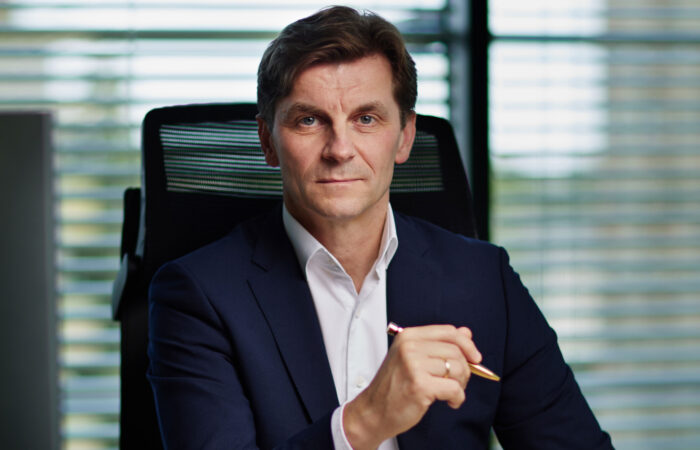

Managing Director Piotr Flugel leads CTP’s push to reach three million square metres in Poland by 2030, with ready-to-go parks that help industrial clients cut operational costs, retain staff, grow on site and meet sustainability goals.
Q: What have been the key strategic decisions of your tenure?
Piotr Flugel, Managing Director: We have focused on several clear strategic priorities. One of the most important has been securing well‑located land for future growth. We have acquired a number of strategically positioned plots – some already with permits in place – allowing us to move quickly and create high‑quality environments tailored to our clients’ long‑term needs.
At the same time, we have continued to raise our development standards. Our new buildings feature optimised daylight, energy‑efficient systems, strong construction quality and prime locations complemented by attractive surroundings.
A key element of this approach is the CTP Clubhaus concept, which is a signature feature across our European portfolio. Clubhauses bring together restaurants, cafés, meeting areas and on‑site services such as medical facilities. While these elements are not profit centres in themselves, they play an important role in tenant retention and in reducing workforce turnover. This concept is now being introduced in Poland, with the first CTP Clubhaus currently under development at CTPark Warsaw West.
Q: What differentiates CTP from competitors?
PF: The first point is that we are not a single-project developer looking to trade an asset. When we secure land, we always aim to acquire more than is immediately needed, because we want our tenants to have room to grow without relocating. Losing staff because a facility has become too small is a real cost.
The second point concerns the true cost of occupancy. Rent is only one component; energy costs, heating costs and staff turnover all feed into what a tenant actually pays to operate from a given building. If our insulation standards are higher, heating bills are lower – and in Poland, where temperatures can demand six months of heating each year, that matters considerably.
Thirdly, we genuinely invest in the working environment. Our Clubhaus concept is not a profit centre; it is an investment in the ecosystem. We ask tenants what would help them retain their employees – whether that is childcare, medical services, a café or a gym – and then we build accordingly. Our own staff also work within the park, which means property management and construction teams are immediately on hand, creating a very different quality of service.
And fourth, we have developed what we call the “ready‑to‑go” concept. Because our investment decisions are made at group level rather than through external fund structures, we have the freedom to decide what to build and where. This means we invest speculatively – developing buildings before a specific tenant is identified – but we design them with long‑term future readiness. Enhanced insulation, roofs prepared for photovoltaic installations and optimised access to natural daylight, which eliminates the need for costly adaptations once a tenant moves in. As a result, operations can begin immediately. That is what “ready-to-go” means in practice.
Q: What are your main growth ambitions for CTP in Poland and across the group?
PF: In Poland, we want to reach three million square metres by the end of the decade, sustaining double-digit growth in gross leasable area each year to get there. Across the group, the ambition is to grow from roughly 15 million square metres today to approximately 25 million square metres, continuing to deepen our position in markets where we are already the clear leader – Romania, the Czech Republic and Hungary – while building that same standing here.
Q: How are tenant needs shaping the type of industrial space you develop?
PF: The flexible-format products address a genuine gap in the market. In well-established economies such as Germany and Italy, small and medium-sized businesses have access to institutional-grade space at a range of scales. In Poland, that middle tier has largely been absent. A company outgrowing its garage has had almost nowhere to go short of commissioning its own building – which makes no sense when your capital should be focused on your actual business rather than on property.
Our ambition is to create parks close to major cities that allow these companies to occupy better space and concentrate on what they do best. We handle the building; they handle the business.
Q: How do you approach sustainability across your Polish portfolio?
PF: Our minimum standard in Poland is BREEAM Very Good, but in practice we are building to Excellent across the portfolio, with a number of Outstanding certifications as well. That is not a marketing position; it is an internal requirement. In practical terms, sustainability for us centres on operational efficiency rather than symbolic gestures.
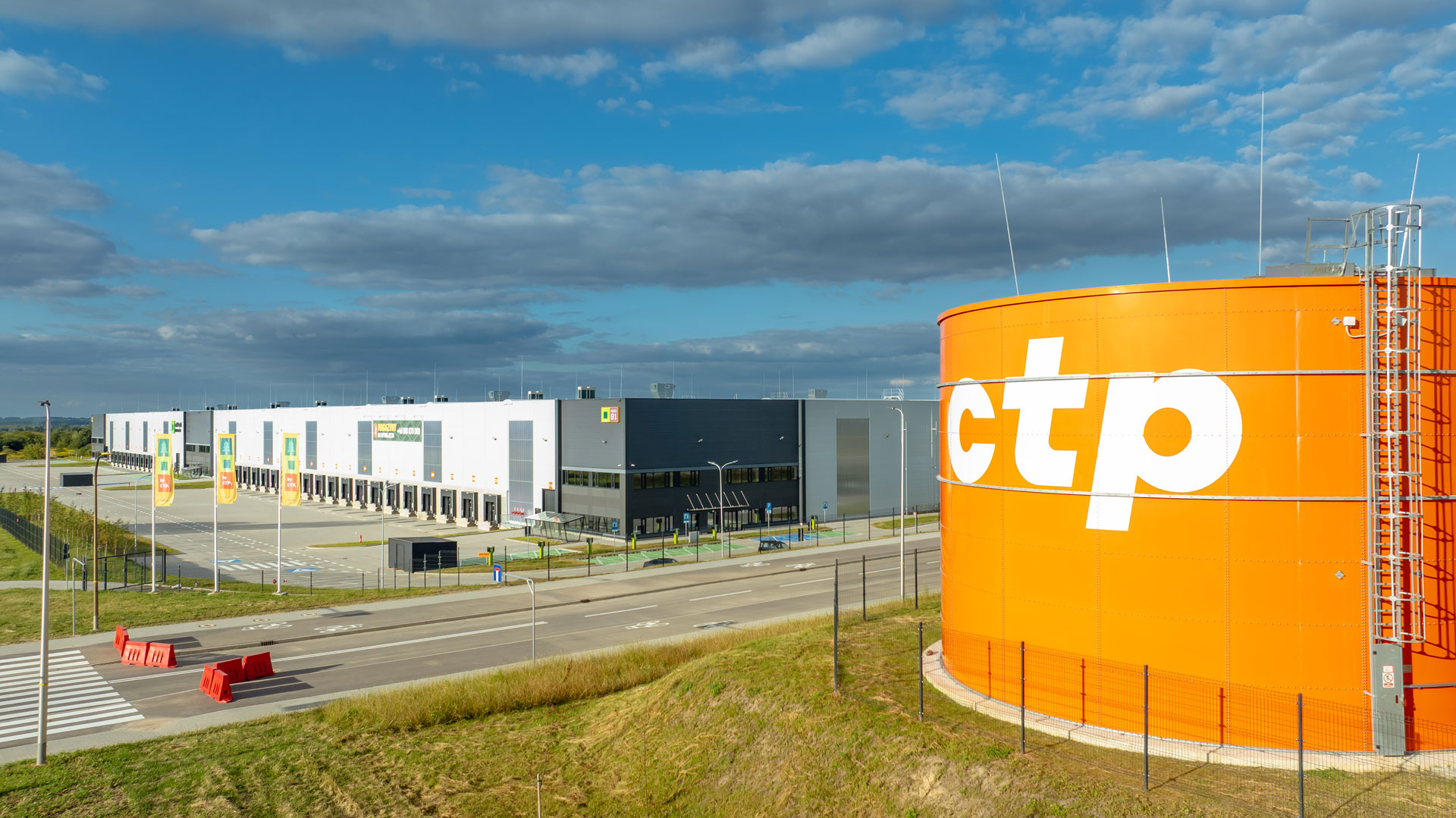
Every building we develop is prepared for photovoltaic panels, though we are realistic about their economics in Poland. Where we are investing heavily is in heat pumps, which provide consistent thermal comfort across large spaces and can double as a cooling mechanism in summer. We have also moved to what we call the SPARK concept – relocating car parking away from building façades, replacing hard surfaces with greenery and increasing natural light penetration through the building envelope.
Q: What makes Poland an attractive market for German investors and partners?
PF: Labour costs remain lower than in Western Europe – that is a straightforward fact. But I would not lead with cost as the primary argument. What I would emphasise is the quality and work ethic of the Polish workforce. Polish employees are precise, reliable and genuinely motivated. It is something that German companies in particular recognise and value immediately.
Beyond the workforce, Poland offers modern infrastructure – roads, digital connectivity, logistics networks – alongside a still-accessible permitting environment, all of it close to the German border.
The country is also increasingly well connected to wider European supply chains. Polish ports are becoming among the largest in Europe by throughput, and with Germany as a direct neighbour and the same time zone, the practical frictions of doing business here are minimal.