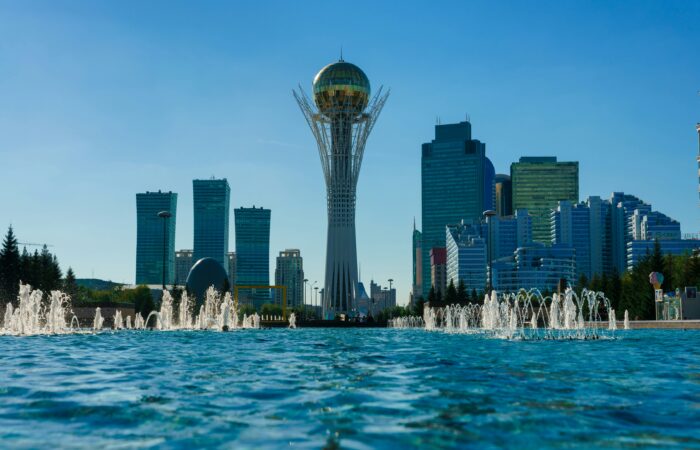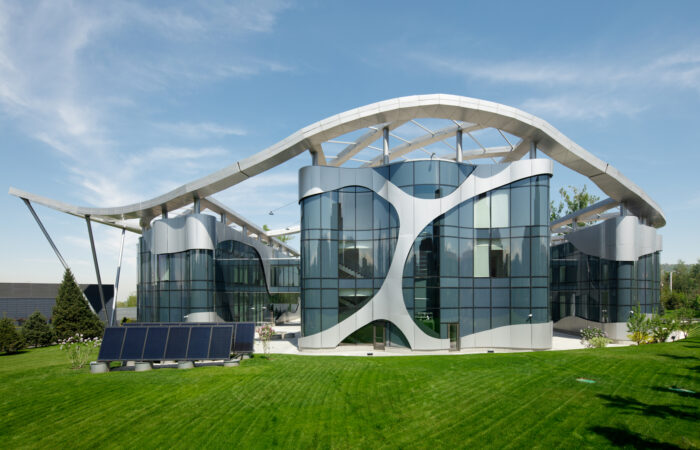
President Kassym-Jomart Tokayev declared 2026 the Year of Digitalisation and Artificial Intelligence, part of the government’s plan for Kazakhstan to become a fully digital nation within three years. Spearheading the push is the Ministry of Artificial Intelligence and Digital Development, created in 2025 to lead AI deployment and integration.
Kazakhstan’s five-year strategy includes the launch of Alem.AI, an international centre for innovation, research and talent development located in Astana Hub. The country also plans to develop a national AI platform and to train one million people in AI skills, guided by a presidential AI Development Council that includes UAE Minister for Artificial Intelligence Omar Sultan Al Olama. That builds on existing government partnerships with UAE firms Presight AI, developing Kazakhstan’s first supercomputer, and AIQ, which is implementing AI solutions in the energy sector.
Astana Hub is central to the strategy, with more than 1,800 resident companies. “Our main goal is to bring our startups to global markets,” says Founding CEO Magzhan Madiyev. That’s aided by the Astana International Financial Centre, which offers an English common law framework designed to support digital finance and international investment. “We believe we can bring significant talent to the Gulf region,” adds Madiyev.
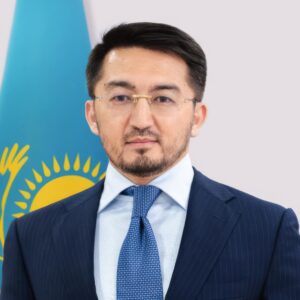
Kazakhstan’s deputy prime minister outlines the country’s digital ambitions as it expands its role as a regional hub for startups, AI, fintech and other frontier technologies.
Q: What are your priorities for digital transformation in Kazakhstan?
Kazakhstan has invested heavily in digital transformation over the past decade, becoming a leader and Eurasian hub on its path to becoming a digital state. Banks and fintech companies have transformed the payments market, and Kazakhstan hosts the region’s largest IT hub and one of the fastest-growing startup ecosystems globally, with over 1,700 startups and major tech companies.
Astana Hub now operates in 20 major cities across Kazakhstan and has expanded internationally. This network enables startups to scale both domestically and globally, connecting with investors worldwide.
The crypto industry is also rapidly developing, and the sector is one of Kazakhstan’s top priorities, alongside AI.
Q: What is your vision for developing smart cities such as Alatau?
This is a very ambitious project initiated by the president. His vision is to build the city as a centre of accelerated development, an FDI hub and a business capital of Eurasia – a gateway for cooperation between China and Central Asia. Alatau city is designed to become a major transport and logistics hub for the region.
Together with Almaty and the Almaty Region, the new smart city will form an agglomeration of six to seven million people, a major new growth centre for Kazakhstan, driving infrastructure and business development. As His Highness Sheikh Maktoum envisioned Dubai as the business capital of the Middle East, we aim to create the business capital of Eurasia, strategically positioned between major economies.

Kanat Amirkin explains how Kazakhstan’s eResidency expands remote access to finance and business as the country builds a digital gateway.

Q: How does Kazakhstan’s eResidency programme work?
The eResidency programme is a digital residency initiative adapted to Kazakhstan’s rules and systems. It provides remote access to selected parts of the country’s financial ecosystem, including the ability to establish and manage businesses online. Key to that ecosystem is the Astana International Financial Centre (AIFC), which has attracted a growing number of international companies.
The model is built around remote access. Many individuals require financial and business management tools without the need to travel. The programme is designed to balance strong compliance requirements with a seamless user experience.
Q: What is its significance for Kazakhstan?
Kazakhstan’s geographic position and digital infrastructure create opportunities to serve a global user base. Even early on, we observed interest from across different regions. Our long-term ambition is for eResidency to contribute meaningfully to Kazakhstan’s service and financial economy.
The next phase includes remote company registration, expanding platform functionality. This can be effective when combined with the AIFC and Astana Hub, which offer competitive regulatory and tax conditions.
Q: Which markets are you prioritising?
We are exploring demand across Asia, the Middle East, Latin America and the CIS, while respecting local regulatory frameworks and global compliance requirements. eResidency can provide an additional channel for accessing stable and regulated financial services, especially for users seeking secure, remote access.
We are building an integrated digital infrastructure. Additional initiatives, such as QazETA, are being developed to improve efficiency, security and user experience for international visitors.
This approach supports more precise communication with relevant audiences and sustainable ecosystem growth, while keeping security, compliance, transparency and risk management at the centre of the system.

Kcell CEO Askar Zhambakin explains how 5G, AI and connectivity support Kazakhstan’s digital economy and investment appeal in Gulf markets.
Q: How is Kcell positioned beyond connectivity?
We position Kcell as a digitalisation partner for large corporations, not only as a connectivity provider. Connectivity remains our core product – clients need it for surveillance, health and safety, workforce control, vehicle tracking and data collection from IoT applications. ERG, Solidcore Resources and KAZ Minerals use our network as the foundation for advanced digital solutions today.
Q: How is 5G changing Kcell’s market position?
Since the end of 2023, we have been expanding our 5G network, focusing on higher speeds and better service quality in major cities. We want to position ourselves as the best operator, providing the highest-speed networks.
Q: What impact can AI-enabled networks have?
AI-enabled and automated systems improve safety and efficiency, while allowing companies to move people into higher-value tasks. This illustrates the broader impact of the networks we provide. High reliability, high-speed connectivity enables real-time data processing and decision making. Solidcore Resources has implemented an AI-driven dispatching system that collects and processes data from vehicles and transport assets, automatically deciding which equipment to send to different parts of the mine.
Q: Why should investors look at Kazakhstan?
Kazakhstan is the region’s strongest investment destination because it offers a transparent legal framework, while leading in digital infrastructure, government services and connectivity. Kcell contributes through high-speed 5G networks, confirmed by independent indices, with Almaty and Astana ranking above many developed markets for mobile internet speeds. Astana Hub, regional tech hubs, IT voucher programmes, AI universities and IT training for women also provide funding, education and infrastructure for innovation.