As published in

When Malta’s Labour Party secured an historic fourth term in May 2026, one of the defining projects of Prime Minister Robert Abela’s agenda was already set. In February he launched Malta Vision 2050, a comprehensive national strategy designed to accelerate economic growth through productivity gains and improve the quality of life. “Malta Vision 2050 is not just a plan. It is a new way of living, where development is balanced, where everyone achieves their aspirations, where we will have a country far better than the one we found,” Abela said at the policy’s launch. “Together, we can build the best Malta.”
Drawn from extensive analysis and public consultation, Vision 2050 breaks from traditional planning cycles based around the length of a single parliament in order to drive long-term change, with progress to be tracked through a dedicated government website. Organised around four pillars, three national goals and 100 measures, the plan’s stated aim is to create “a safe and resilient nation, inspired by its heritage and driven by progress, which promotes a healthy quality of life for everyone.”
In practice, that progress is to be focused on the central pillars of sustainable economic growth, more accessible public services, a more resilient and better-educated society and smarter use of the island’s limited land and sea. Of the 100 specific measures, six are identified as flagship projects, from a more efficient transport system and a modernised health service to future-ready education, clean energy and environmental action, a greener island of new national parks and the regeneration of Malta’s ports. The mix is deliberate, pairing infrastructure and the environment with health and skills, a definition of progress meant to be as much social as economic. “The time has come for our country’s destiny to be written, and for us to begin living it at its very best, for ourselves and for our children,” Abela said.
It is an ambition founded on an economy that grew at an average of almost 7% per year from 2014 to 2023. Malta has combined sustained growth with high employment, a diversified services sector and a strong record in attracting international business. Real GDP grew by 4% in 2025, with the European Commission forecasting growth of 3.7% this year and 3.6% in 2027 – among the highest rates in the European Union. Unemployment, meanwhile, is expected to remain close to 3%, with inflation forecast at 2.7%. That reflects an economy built on a broad base, with tourism, financial and professional services, gaming, aviation, maritime activity, advanced manufacturing and the digital economy all contributing to the country’s performance.

Malta’s relationship with Germany is one of the foundations of that economic strength – and a launchpad for further growth. The two countries marked 60 years of diplomatic relations in 2025, but their connection is increasingly defined by trade, services and investment. Based on Bundesbank balance-of-payments data, bilateral trade in goods and services reached approximately €3.45 billion in 2025, with services accounting for around two-thirds of the total. The figures highlight Malta’s position as a European centre for cross-border services as well as the depth of its conventional trading links.
German investment flows are also significant. Direct investment from Germany in Malta stood at approximately €16.3 billion at the end of 2024, the most recent official figure, while around 60 German companies operate on the island and its sister, Gozo. The relationship spans manufacturing, aviation, finance, maritime activity, tourism and specialised services, making Germany one of Malta’s most important trade and investment partners. For Malta, Germany brings capital, technical expertise, commercial networks and access to Europe’s largest national economy. German companies, in turn, gain an English-speaking EU base, an established regulatory environment and commercial links across the Mediterranean.
Tourism represents another key dimension of the relationship. After achieving record total visitor numbers in 2025, Malta is placing greater emphasis on value, visitor experience, premium accommodation and management of the demands placed on infrastructure and the environment. Germany is central to that effort, as a high-value market targeted for further expansion. Malta welcomed 261,939 German visitors in 2025, generating approximately 1.91 million guest nights and €289.5 million in expenditure. Arrivals rose by 5.3%, cementing Germany’s position as Malta’s fifth-largest tourist origin market, while spending increased by 11.9%. Malta’s new positioning as ‘an island for connoisseurs’ emphasises the distinctive cultural, gastronomic and heritage experiences for visitors to explore, in part designed to shift perceptions of the country in the German market.
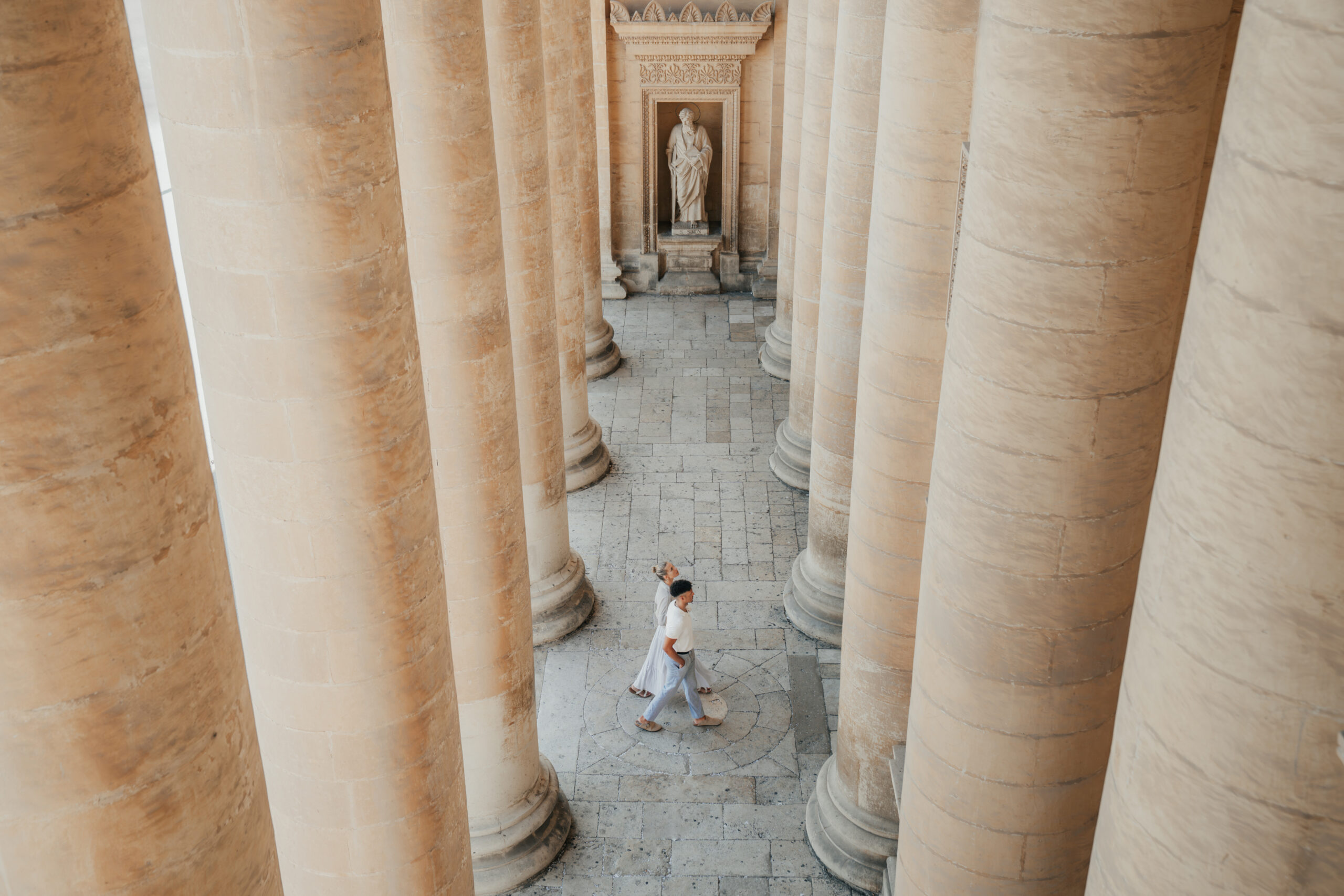
The Vision 2050 agenda supports this through its emphasis on sustainable growth, smarter use of land and sea and the regeneration of port facilities. A greener island and modernised tourism infrastructure are designed to attract higher-spending visitors and increase demand outside of peak months. That builds on Malta’s natural appeal as a year-round destination; the island averages around 3,000 hours of sunshine and 300 days of clear skies each year.
All of this dovetails with the plan’s domestic focus. As a compact island state that has enjoyed rapid expansion, the government is aware of the need to align economic growth with delivery across housing, transport, healthcare, energy security, education and careful use of available space. At the same time, labour market pressure and a reliance on workforce growth add to the need for higher output per worker. Vision 2050 therefore points towards a productivity-led model based on stronger skills, research, digital technology, advanced manufacturing and higher-value services. The aim is to judge performance less by the scale of activity and more by the value created for companies, workers, families and communities. Technology is expected to support higher wages, expand capacity and help organisations achieve more within the country’s physical and demographic limits.
To underwrite delivery, accountability features prominently in the Vision 2050 framework. The plan sets specific targets to be assessed against a group of global benchmarks, with interim targets for 2035. Examples of 2050 targets include reaching the top 10 globally in the Human Development Index, placing Malta in the top five of EU countries for life satisfaction – based on Eurostat’s indicator – and increasing median disposable income to 135% of the EU average.
Malta’s economic growth gives the government a strong base to work from, while the recent election victory provides a renewed mandate for implementation. With those elements in place, the focus is now on results. In that context, Germany’s role as a source of trade, investment, expertise and tourism gives the bilateral relationship even greater importance. As Malta sets about building a nation for the next generation, its ties with a long-standing partner will be a defining feature of the process.
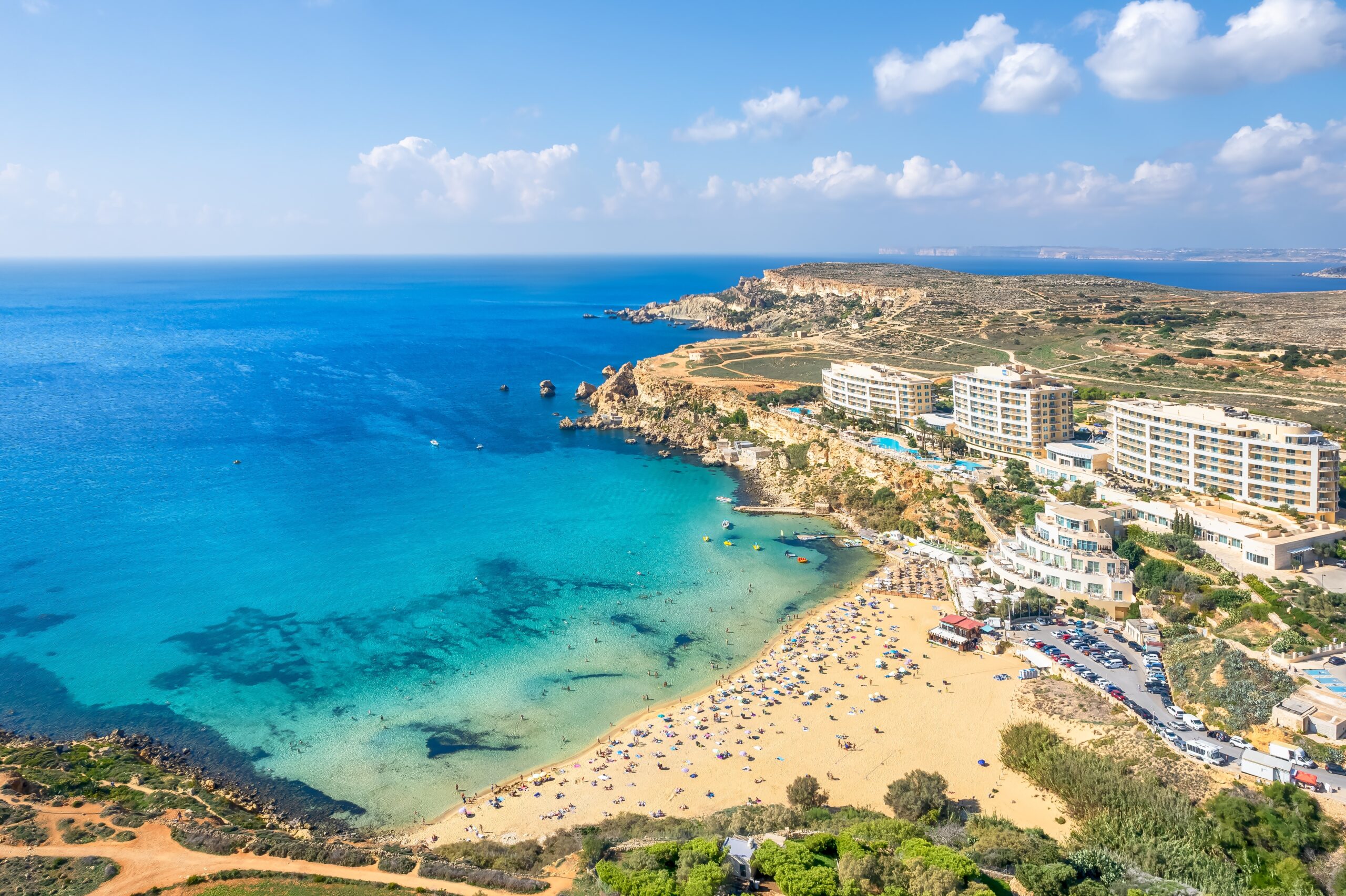
From the stunning Golden Bay and the amber beaches of Għajn Tuffieħa to the red sands of Gozo’s Ramla l-Ħamra and the Inland Sea at Dwejra, Malta’s dramatic coastline is as varied as any in the Mediterranean. Above all stands Comino’s Blue Lagoon, located a short boat ride from Malta, where crystal-clear waters offer an idyllic spot for swimmers.
Malta’s sister island, just a 25-minute ferry ride away, Gozo has a greener, more rural character all of its own. With natural landscapes, azure waters and a history steeped in myths and legends – among them its supposed role as the legendary lair of Calypso – Gozo is home to the ancient Cittadella, with views across the island, and some of the archipelago’s finest scenery.

Maltese cuisine reflects the islands’ position at the heart of the Mediterranean, with Italian, Arabic and Provençal influences carried into dishes rich in local character. Pastizzi, ġbejniet cheese, fresh seafood, honey and Maltese wines sit alongside a growing fine-dining scene and Michelin-starred restaurants. Beyond the table, vineyards, olive groves and family-run farms offer a closer look at the depth of flavours and traditions in Malta’s food.
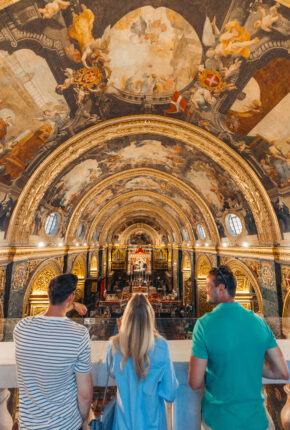
Seven thousand years of history have given Malta a cultural heritage of remarkable depth. Its three UNESCO World Heritage Sites comprise the Megalithic Temples, which predate Stonehenge, the Ħal Saflieni Hypogeum and the City of Valletta. St John’s Co-Cathedral houses Caravaggio’s only signed painting, while watchtowers, palaces and churches recall centuries of faith and conflict. Yet Maltese culture remains vividly alive in village festas, traditional crafts, music and celebrations passed down through generations.