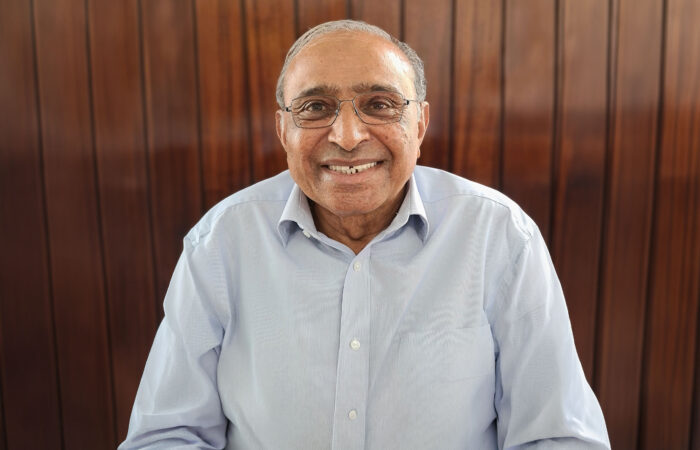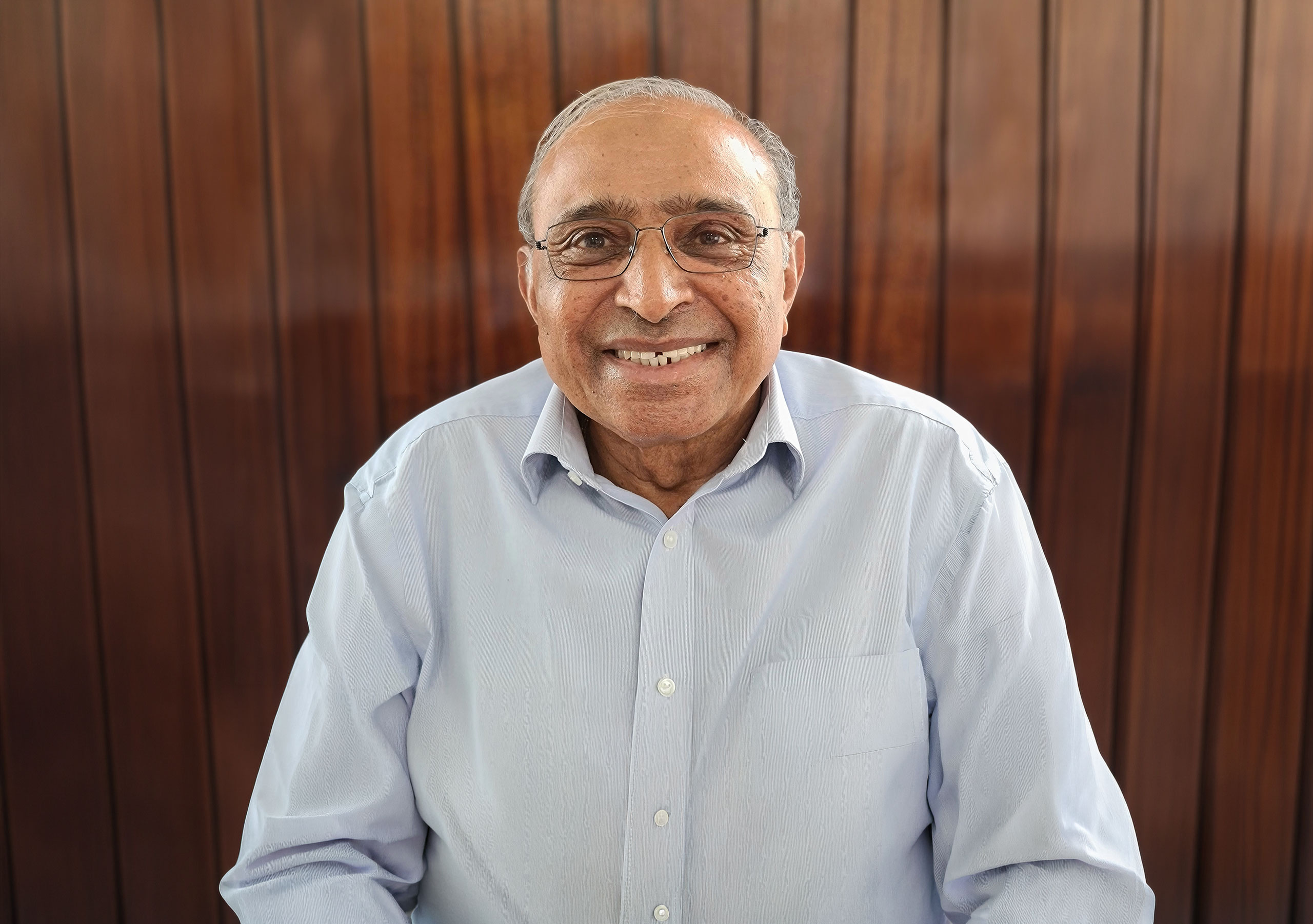

From nationalisation-era Seychelles to marine piling projects for the world’s leading hospitality brands, Vijay Patel has spent 47 years building Vijay Construction on a simple formula. Here, he explains why quality, time and price remain non-negotiable.
Q: How has your vision evolved since founding the company in 1979?
Let me go back to the beginning. When I started, it was the era when President René was nationalising many businesses and acquiring land to redistribute it. This created fear in the business community; many businesspeople wound up and left. I saw an opportunity, and I also shared René’s belief that people must not be exploited. If I paid fair wages, I would not have a problem operating under the government, because fair wages could be built into pricing and paid by clients.
At the time, I was running Laxmanbhai, which was well established, and I was secure as a 20% shareholder and managing director. Friends told me I was crazy to start a new business in that climate, but I believed that regardless of politics, people and government would always need buildings, so the business would not disappear. I started, and there has been no looking back.
Paying people reasonably worked. When people are treated better and paid better, they are more productive. The biggest advantage of this policy is that people take ownership, and when people take ownership, the business flourishes.
For any business to progress, I focus on three factors: quality, time and price. Quality comes first. In construction, time is critical. Price comes third because when quality and time are respected, price becomes less important to clients.
Q: How do you want your operations to be perceived by international investors, including from the UAE?
I emphasise the same three factors with my senior team: quality, time and price, with quality first. At the beginning, I did not have trained staff, so I recruited and trained people, and I invested in people and equipment. It did not happen overnight, but it happened.
I also looked for a niche. Laxmanbhai focused on building works and did not do infrastructure work, so I entered infrastructure, and it worked. In 1982, for example, the BBC towers project required specialised foundations using piling, an area I had no experience in. I went to South Africa, found a company specialising in piling foundations, and brought them as a subcontractor. They did the work while I watched and learned. We managed it well, and the client received the job on time and within budget.
A similar situation happened with the Eden Island Project, where we were not permitted to tender for the piling portion of a bridge. We proved we could deliver the rest of the work on time and with quality. In 2005, I had not yet proven quality at that scale, so I competed on price against Laxmanbhai to secure entry. After delivering quickly and well, Eden Island decided not to re-tender, and we did not change our rates for 15 years.
Q: How have Eden Island and other flagship projects built your credibility in the domestic market?
We concentrated on the three factors, quality, time and price, constantly. You cannot apply them for a while and then become complacent; complacency causes decline. You must be vigilant. I am still maintaining this approach, but I cannot guarantee what happens when I am no longer here. It depends on how people at the top think and perform. One person can change everything.
Q: How are you prepared to partner with UAE investors on infrastructure and real estate?
Today, many of our main clients are from the Middle East. Eden Island was a South African-led project, but after that, much of our business came from European countries and mainly the UAE.
Four Seasons returned in 2004, and we won the first-phase tender for roadworks and infrastructure. We have continued doing work at Four Seasons, nearing completion of staff housing and storage, approximately a $10–12 million project. They now want to build a three-star hotel, another approximately $20 million project.
My point is that greed leads to consequences. Another key principle is not wasting time making claims. Most contracts generate claims, but I do not need claims because I make a reasonable profit and do not aim to be excessively greedy. This created a reputation: if you want a smooth contract, you go to Vijay.
Q: How do you apply innovation to complex projects?
I have always tried to find a niche because a niche market brings more business and better profit due to less competition. On Eden Island, when the marina required marine piling, we were allowed to tender. I offered a better price than the South Africans, but I had to learn because I did not have staff with that expertise. My approach was to jump in and learn to swim. I employed people with experience, including a British specialist, and trained more staff.
We completed the marina with marine piling at depths of about 25 to 30 meters. It requires courage and self-confidence. When you have confidence, you focus on solutions, and solutions exist because marine piling is done worldwide. You must find the method.
Infrastructure is where we succeeded because there is less competition. I might target 12% profit, sometimes even 15%, instead of 7%, but only if we can deliver. Good management is the governing factor.
Q: How did your time at Laxmanbhai Construction shape your leadership approach?
At Laxmanbhai, the policy was to control everything. Senior people were not given freedom or authority. I came to Seychelles in 1973 as an employee of Laxmanbhai to build what remains the Mahé Beach Hotel, and I was later placed in charge. I observed that senior foremen lacked authority, so I changed that, and they worked better.
I continued the same approach at Vijay Construction. When staff take ownership, they find solutions even for challenging work. For example, we are currently demolishing the palace on the hill, extremely heavy construction, and the people on site find the solutions for how to dismantle and bring it down.
This is how the business has strived and sustained. There is no secret. I do not have extravagant habits. I also believe you must not become a boss. In my office, anyone is welcome; there is no rigid hierarchy or unnecessary permissions. People feel heard. These principles matter in business, civil society and government. If the top is not working, others will follow.