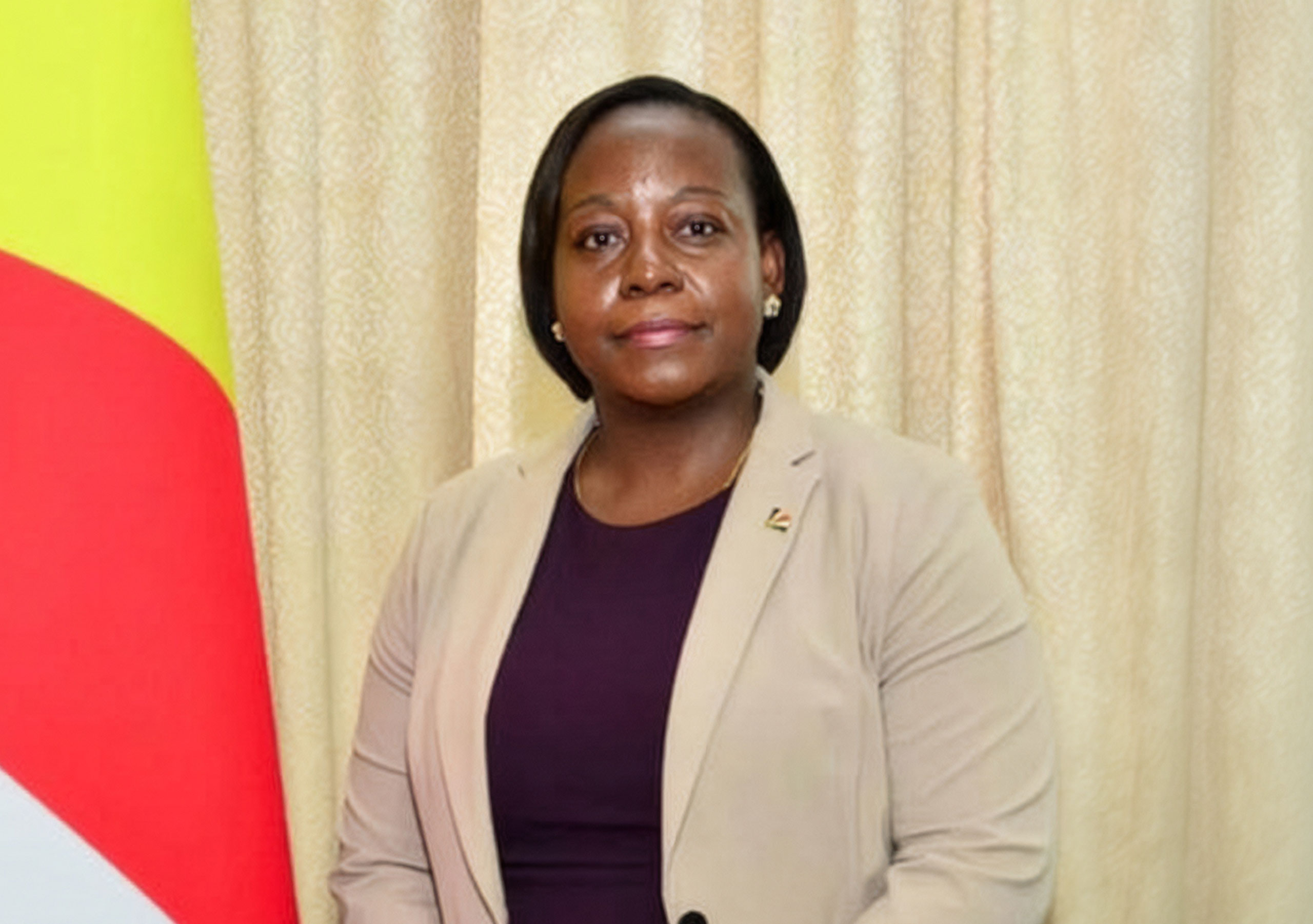

From renewable energy to the blue economy, Minister Marie-May Jeremie is steering Seychelles’ sustainability agenda. Here, she explains how environmental stewardship is integral to the nation’s economic future.
Q: What is your vision for making sustainability a driver of long-term growth and resilience?
In Seychelles, the environment has always formed the backbone of the economy. The leading sectors, fisheries and tourism, depend on natural resources and on how well we manage them.
Taking on this large and important portfolio underscores the level of importance the country places on sustainability. It is not a choice at this point: as a small nation with limited resources and capacity, sustainability is the only way we can achieve resilience and the prosperity we aspire to. A large part of my responsibility is to ensure that policies on diversification and economic growth are anchored in sound governance of the resources we have.
Q: What is the sector’s current contribution to economic stability and employment, and where is there scope to expand its impact?
One of the key things we face is the challenge of being small. We have limited access to large markets, and even for what we produce it is difficult to sell and market, and to attract the right types of partners.
For us, this is where we have tried to bring in the blue economy, where the ocean is integral and central to the country. There are many untapped areas in the ocean space that could attract investors, research and innovation. I feel that many opportunities lie especially for young people: how to do things differently and more effectively with the limited resources we have. However, climate change and other factors create vulnerability, so we need to diversify and look at all the ways we can remain relevant while remaining sustainable.
Q: Which opportunities in sustainability and climate adaptation would you highlight to UAE-based investors?
Energy is one of our top priorities, and certainly one of mine. One of the key areas we have been exploring, and which presents significant potential with UAE investors and the private sector, is renewable energy, where the UAE is leading.
A couple of weeks ago I attended Abu Dhabi Sustainability Week and saw the level of commitment in the UAE, how far they have advanced in developing technologies and innovation and how they are now bringing artificial intelligence into the mix. This creates an opportunity to help Seychelles meet its renewable energy targets by overcoming land constraints. Much of this technology now resides with the private sector and innovators in the UAE, the Middle East and across other countries in the Global South. That is where Seychelles can partner.
Q: What reforms are needed to turn Seychelles’ renewable energy targets into viable, scalable projects?
These are bold commitments under our nationally determined contributions, set a couple of years ago, and we intend to honour them. Even with the change in government, we will try to exceed 15% by 2030, which is in four years.
Because of its relatively new nature, many policies and regulatory frameworks are lacking, so the government has focused on creating an enabling environment and legal clarity for investors. We have established a new entity, the Utilities Regulatory Commission, whose core functions include setting frameworks for tariffs, standards for agreements such as power purchase agreements, and clarity of process for anyone seeking to invest.
We are laying the groundwork so that when investors bring innovation and ideas to grow the sector, they do not encounter unnecessary barriers and bureaucracy. As government, our role is to facilitate and overcome these barriers, although policy and legislation take time.
Q: How does the Marine Spatial Plan strengthen Seychelles’ investment appeal in the blue economy?
The Seychelles Marine Spatial Plan is by far the most extensive exercise the country has undertaken, particularly given the sheer size of the exclusive economic zone. Through it, we have identified areas that are protected, creating one of the largest protected area estates in the world.
That leadership sends a strong message internationally that when we make a commitment, we deliver and honour it. There is no blue economy without a healthy ocean, which is why protected areas are essential. The plan has also created opportunities by identifying key sectors beyond conventional fisheries and tourism, including ocean research, deep-sea work and deep-sea tourism.
Very soon, we will have a Seychelles Marine Spatial Plan agency to coordinate implementation, identifying opportunities for development in ocean-related growth to support the Seychelles Blue Economy Roadmap.
Q: How is the Ministry embedding innovation into Seychelles’ energy transition and climate resilience agenda?
One key thing we have seen in renewable energy is that it is a very dynamic area, with rapid change. To keep up, innovation becomes mandatory, especially because we must be smart about achieving our targets given land constraints and other limitations.
At Abu Dhabi Sustainability Week, we gained ideas on how to translate these priorities into policy. For example, we became very interested in strong battery storage to overcome limitations in production. We will have limited capacity to produce, so we must become very effective in harnessing what we produce. After returning, we have taken steps to rethink how Seychelles can accelerate its efforts toward the targets we have set.
Q: What message would you like Seychelles’ sustainability-led growth model to convey to UAE-based investors?
Perception is a tricky one, and I always try to manage investors’ expectations. Seychelles is very small, and the market is small. We have encountered situations where investors arrive expecting to run massive projects, but that is not a model that will deliver for us.
The message is that in Seychelles, we have clarity about what we want. We are ready to support investors, we have an enabling environment that can support them and there is stability in the partnership. In the long run, even if the market is small, it is steady, stable and consistent, including in terms of returns for those who come to work with us.
Q: How have your previous roles shaped your leadership approach as minister?
One of the advantages of working at an organisation like SeyCCAT is that you are accountable to many stakeholders, nationally and internationally, along with local communities and the trust’s beneficiaries. That helps you stay focused on the people you work with.
In any policy, programme or initiative you are trying to roll out, you must treat people with integrity and respect. My leadership style is inclusive and respectful, and that is essential to making progress. I often say that I lead from the back. I do not always have to be the face of a programme or an entity, but I am there supporting and motivating the people I work with.
With renewable energy, where there are many difficulties to overcome, if we get enough people to believe in it, we can create the environment for progress. People will take it forward, and that is how we achieve the 100% target we want to achieve by 2050.