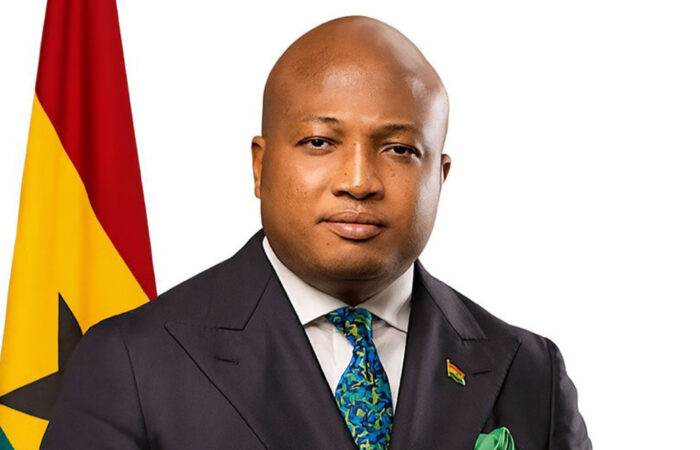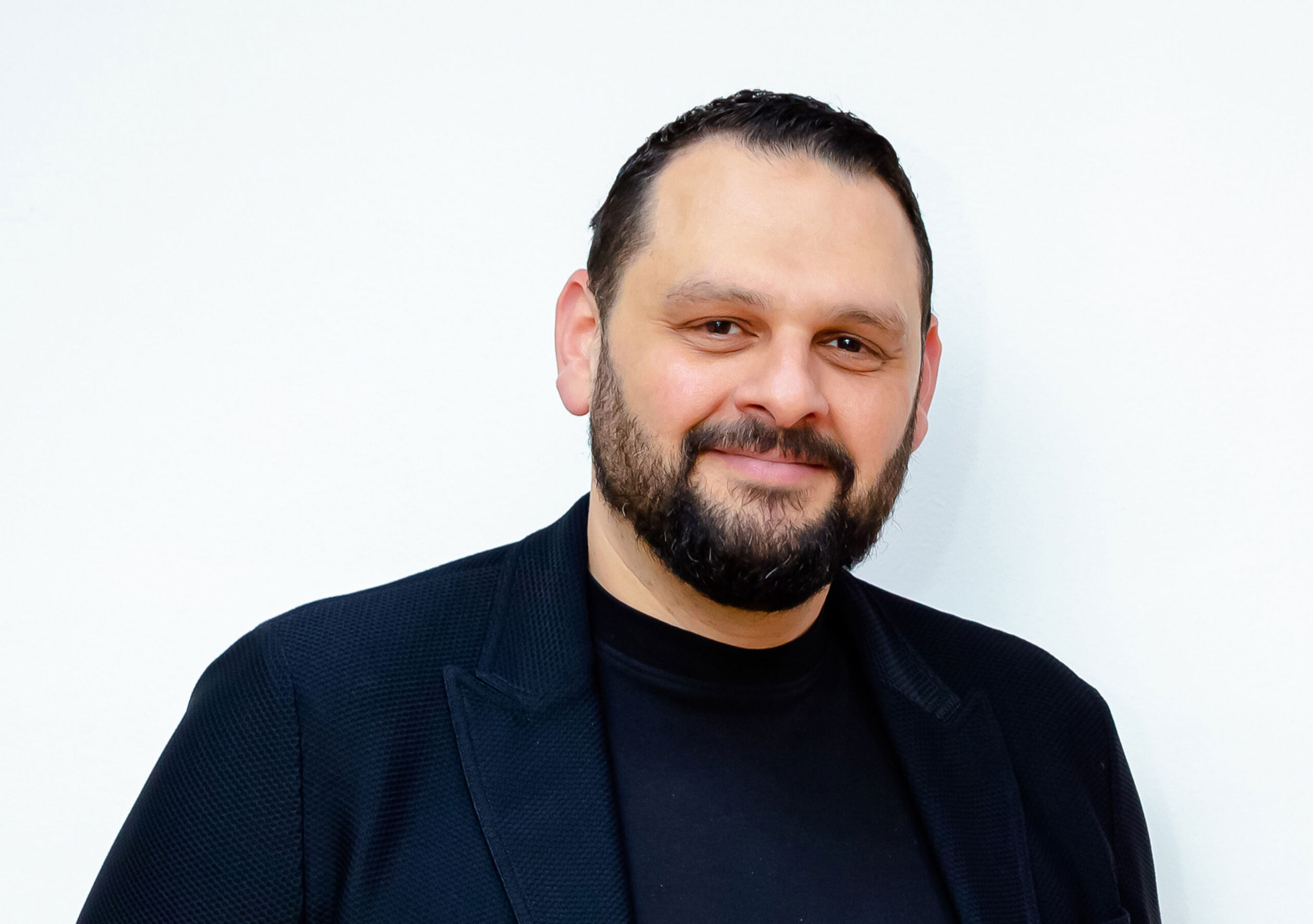
Madinet Masr is leading an ambitious transformation in Egypt’s real estate landscape. Founded in 1959, the company later acquired Minka Real Estate Investment, the business created by current President and CEO Abdallah Sallam. Today, it is evolving into a modern developer focused on long-term value creation for a rapidly growing population.
Q: How did the acquisition of your company, Minka Real Estate Investment, lead to your appointment at Madinet Masr?
Abdallah Sallam, President and CEO: I could never have planned any of this. Ten years ago, if someone had told me I would be in the real estate industry, I would not have believed it. But coming from a different industry and background is one of the reasons I believe I succeeded.
Minka was the reason I entered this field. When I founded the company in 2016 or 2017, almost a decade ago, it was intended to be an investment firm, not a development company. I had just returned from a period living in Canada in 2014, and my vision was to create a boutique real estate investment business focused on asset management, rental properties and flipping, purely investment, not development.
Then came a turning point. Madinet Masr was selling a plot of land, and we acquired it for one of our boutique projects. A year later, we purchased another plot from them. During this entire period, I had no involvement with Madinet Masr beyond being a client.
In 2019 we acquired the first plot, in 2020 the second. Then in 2021, I received the phone call: an invitation to join the company, then still under its old name. They told me they appreciated our work and the way we approached development. I was genuinely surprised. I was not looking for a job. I had always run my own businesses and held full ownership or majority stakes in the companies I led.
But after months of discussions, I became intrigued by the challenge. I knew the company, its history, its legacy and I could see its untapped potential. Six months later, Madinet Masr acquired Minka through a share swap. We grew the company almost twentyfold in four years. We rebranded a 60-year-old legacy company, a decision that proved transformative.
Today, we rank among the top three developers in customer awareness and top-of-mind perception. And in terms of volume and value, we are among the top ten developers nationally. It has 14 subsidiaries, including four international ones in the UAE and Saudi Arabia, Saudi launching in late November 2025.
Q: How is the company positioned among stakeholders?
AS: This company has a very unique DNA. I often benchmark it against those brands you instinctively associate with a nation, like IKEA with Sweden, Sony or Toyota with Japan, Mercedes with Germany. These are not necessarily government-owned companies, but they are national icons.
That is how I want Madinet Masr to be perceived, especially by foreigners: as a national, iconic Egyptian brand. Madinet Masr started as a government-owned company, patriotic and national in spirit from day one. It was responsible for developing one of Egypt’s most important neighbourhoods, Nasr City, where we are now. That history naturally shapes how we think and act.
At a personal level, this mission is a major source of motivation for me. I genuinely believe Egypt deserves to be in a much better place. The country has enormous potential and a young population capable of achieving remarkable things. My experience on Shark Tank has given me the privilege of engaging with many young entrepreneurs. While they may see us as role models, I always tell them I keep doing Shark Tank because I am addicted to the energy I get from them. They give me hope.
I would be proud to see foreign, regional and international investors view Madinet Masr as a patriotic, national icon of the Egyptian economy.
Q: With Madinet Masr’s recent expansion into Saudi Arabia, what developments do you foresee for the company in the coming years?
AS: Let me zoom in, then zoom out. You mentioned some of the specific partners we are collaborating with, mainly on the commercial side, including health and fitness providers and retail operators. These partnerships tie directly to our purpose statement: to drive growth in Egypt by developing sustainable communities. We are even adding an extension to it: developing sustainable communities that make life safer, better and easier.
A purpose statement is not poetic language on a wall. It functions as the company’s constitution. It guides our decisions. And we cannot claim to build sustainable communities without working hand-in-hand with industry leaders across critical sectors.
People tend to associate sustainability primarily with environmental practices and green buildings, an important component, of course, but sustainability, at its core, is about creating communities that stand the test of time. Madinet Masr is 67 years old. The real question is: how do we ensure the company thrives for the next 67, or 100, years?
Building a structure is the easy part. Any developer will tell you that. The real challenge is managing a community so that it remains liveable, relevant and thriving for generations. And in many of our neighbourhoods, we already have third- and fourth-generation residents. Sustainability for us means collaborating with experts in health, education, sports, retail, office, logistics and entertainment.
Even though our purpose is deeply patriotic and strongly tied to Egypt’s identity, we will only fulfil that ambition by expanding beyond Egypt’s borders. That is why regional and international partnerships are core to our strategy. We are looking for the right allies to help us scale quickly across the region and globally. We are already exploring opportunities beyond the Gulf. I do not see any reason to limit our ambition.
Our vision is to become a Global 500 company within the next ten years. And I always phrase it as within ten years, not by the end of ten years, because we may get there faster. We are already working with international advisors on how to reach this goal. Pursuing this vision will push the company into domains we may not have imagined, still rooted in urbanisation, which is broader than community development.
To become a truly global organisation, we must go far beyond building housing, offices and retail. And we are ready for that. To sum up: our ambition is unlimited. Our vision is clear.
Q: What opportunities and incentives does SAFE, your real estate fractional investment tool, offer to clients?
AS: SAFE embodies something I deeply believe in: the democratisation of real estate ownership. For decades, owning real estate was a privilege reserved for the wealthy, or something people began doing only in their 40s. But in the past ten years, the rise of the crowd economy and shared-resource models, like Uber and Airbnb, has reshaped how people access services. SAFE applies that same shift to real estate.
Fractional ownership, globally recognised and widely adopted, opens the door for people as young as 18 or 20 to invest. Instead of purchasing an entire apartment or office, they can buy a fraction of an income-producing asset, tailored to their budget and risk appetite. And from a business perspective, it dramatically broadens our audience.
Another part of SAFE I truly value is its technological foundation. It is a fully digital platform: users can pay online, view their ownership details online, receive earnings through a digital wallet and even sell their shares online. With the global momentum around AI and digital transformation, I am convinced technology will fundamentally reshape how people invest and own property. SAFE is perfectly positioned within this shift.
Even the name captures its essence. “SAFE” reflects the idea of a safe investment, because it is asset-backed. It is an acronym for Secure Assets for Fixed Earnings, which describes the model exactly.
SAFE checks every box: it democratises access, empowers young investors, embraces technology and is built on a solid, transparent business model. We are already seeing strong traction, yet we are still only scratching the surface of its potential.
Q: How do your diverse experiences, from your education at institutions like Harvard and Stanford to serving as a Shark Tank investor, shape your leadership style?
AS: The question about time is always the toughest. I constantly wish I had more of it. I even joke that my favourite hotel, 25hours, reflects exactly what I need, an extra hour in the day. Time is something I think about often. I actually wrote an unpublished book on the scarcity of time. My mother keeps pushing me to publish it, but ironically, I have not had the time to edit it properly.
Time is our most valuable asset. It is the raw material that makes everything else possible and it is the only resource that cannot be replenished. You can regain your health, even after major setbacks. But time, once gone, is gone forever. That awareness shapes how I think and how I operate.
Managing my time across everything I do is a challenge, but the reason I handle it is simple: I am a naturally curious person. The reason I keep saying yes is impact. I enjoy the entrepreneurial side, I enjoy what I do in real estate and I truly love this industry. Because we touch people’s lives so directly, there is enormous room for creativity and innovation.
Impact is also why I continue with Shark Tank. After season one, I almost quit because the workload and follow-up with entrepreneurs were overwhelming. But I returned, and now I am completely committed because I see the impact, on young founders, on the ecosystem and on the culture of entrepreneurship in Egypt. I genuinely believe Shark Tank has helped transform the entrepreneurial landscape in the country, and we are still only at the beginning. The momentum is growing; it is a snowball effect.
Q: Why should global investors consider Egypt?
AS: The fundamentals are exceptional. Egypt has everything a thriving nation needs: agricultural resources, the Nile, two seas, tourism potential, fisheries, energy opportunities, desalination capacity and a climate that is ideal for most of the year. The country is geographically large, rich in land, and uniquely conducive to development.
From a business and economic standpoint, the long-term fundamentals remain extremely strong. That is how investors should evaluate Egypt: understanding its historical performance.
I once said this to a room full of foreign investors: Egypt does not need anyone to “give” it confidence. Just look at its history. The investors who believed in this country twenty or thirty years ago, multinationals, regional investors, Gulf investors, have often made more money here than anywhere else.
Egypt is a land of opportunity, often precisely because of its challenges. Challenges mean that there is room to build, innovate and create solutions. Add to that a strong labour force and a vibrant, growing population and the potential becomes enormous.
Population is one of our greatest assets. A market of 120 million people is a magnet for investment. And contrary to common belief, Egypt is nowhere near “overpopulated.” If you search global population density rankings, Egypt does not even appear near the top, because we are all packed into just 7–9% of the land. In 7,000 years of civilization, we have developed less than 10% of the country. We could literally build “ten more Egypts” and still have room to grow.