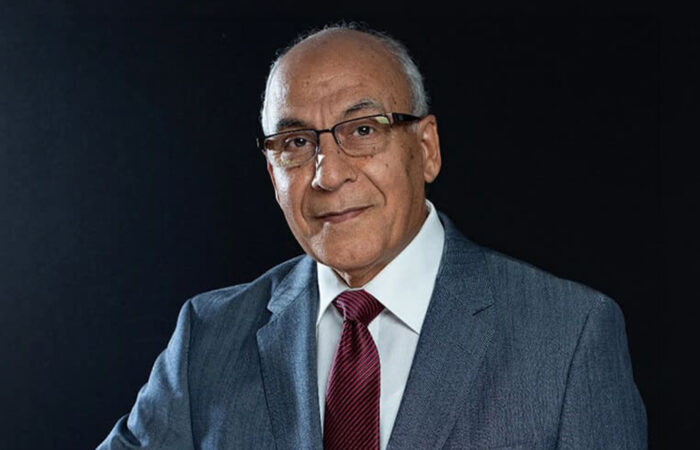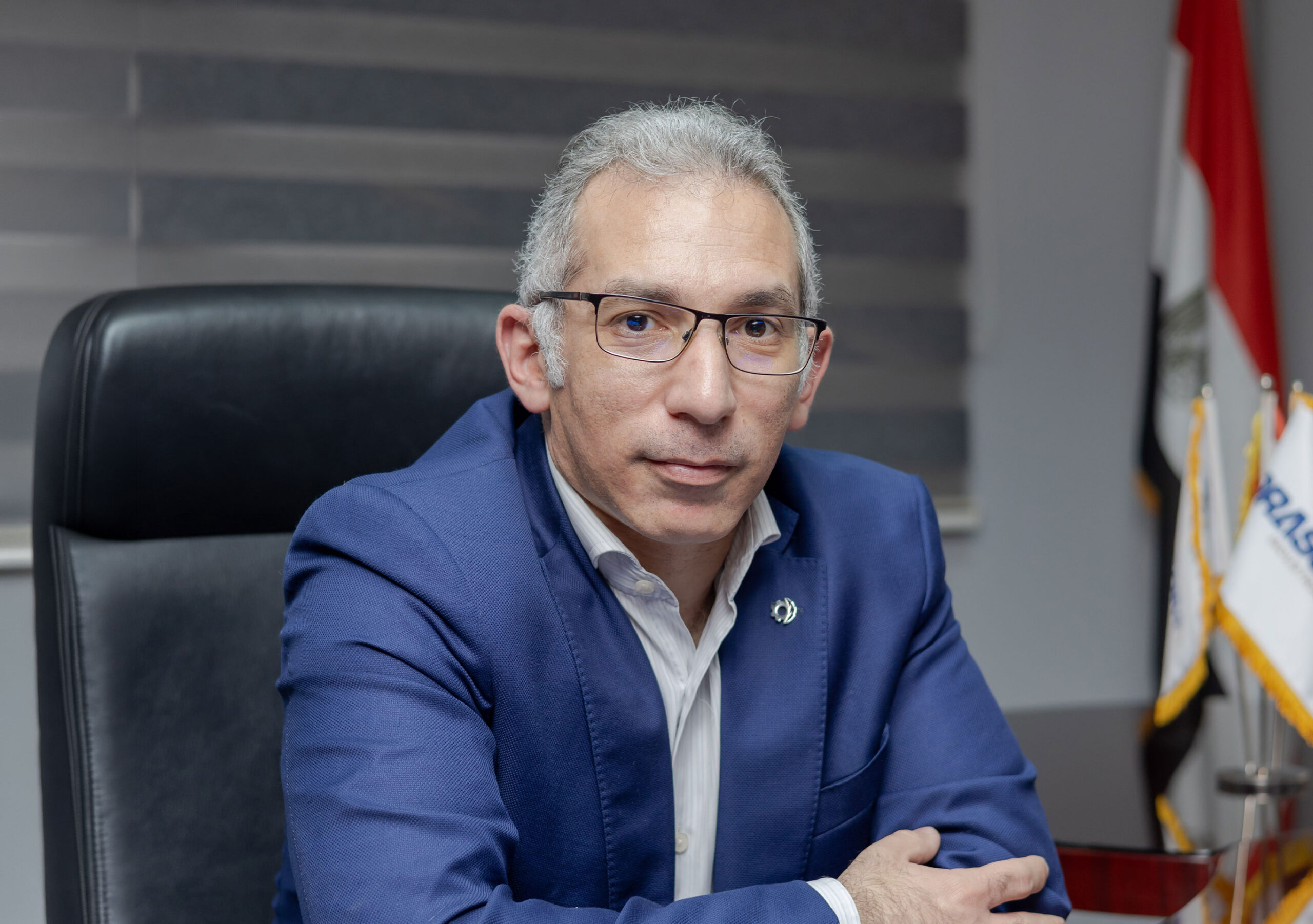

Orascom Industrial Parks is pushing a multi-site expansion strategy as Egypt competes for export-oriented manufacturing, near-shoring and green industry investment. Under Amr El Batrik, the company is building on its Sokhna base with new developments in Abu Rawash and the SCZONE’s Green Industries Hub, while pitching Egypt as a gateway to Africa, Europe and the Gulf. In this interview, the CEO explains the company’s expansion strategy and its vision for Egypt as a regional industrial hub.
Q: What is your vision for the company’s future?
Amr El Batrik, CEO: When I was appointed CEO, I was mandated to set a strategy and vision for the company’s future. We adopted an expansion strategy. At the time, we had only one development, the Sokhna Industrial Development Complex (SIDC), a 10 million square metre project progressing through our development alongside with newly onboarded clients. Our strategy focused on expansion and diversification across different locations.
We studied both domestic and international markets and aimed to establish two additional industrial parks within five to six years. We partnered with Al Ahly Capital Holding, the investment arm of the National Bank of Egypt, to develop a 2.2 million square metre industrial park in Abu Rawash, Giza, where we are the exclusive developer. Development and client onboarding began soon after and continue today.
At the end of 2024, we signed our third project, the GI Hub (Green Industries Hub) in the Suez Canal Economic Zone, Sokhna. This park targets green industries and their backward and forward integrations, serving the Sokhna region and the Egyptian economy. Development began in 2025 after completing all designs, and sales are underway.
Our vision is to continue exploring new opportunities in Egypt and the Middle East. For now, our main focus remains on Egypt and on studying complementary activities to support our industrial parks.
Q: How is the company currently positioned among key stakeholders?
AEB: We position ourselves as pioneers in every aspect. We are Egypt’s first private industrial developer, established in 1998, long before the government introduced the concept in 2007. We were also the first to complete a 10 million square metre development in the SCZONE region, even before the SCZONE Authority was established.
We were the first private industrial developer selected by UNIDO (United Nations Industrial Development Organisation) to collaborate on the eco-industrial parks framework. Trained by UNIDO, we transformed our Sokhna Industrial Park into an eco and green industrial park, achieving 98% of UNIDO’s framework goals in 2025. Thus, we became Egypt’s first eco-industrial park. Our new developments are designed from inception to follow this model, emphasising sustainability, industrial integration and zero-waste practices. For example, our Sokhna park has zero wastewater discharge and strong backward and forward integrations among key industries.
We also host the first green hydrogen project in the Middle East and Africa, which began production a few years ago and made its first export to India in 2024. The project has since signed an agreement to export all green ammonia to Germany and the EU. This initiative is a collaboration between Orascom Construction, Fertiglobe, the Sovereign Fund of Egypt and SCATEC. Fertiglobe, fully owned by ADNOC of Abu Dhabi, operates two plants in our park producing urea and anhydrous ammonia, which are now part of the green ammonia value chain, representing a major UAE investment in our zone.
Given your meetings with ambassadors from India, Turkey and the UAE, what key opportunities do you see for UAE investors and partners with Orascom Industrial Parks?
AEB: As an industrial developer, we provide land with customised utilities and a complete business and industrial environment for investors to establish their projects across our three industrial parks. Two parks focus on exports and industry localisation, while the third, Abu Rawash Industrial Park, serves mainly the domestic market.
For our UAE partners and investors, we offer a full landscape for industrial investment in Egypt. Investors focus on their production and operations, while we handle all external requirements, licensing, administrative processes, logistics and other support outside factory boundaries.
In Sokhna, through our cooperation with SCZONE, investors benefit from significant incentives, including tax, customs and VAT advantages. In Abu Rawash, the proximity to agricultural land creates opportunities for agri-industries to source raw materials locally and from the new agricultural delta being developed by the government, enabling production of processed or packaged goods for local and export markets.
Abu Rawash Industrial Park is developed under the umbrella of GAFI (General Authority of Investment and Free Zones) and operates as an investment zone. It has a dedicated board chaired by GAFI’s CEO to manage licensing and administrative procedures through a one-stop shop within the park, making investment straightforward and efficient.
We consider ourselves the private investment promotion arm supporting the government. We regularly collaborate with GAFI, SCZONE and the Minister of Investment on global missions to promote Egypt as an investment destination.
We believe Egypt, particularly the SCZONE, is not only Africa’s gateway but also a prime near-shoring hub for Europe, Africa and the Middle East. With a population of over 100 million, Egypt offers young, skilled manpower and a strategic location at the crossroads of the Red Sea, the Mediterranean and the Suez Canal. It is only a few hours from the Gulf and within a five-hour flight radius of Europe and North Africa, allowing investors to visit and return home in a single day.
Egypt’s position also facilitates global trade, sitting at the centre of three continents. The country has trade and investment treaties with around 80% of the world and enjoys customs-free access to markets covering over 2 billion people. Combined with low-cost power, utilities and energy, Egypt provides the ideal environment for investment, requiring only capital, expertise and entrepreneurial vision to realise its full potential.
Q: How is the company leveraging Egypt’s growing global investment interest?
AEB: We have several investors launching projects in our industrial parks, starting with four Indian companies in Sokhna. Two are expected to begin operations by year-end, and one, UFlex, a major Indian conglomerate, has already started production in 2025. Another Indian investor will commence production in 2026.
We’ve recently inaugurated new factories in our park, attended by Egypt’s Prime Minister, with another opening scheduled for October 25, 2025, to be attended by the Prime Minister and several ministers. This factory is a Turkish investment in the PVC industry. We also have multinational investors from Japan and the UAE expanding in our zones. Fertiglobe and its consortium are exploring new green hydrogen projects expected to launch soon.
In Abu Rawash Industrial Park, two investors in the beverage industry have begun the design and construction phase, aiming to start production within two years. Another Egyptian investor is developing a logistics project, with more investors of various nationalities expected in both Abu Rawash and Sokhna.
We are also in discussions with several Chinese manufacturers to attract investments in electric vehicles, from golf carts to full-size vehicles, and expect to finalise agreements soon. Additionally, new food and beverage industries are joining Sokhna, primarily for export. While Egypt has long exported fruits and vegetables, the current national strategy focuses on adding more value through processing and manufacturing, which we are actively promoting among industrial investors.
We have signed an agreement with a company to produce frozen fruits and vegetables primarily for export to Europe, a major consumer of Egyptian produce, with other markets also targeted. We are also focusing on the Japanese market, both for exports and to attract Japanese industrial investors. During my recent visit to Japan, I met with several companies interested in investing in Egypt.
Next, we are planning a roadshow in the UAE to engage investors and industrialists, both Emirati and multinational, looking to expand in the region, with Egypt as their ideal destination. The Egypt–UAE partnership has grown significantly in 2025, especially with the Ras El Hekma cooperation and strong political and economic ties between both governments. These relations date back decades, from the era of Sheikh Zayed to today, and continue to deepen.
We encourage UAE industrialists to invest more in Egypt. Our close relationship with DP World, which operates Sokhna Port directly opposite our industrial park, supports this effort. Many of our clients use the port, and we facilitate their logistics coordination. We consider DP World Sokhna one of the best ports in the region and look forward to similar cooperation with Abu Dhabi Ports in Port Said.
Q: How are you approaching sustainability?
AEB: The eco-industrial parks framework focuses not only on being green but also on achieving full sustainability. We view sustainability as more than renewable energy. It is about integrating industries to create closed-loop systems. For example, a producer of anhydrous ammonia should have a neighbouring industry that uses ammonia as an input. We design our parks to align entire supply chains within or near each site.
A company emitting CO₂ should have an adjacent partner that reuses it as fuel instead of releasing it into the atmosphere, as we successfully did with Fertiglobe. This approach reduces emissions, conserves energy and enhances sustainability through industrial integration.
True maturity in an industrial park is also reflected in its community. When people walk through its streets and women commute daily to work, even in remote areas, it demonstrates social sustainability and supports Egypt’s women empowerment goals under ESG standards.
Aligning with Egypt’s Vision 2030 is central to our strategy. We focus on localisation, reducing reliance on imported food, raw materials and industrial goods, while adding value to our natural resources. This integration of environmental, social and economic sustainability defines our long-term vision.
We aim to harness Egypt’s abundant renewable resources, wind and solar power, not only for export to Europe and the Middle East but also for use within our industries. Our current focus is on applying renewable energy for continuous 24/7 production to avoid future restrictions, such as Europe’s carbon border measures, while ensuring all our products are green and reducing pollution in Egypt.
In recent years, Egypt has successfully lowered emissions, and within our industrial park, home to traditionally high-emission sectors like fertilisers, we are achieving near-zero carbon output through integrated systems. Our goal is to reach full carbon neutrality. Over the past 20 years, we have made significant progress toward this vision.
From a sustainability perspective, all wastewater from our 120+ clients are now reused, either by the industries themselves or by us as the developer, for agricultural purposes. As a result, our park features both a productive agricultural area and a green, landscaped environment. We are now exploring ways to channel agricultural output back into industries within the zone, creating a self-sustaining ecosystem that embodies true sustainability.
Q: How have your 20 years of multidisciplinary experience shaped your leadership style?
AEB: Organisations such as NGOs, chambers of commerce and particularly the Egyptian Junior Business Association (EJB) have played a key role in shaping my perspective. Through them, I have engaged with entrepreneurs and investors, understanding their needs and learning how to collectively voice these to the government.
Other associations, such as BEBA, AmCham, AHK and the Egyptian-Japanese Business Council, also help us communicate our requirements and connect with international investors to promote Egypt and our business. Each nationality and culture has distinct needs and approaches, and through these organisations, we have gained a deeper understanding of their challenges in Egypt. This helps us address issues proactively.
We regularly participate in promotional roadshows with these associations abroad and host their investors in Egypt to showcase opportunities. At Orascom Industrial Parks, we welcome not only cooperation but also partnerships with investors from various countries to share risks, build confidence, and ease their entry into the Egyptian market by helping them understand the local culture and business environment.