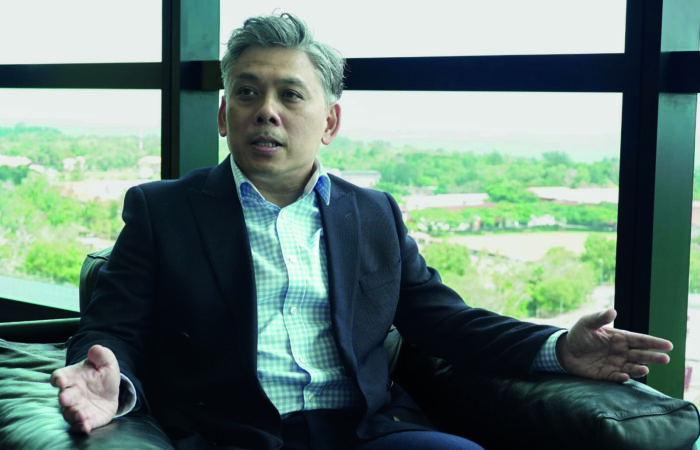
Investment in digitalization is bringing about a transformation in Brunei, with the country’s transport, communication and information technology networks the backbone of a digital nation.
The 2025 Strategic Plan drawn up by Brunei’s Ministry of Transport and Infocommunications (MTIC) aims to leverage technology and connectivity to enhance the lives of the country’s citizens. Focusing on five clusters – transportation, information and communication technology (ICT), science, technology and innovation – the Ministry is pursuing initiatives designed to boost digitalization across society, government and the economy. “This plan aims to turn the country into a connected, smart nation,” explains the Minister of Transport and Infocommunications Yang Berhormat Pengiran Dato Seri Setia Shamhary Pengiran Dato Paduka Haji Mustapha.
Within these overriding goals, the Minister emphasises three key objectives: safety and security of the transport system and cyber environment, enhancing public wellbeing through delivery of efficient and reliable services, and fostering sustainable growth to bolster the national economy. Key initial milestones have already been reached, including the launch of the 5G mobile network, increased broadband speeds nationwide, expanded rural access to broadband and mobile networks, and delivery of the government’s digital information hub – with digital ID and payment gateways slated for completion by year’s end. “These initiatives are pivotal in fortifying and expanding our digital economy.”
An overhaul of public transportation has proved more challenging, as a result of Brunei’s urban development landscape, demographics and lack of high-density population centres. Here, however, the Ministry’s synergies come to the fore, leveraging on technology to unlock new solutions. The planned implementation of a smart transport management system enables enhanced efficiency and accountability, while targeted support measures such as tiered pricing mechanisms are designed to make transportation attainable to all segments of society. To these ends, development of a three-tiered system is underway, consisting of a core bus network, shared ride services for areas without coverage and for ‘last mile’ journeys, and traditional taxi services, incorporating e-hailing and other flexible options.
MTIC’s work is also central to Brunei’s foreign direct investment priorities, with ICT and transportation being two of the sectors targeted for growth given Brunei’s significant potential as a logistics hub and gateway to the wider ASEAN market.
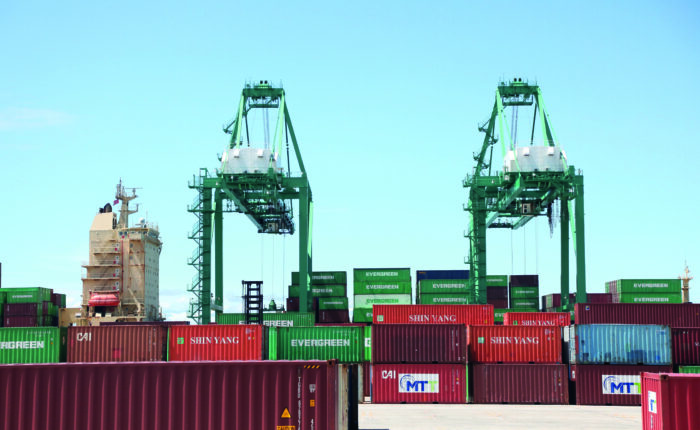
As Brunei’s strategically located seaport, Muara Port offers access to the Indian, Pacific and Atlantic oceans and is an important gateway to trade across Southeast Asia.
Muara Port Company (MPC) oversees the management of the port and is responsible for bolstering economic ties and fostering collaborations among the countries of Brunei Darussalam, Indonesia, Malaysia and the Philippines (BIMP-EAGA). MPC has embarked on ambitious port expansion plans which are set to transform operations over the next few years. “We have taken extensive steps to enhance and optimize our shipping services which includes collaborating closely with key companies to explore route expansion and increased vessel frequency to Muara Port,” says COO Fazilah Yassin. “Our goal is to adapt to the evolving needs of the shipping industry and position ourselves as a central hub and gateway in the region.”
Plans include the expansion of the site to over 16 hectares, as well as the construction of a new 250-meter container terminal, doubling the port’s current capacity. The berthing area will also be deepened to accommodate container vessels up to 30,000 TEUs, with a designated free-trade zone to streamline operations. The deployment of technologies such as Terminal Operating Systems (TOPS) and Electronic Data Interchange (EDI) systems will enhance efficiency and capacity – crucial for attracting clients and meeting evolving sector needs. “Modernizing our facilities provides a competitive platform for Brunei’s businesses and the region,” continues Fazilah, explaining the strategy’s wider significance. “Efficient IT platforms and digitalization ensure seamless operations, aligned with the Wawasan Brunei 2035 national vision for economic diversification and sustainable development.”

Brunei is Southeast Asia’s third-largest crude oil exporter, and Muara Port also serves as a vital hub for vessels engaged in oil and gas activities, providing essential services such as crew changes and equipment handling. The port’s role in exporting urea, a downstream product of oil and gas, further contributes to Brunei’s economy, with last year’s volume reaching nearly 600,000 tonnes.
New opportunities for growth and investment are emerging too. Brunei’s exports to the UAE are on the rise, with Muara Port’s strategic position providing a convenient gateway for shipping liners to explore new trade routes and expand their operations. “Encouraging collaboration between Brunei and UAE-based shipping companies can lead to innovation in logistics and the creation of efficient supply chains,” explains Fazilah, outlining a likely route for trade expansion. “Muara Port can serve as the entry point for Brunei’s halal food exports into the UAE, capitalizing on the reputation of both countries for high-quality, ethically sourced products.” The recently established container shipping connection with Qinzhou underscores considerable potential for Brunei, particularly in the context of China’s expansive Belt-and-Road Initiative. This development solidifies Muara Port’s pivotal role as a vibrant and strategically positioned transport hub, fostering enhanced international trade partnerships and cooperation.
The port’s green credentials are another area of focus. New initiatives include the use of electric powered terminal equipment – like quay cranes and rail-mounted gantry cranes – for the new terminal and the use of LED lighting to illuminate the facility and office spaces. Fazilah’s long-term strategy also emphasizes efficiency, infrastructure, and technology integration to drive change and meet evolving global trade demands. “Streamlining operations is my top priority, with continuous improvement essential to meet growing cargo volumes and industry demands,” he says. “Setting ambitious targets drives our performance – we aim to increase cargo throughput exponentially this year, reflecting our confidence in achieving this goal through diligent efforts and collaboration.”