Originally set up as part of Brunei’s bid to accelerate mobile provision, DST celebrated a fresh milestone in 2020 when the company transitioned from traditional telco to full-service ‘Techco’ as part of a far-reaching national digitalization program. This pioneering strategy saw the consolidation of Brunei’s fibre and mobile infrastructure under the purview of a single wholesale network operator – state-owned Unified National Networks (UNN). DST had long aspired to expand into the fibre-to-home business; the national push for sector transformation presented the company with a timely opportunity for advancement. DST became a satellite entity, relinquishing its previously extensive infrastructure responsibilities and enabling it to pivot towards the pursuit of lucrative fibre business opportunities.
Now equipped to provide fixed and mobile services, together with lease lines, DST’s new role extends beyond provision to encompass product development, marketing, sales, distribution and customer service. It is a shift in focus that has parallels across Southeast Asia, where many countries are similarly reassessing and restructuring their regulatory frameworks. Progress necessarily involves a comprehensive overhaul of IT infrastructure. But, by leveraging digital solutions in this way, telcos can optimize processes, streamline operations, and enhance customer interactions across multiple channels. This evolution underscores the industry’s transition toward digitalization and the exploration of new revenue streams beyond basic connectivity.
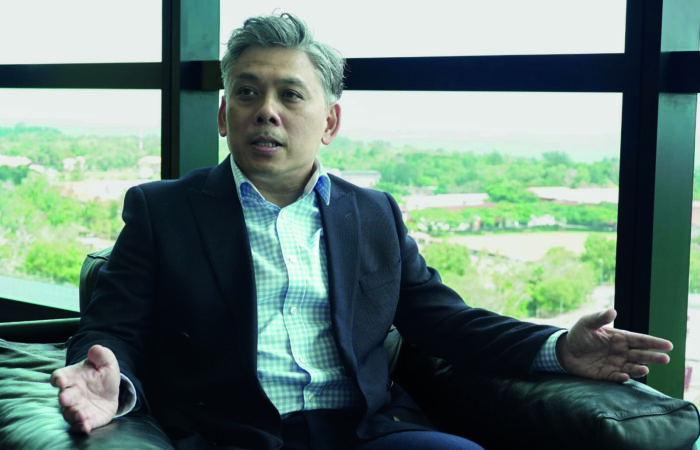
CEO Radin Sufri Radin Basiuni reflects on the company’s journey to date and explains his vision for DST’s future.
Q: What are DST’s strategic objectives and aspirations?
The mobilization of DST marked a significant change in the telecommunications landscape. The shift from traditional telecoms to a more tech-centric approach also invites diversification into adjacent sectors – fintech, for example. DST aims to future-proof its business model by capitalizing on emerging opportunities in digital payments and e-commerce, as it approaches but has not yet reached a saturation point in traditional telco services. The company’s success in Brunei serves as a blueprint for global expansion, particularly in regions with untapped fibre infrastructure. By capitalizing on the groundwork prepared by UNN and embracing digital innovation, DST is poised to emerge as a leading player in the sector, securing its legacy as a traditional telco to become a dynamic tech-driven enterprise.
Q: How can DST increase its market share and geographical reach?
In Brunei, there is a concerted effort to foster innovation and expand service offerings. This includes cultivating a pool of developers, introducing new functions such as UX/UI design, and embracing cloud-based solutions to streamline operations. By partnering with established digital players, banks, and airlines, DST aims to embed its telco services within existing digital ecosystems, so expanding its market reach. A notable milestone for DST is its transition to a fully cloud-based infrastructure, a move that signifies a departure from traditional ownership models towards a more agile, scalable approach. Looking further ahead, DST’s global ambitions centre around two key products: a turnkey fibre-in-a-box infrastructure solution and a super app that transforms existing mobile applications into comprehensive digital platforms.
Q: How could these super apps raise DST’s global profile?
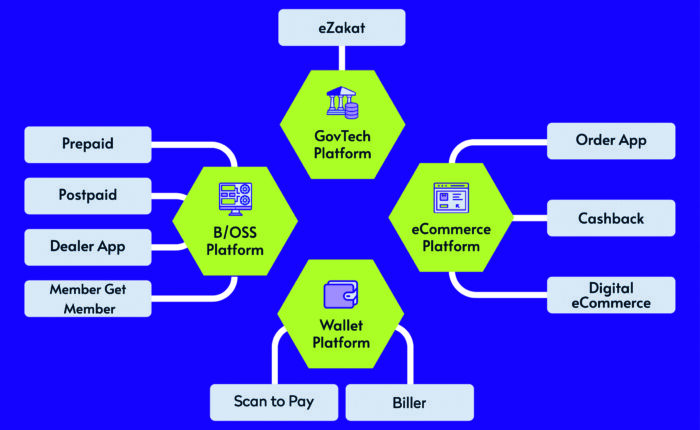
The decision to venture into fintech reflects our desire to engage users more frequently and build a robust digital ecosystem. Our fintech strategy transcends platform provision; we offer a playbook detailing the implementation of both telco and non-telco products. In a bid to resolve the decoupling between mobile data consumption and revenue growth, we’re hoping to emulate the success of super apps like GCash, TikTok, and Shopee. While these platforms have diversified into various verticals, our focus lies in expanding into payments, e-commerce, and government technology (GovTech). For us, the essence of a telco-based super app lies in its ability to cater to diverse digital needs. Any entity with a digital customer base has the potential to evolve into a super app, contingent upon the choice of verticals and strategic direction. While the trajectory of super apps may vary, our commitment lies in leveraging our digital infrastructure to offer innovative solutions that cater to the evolving needs of our users.
Q: What specific collaborative initiatives do you envision between your company and GCC players?
Two types of partners emerge in this scenario. Some simply utilize existing fibre infrastructure to expand previously untapped revenue streams. Some, however, possess significant fibre infrastructure but have yet to fully capitalize on its potential. By leasing out additional capacity, they stand to generate substantial additional income. In targeting new markets, DST’s focus lies primarily in the Middle East, with Bahrain, Oman, Qatar, and Kuwait emerging as key prospects. Regulatory environments play a crucial role in market selection, with countries offering regulated broadband access being of particular interest. Through strategic partnerships and technological innovation, DST is poised to redefine the telecommunications landscape on a global scale.
Q: Are there plans to expand operations or establish collaborations in other regions?
The current broadband landscape in certain Gulf countries presents a challenge due to limited availability. Bahrain, Oman, Qatar, and Kuwait are strategically important for our super app strategy, which aims to offer comprehensive tech solutions tailored to local needs. By leveraging existing mobile operator infrastructure, we can streamline access to government tech solutions and provide value-added services. Specifically, Bahrain shows promise due to impending regulatory shifts. Additionally, while less mature than the EU, ASEAN markets offer opportunities for expansion.