Timor-Leste is preparing a Blue Economy Policy and Strategic Action Plans on opportunities to leverage finance for sustainable blue growth.
The roadmap explores the role the blue economy can play in accelerating sustainable economic development across four key pillars: social capital; infrastructure development; economic development; and institutional frameworks. It analyses how domestic and external financial resources can be leveraged in innovative and strategic ways to support the blue economy.
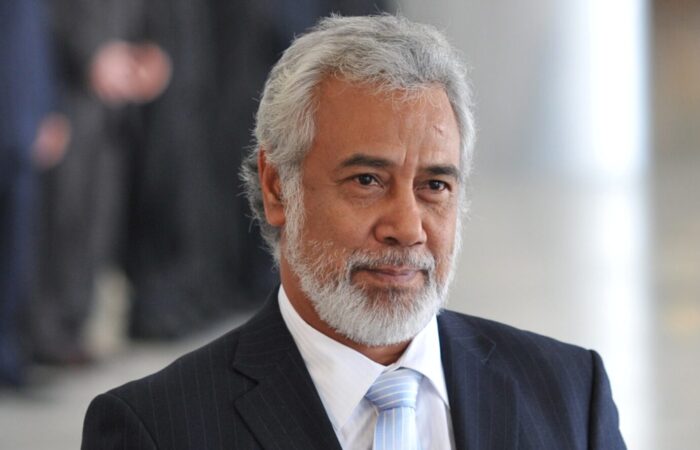
Prime Minister Xanana Gusmão, through the Timor-Leste Land and Maritime Boundary Office, is responsible for actioning the plan. Prior to being elected in May 2023 Gusmão, was the country’s special representative for the blue economy. Thanks to his deep understanding of this topic, he is now developing and coordinating the implementation of the nation’s blue economy policy.
“We want to attract public and private partners from the UAE and around the world to be a part of this historic chapter in our nation’s development,” says Gusmão. “We believe that by investing in the health of marine ecosystems and the preservation of biodiversity, we are not only guaranteeing the sustainable use of natural resources for the benefit of our communities but also for the planet.”
“Our policies on the blue economy will ensure we responsibly use marine resources in the seas surrounding Timor, transforming them into viable business opportunities that generate revenue for the state and jobs for our people,” Prime Minister Gusmão says. “The Blue Economy Policy will include recommendations for marine protected areas to conserve coral reefs, protect and reforest mangroves and ensure sustainable fisheries.”
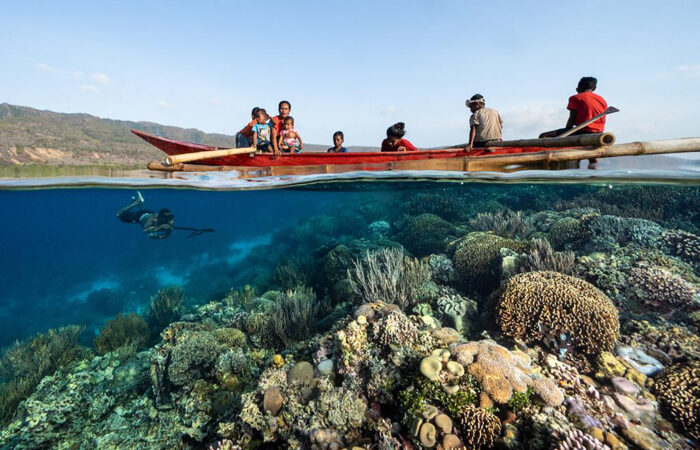
One such location is Ataúro Island which lies 20 kilometres across the Wetar Strait from the capital Dili. The island is surrounded by coral reefs that attract scuba divers and snorkel enthusiasts from around the world. The Government has recently announced the establishment of a Marine National Park around Ataúro Island. The park boundaries will be based on scientific advice and any ‘no-take’ areas within the park will be determined after an extensive community consultation.
Gusmão says the plan will market Timor-Leste as a destination for divers, researchers, and those wanting to experience the breathtaking beauty of life under our sea. “We are also lucky to be on the marine corridor that offers safe passage to different species of whales, dolphins and dugongs annually, from October to December.”
Despite abundant fish stocks and a variety of coastal habitats, Timor-Leste’s fisheries represent less than 0.5% of its GDP and the country is largely dependent on imports to meet its seafood demands. However, this is set to change dramatically in the years ahead. Timor-Leste is promoting a sustainable increase in fishing and aquaculture production and seeking investors in seafood processing facilities.
“Timor-Leste has a coastline of more than 700 kilometres and an Exclusive Economic Zone of about 72,000 square kilometres in which we have the right to fish and other marine life. Administratively, the nation has twelve municipalities and one Special Administrative Region of which all, but two municipalities have direct access to the coastline,” says Gusmão.
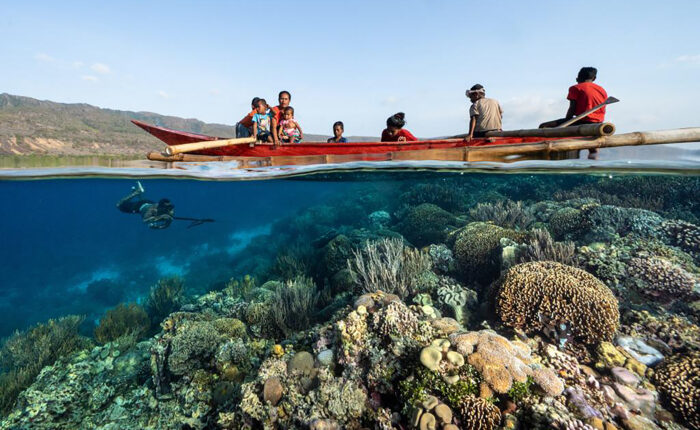
“The government is undertaking a review of the fisheries sector to identify priorities and strategies for sustainable growth of the industry. Fish production was 50 metric tons a year in 2009 and the goal is to increase that to 12,000 metric tons or more by 2030. We are introducing measures to regulate minimum mesh sizes of nets and to control fishing during breeding seasons.”
While it is important to grow the fisheries sector, the government is ensuring that it does so whilst also protecting the natural habitat. This is especially important to ensure that it remains a sustainable sector for decades to come.
“Existing commercial licenses will be reviewed to better define how parties utilize Timor-Leste’s marine resources in the medium and long term, balancing the need to generate revenue for the state and protect and preserve marine resources and assets,” says Gusmão.
“The key is a sustainable fishing industry. Legislation to reduce illegal fishing, especially by foreign vessels, will be introduced along with improved surveillance.
“The government is also investing in sustainable deep-sea fishing for export and establishing fishing centres along the coast, providing better access to boats, equipment, and training. We are establishing a fishing academy in the Municipality of Manatuto on the mid-north coast.
“We are looking for international partners to establish links to international markets, strengthen our transport system and chilling centres, and develop essential infrastructure such as harbors, quays and docking facilities.”
International collaboration is vital to the success of Timor-Leste’s plans for the blue economy and the country plans to gain knowledge from the countries that make up the Association of Southeast Asian Nations (ASEAN). The block of 10 member states launched a blue economy strategy in 2023 with the aim to accelerate economic growth among its members.
The strategy aims to promote sustainable and inclusive economic and social development related to marine and freshwater activities and livelihoods. The member states believe this will translate into economic growth while remaining environmentally sustainable.
“Timor-Leste is scheduled to become a full member of ASEAN in 2025 and we look forward to working with our ASEAN neighbours on knowledge-sharing, joint research initiatives, skills development and training, business opportunities, and regional strategies for sustainable marine development,” says Gusmão.