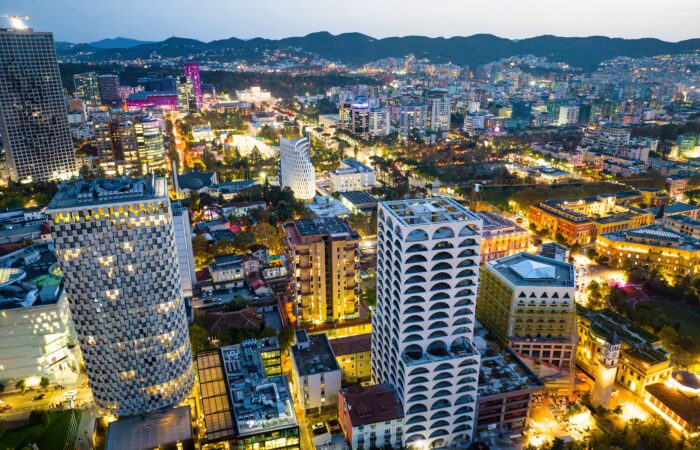
Foreign investment in Albania has doubled in the last six years, led by companies from Europe and the US.
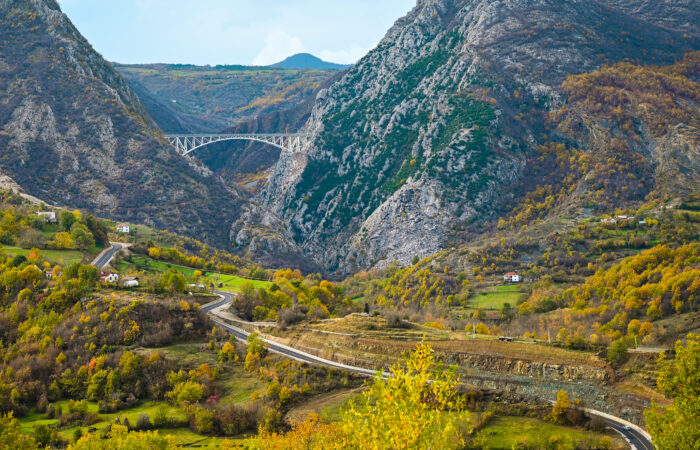
Strategically located at the crossroads of northern and southern Europe, Albania has long served as a vital link in some of the continent’s most important trade routes. Its historical significance, from the ancient Greeks and Romans to the Ottoman Empire, reflects its role as a gateway for commerce and cultural exchange.
Today, Albania’s well-educated and reform-minded population is welcoming a new generation of investors. The main draws include not only the country’s own fast-growing economy but also the easy, low-cost access that it offers to larger European markets. According to the country’s central bank, the stock of foreign investment in Albania has more than doubled in the last six years and now stands at over $15 billion, led by sectors such as real estate, mining, banking and insurance.
The largest investment flows come from the European Union, which began accession negotiations with Albania in 2022. According to the European Commission, inflows of foreign direct investment (FDI) from the EU increased to 55.4% in 2023, up from an average of 51% in 2019-20222.
Investors from the US are not far behind, boosted by a 2020 agreement to increase trade and investment. “In the last four years, US investment in Albania has almost tripled, from $89 million to over $300 million,” says Neritan Mullaj, executive director of the American Chamber of Commerce in Albania.
In recent years, the Albanian government has rejected closer ties with China and prioritized relations with the West. Partly as a result, investments from the US are expected to accelerate in the coming years.
“We continue to make progress on enhancing business ties and bringing more investment in both countries,” the US embassy’s outgoing chargé d’affaires David Wisner said in July 2024. “Big American companies are looking at new investments here and we hope those will be soon realized.”

The Albanian Investment Development Agency (AIDA) is intensifying its efforts to reach out to US investors and strike new partnerships with American companies.
Q: What is the mission of AIDA?
Our goal is to directly contribute to diversifying sectors and facilitating targeted investments in Albania. From the initial stage of exploring investment ideas and conducting market intelligence and analysis to the successful realization of their projects, we remain engaged. Even after project implementation, we continue to support investors in addressing any challenges they face in achieving their objectives in Albania. From inception to completion, we are committed to guiding and partnering with them every step of the way.
Q: How does AIDA reach out to foreign investors, especially in the US?
Outreach campaigns have been among our most effective efforts. For example, last year, we conducted an outreach campaign in Spain focused on the tourism sector. This initiative yielded tangible results, including follow-up meetings and visits to Albania by interested parties. We plan to adopt a similar approach in the US, targeting key sectors that we want to develop.
Q: Which sectors are a priority?
We are actively working to ensure balanced development across multiple sectors. Our aim is not only to support tourism but also to attract investment in a diverse range of industries. Technology is a key focus area, particularly in digital services, startups, ICT, and manufacturing. Agriculture remains a traditional sector with significant potential.
Energy is another promising sector, given Albania’s abundant natural resources in hydro, wind, and solar power. We are actively seeking investments in these areas, leveraging expertise from markets like the US.
Q: What opportunities do you see in high-tech sectors?
We intend to organize outreach campaigns in the US, specifically aimed at technology and tech park collaborations. We have identified several international tech brands operating in the US, and we will focus on engaging with them. Our plan involves pinpointing potential partners, assessing their interests, and presenting the opportunities available in Albania. This will include organizing physical meetings in the US to provide detailed information about our initiatives, the business environment in Albania, and the specific opportunities we offer. Our objective is to invite these companies to visit Albania and explore these opportunities firsthand.
Q: What incentives or tax breaks does Albania offer?
We offer fiscal incentives tailored to specific sectors. Additionally, we provide attractive fiscal benefits in three designated economic zones. One of these zones is dedicated to technology, specifically the IT, ICT, and BPO sectors. In this zone, there is a 0% VAT rate, a 10-year tax exemption on profits, reduced social contributions, and access to training programs. These packages are highly appealing to technology investors. The other economic zones cover a broader range of industries.
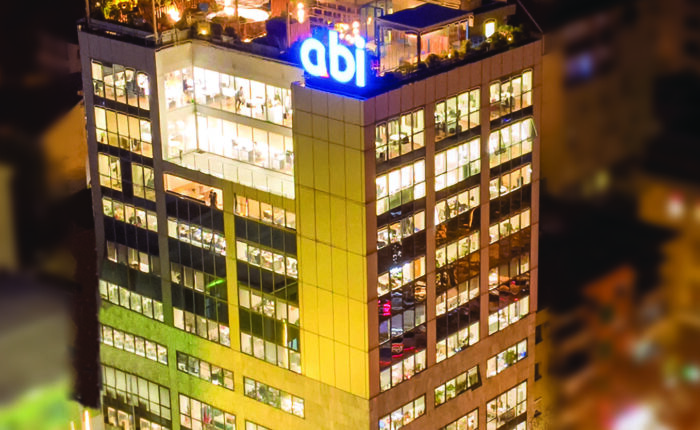
The American Bank of Investments (ABI) is Albania’s third most profitable bank, marking a transformational success story in the sector.
Q: What factors have driven ABI’s impressive growth trajectory?
One thing that has become very clear is that the best approach combines broad international experience with strong local roots and quick decision-making. This applies not only to me but also to my team—many of whom have worked in the United States and other countries. They bring valuable experience to a much smaller market like Albania, where many challenges they encounter have already been addressed elsewhere.
Many entrepreneurs prefer to communicate in Albanian, and this local connection fosters trust and comfort in our interactions. In a small market like this, such personal connections make a significant difference. And the presence of NCH Capital as our private equity partner further simplifies our decision-making process, giving us a significant edge compared to other banks.

What is ABI’s current strategy for supporting small businesses?
We recently acquired NOA, the New Opportunity Fund, what I believe to be the best non-bank financing company dedicated specifically to small businesses. This acquisition allows us to better serve the small business segment, which has a very strong growth potential.
What opportunities would you highlight to US investors interested in Albania?
Albania represents a unique opportunity. There is a strong Albanian-American diaspora that has already begun to contribute significantly. There are also a few American businesses growing here, from what I understand. However, there is still immense potential, particularly in tourism and shoreline residential development.
Albania’s natural beauty is undeniable, and the tourism industry has finally started to take off. There are some Albanian Americans investing here, but institutional involvement is still limited. Marriott has now entered the market; partnerships with such brands would be highly beneficial, and we are eager to collaborate.
What makes Albania an attractive destination for foreign direct investment?
Tourism in Albania is still in its infancy. Currently, only 13% of the coastline is developed—just a thin strip along the shore. That leaves enormous room for growth and development. Foreign management expertise and the ability to anticipate the country’s trajectory over the next few years remain key competitive advantages.