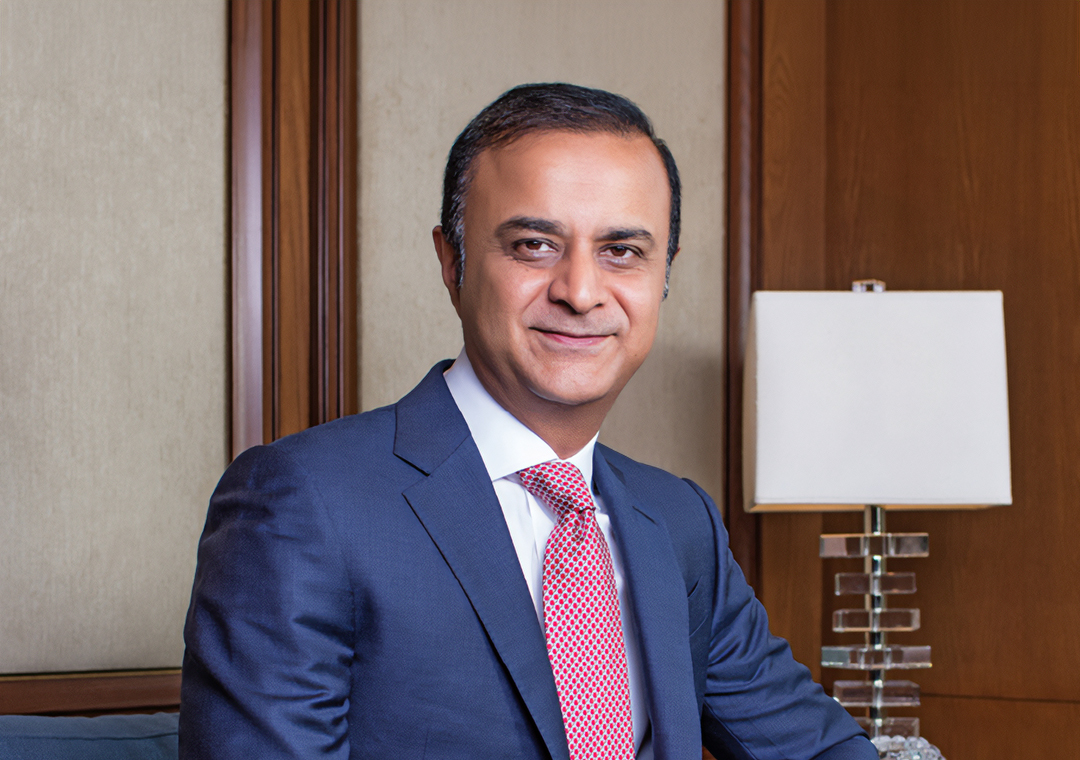
Lucky Cement is Pakistan’s largest cement manufacturer and the anchor business of the Lucky Group, with production operations across Pakistan, Iraq and the Democratic Republic of Congo. Under Muhammad Ali Tabba’s leadership, the company has expanded from cement into a broad industrial portfolio spanning energy, textiles, chemicals, automobiles, mobile phone assembly and pharmaceuticals, supported by a strategy of low leverage and international capital-market access.
Read the exclusive interview below.
Q: What do you consider to be your biggest achievements as CEO?
Muhammad Ali Tabba: By the time I succeeded my late father as CEO of Lucky Cement in 2005, I wasn’t walking into unfamiliar territory. I had the advantage of nearly 15 years of leadership experience, across different geographies and industries before taking on the role.
In 2005, when I took charge, Lucky Cement was already engaged in major expansion projects. Those projects were completed by 2007, and they doubled our capacity. That moment was transformational: we became the largest cement company in Pakistan.
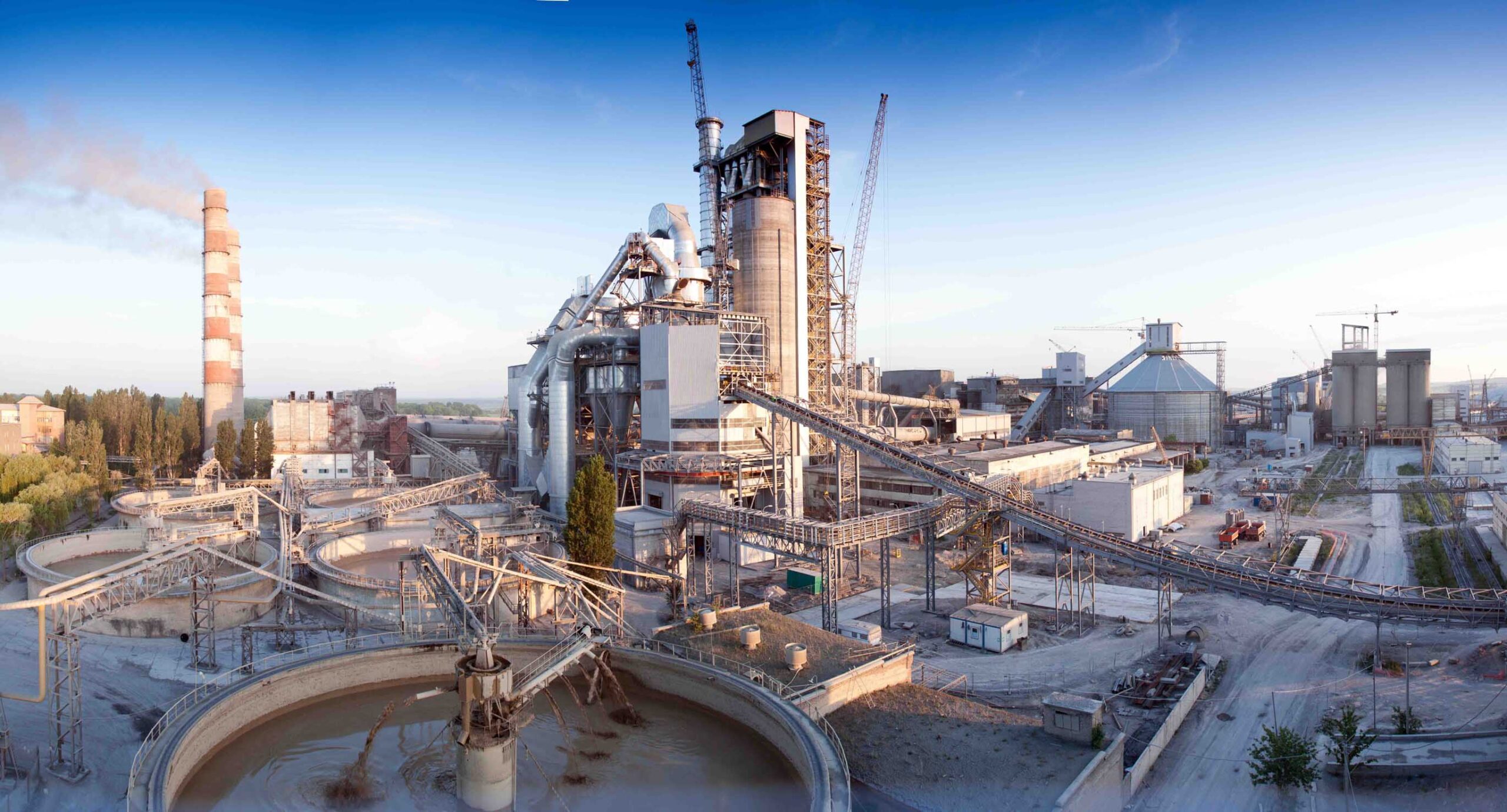
From there, we never looked back. Today, Lucky Cement alone has a production capacity of about 15.3 million tonnes inside Pakistan, and close to 6 million tonnes outside Pakistan, giving the group a total cement capacity of around 21 million tonnes. This scale places us not just at the top domestically but also as a significant regional player.
Another milestone was our internationalisation. In 2008, we listed Lucky Cement on the London Stock Exchange. That was a strategic decision because it was about elevating our corporate profile, adopting international governance practices, and showing global investors that a Pakistani company could meet the highest standards of transparency and compliance.
Then, in 2012, another turning point came. Imperial Chemical Industries (ICI Pakistan), which had been part of the British chemicals giant, decided to divest from Pakistan. We saw this as an extraordinary opportunity. ICI was a diversified business with five major segments: polyester staple fibre, soda ash, pharmaceuticals, chemicals and life sciences. For us, it was a natural extension, because it not only fit our long-term diversification strategy but also gave us immediate scale in entirely new sectors.
Acquiring ICI was about learning from their systems, culture and global exposure. ICI had been run as a multinational, with strong governance frameworks, efficient processes and a global mindset.
Since then, diversification has been our hallmark. Cement is still the backbone, but today the Lucky Group spans textiles, energy, chemicals, automobiles, mobile phone assembly, and pharmaceuticals. More recently, we also acquired Wyeth Pakistan and Pfizer Pakistan, two of the oldest and most respected pharmaceutical names in the country. That cemented our place in the healthcare sector and positioned us to play a bigger role in meeting the needs of Pakistan’s growing population.
All these steps, from Iraq in 1991, to Yunus Textiles in 1998, to Lucky Cement in 2005, to London in 2008 and to ICI in 2012, are part of a continuous journey.
Q: How do you balance short-term financial performance with long-term growth?
MAT: It really comes down to discipline and having a clear philosophy. From 2005 to 2019, our revenues grew nearly tenfold. That kind of growth does not happen by chance; it requires both vision and a framework for decision-making. For us, growth was never about cement alone. While cement has always been the backbone, we consciously branched into automobiles, power generation, mobile phones and international markets in Africa and the Middle East. Each of these moves was carefully timed and designed to strengthen our resilience.
One of the most important principles that has guided us is our financing strategy. We believe in relying more on equity and less on debt. This is unusual in a market like Pakistan. By investing our own money, we avoid being overleveraged, and this shields us from the impact of the country’s frequent boom-and-bust cycles. We have the liquidity and financial breathing space to keep investing, even during downturns.
Q: How do you approach sustainability?
MAT: Sustainability has always been a priority for us, because it makes long-term business sense. For Lucky Cement and for the wider Lucky Group, it is not something we do on the side but has always been and remains at the core of our business. This is not a buzzword for us, but an embedded part of our strategy.
We have invested heavily in renewable energy. Today, our green portfolio includes more than 150 megawatts of waste heat recovery (WHR), solar and wind capacity. We were one of the first companies in Pakistan to install large-scale wind turbines and solar plants for captive use. In addition, we have invested in waste heat recovery plants, which not only reduces our carbon footprint but also lowers our operating costs.
We recycle water extensively, ensuring minimal waste in our manufacturing processes. We also recycle plastics and industrial waste. For example, discarded plastic bottles are processed into flakes, which are then turned into polyester fibre in our textile division and used to manufacture garments. This is a practical example of how we close loops across our businesses, turning waste into value. For us, sustainability is woven into our entire growth model—it is the foundation of how we think about the future.
Q: Could you elaborate on your group’s social initiatives?
MAT: On the social side, we have always felt that as one of the country’s leading groups, we carry a responsibility to contribute to society at large. Through the Aziz Tabba Foundation, we run two major hospitals in Karachi: the Tabba Heart Institute and the Tabba Kidney Institute. These are not-for-profit facilities, offering state-of-the-art healthcare to thousands of patients every year, including those who cannot afford treatment. We support education through scholarships, school development and vocational training, helping Pakistani youth find employment, with a special focus on girls’ education through these initiatives.
So whether it is environmental sustainability through clean energy and recycling, or social sustainability through healthcare, education and employee welfare, these initiatives are central to how we see ourselves. We are building businesses for profit, yes, but also for purpose.
Q: How would you describe Lucky Cement’s identity and market positioning today?
MAT: Lucky Cement—and the broader Lucky Group—is, at its heart, a family-owned business. But it’s not run in the old-fashioned way, where everything is controlled centrally by the family. We’ve made it a point to blend entrepreneurial spirit with professional management. That combination is our biggest strength. The family provides vision, values and the agility to seize opportunities, while professional managers bring expertise, governance and operational excellence. This balance is what allows us to grow at the pace we do, without losing discipline.
In terms of market philosophy, we have a very clear rule: in whatever business we enter, we want to be among the top three players. If you are number ten or fifteen in a market, your contribution is insignificant—you’re just another participant. But when you’re among the top three, you have influence. You shape industry standards, you attract talent and you earn investor confidence. That is the position we aim for.
Take cement, for example. Domestically, we are the largest player in Pakistan, with over 15 million tonnes of installed capacity. Internationally, we operate in Iraq and the Democratic Republic of Congo. In Congo, we are the largest cement producer. In Iraq, after our recent expansions, we are now among the top three.
In soda ash, we are the biggest player in the country. In textiles, through Yunus Textile Mills, we are the second largest exporter from Pakistan. In pharmaceuticals, when we first entered the sector around 2012 through the ICI acquisition, we were ranked in the low twenties. Today, we are already number 12. Our goal is to climb into the top three to five in the coming years.
Our market positioning is not about being present everywhere, but about being relevant and significant wherever we choose to operate.
Q: How important are Gulf-based partners and investors for Lucky Group?
MAT: The UAE plays a strategic role for us, but not in the conventional sense of being a production market. We don’t currently operate cement manufacturing facilities there, because the UAE is already a mature, well-supplied market with relatively stable demand. Cement, by its nature, finds its highest growth in countries that are building rapidly—nations emerging from underdevelopment or rebuilding after conflict.
That is why we have concentrated our manufacturing investments in places like Iraq and the Democratic Republic of Congo. These are markets with long-term growth trajectories, where infrastructure is still developing.
The UAE, for us, is instead a regional hub. Through the free zones, we have established holding companies and trading arms that serve as gateways for our international operations. Being headquartered in Karachi, it is important for us to also have a footprint in the Gulf, because the UAE provides access to global logistics, finance and talent. Dubai in particular serves as a management and networking hub—close to investors, financial institutions and regional decision-makers.
So while we don’t manufacture cement there, the UAE is still critical to our business. It allows us to coordinate international operations, to access global capital markets and to be present in a region that is increasingly important to global trade.
Q: Why should international investors consider Pakistan?
MAT: I think we are now at an inflexion point. Efforts are being made to dismantle non-state actors, to strengthen internal security, and to build stronger relationships with neighbouring countries.
At the same time, Pakistan offers fundamentals that are hard to ignore. We are a nation of 250 million people, the fifth-largest population in the world. More than 60 percent of that population is under the age of 30. This demographic dividend represents one of the largest young consumer and labour markets globally.
We are also blessed with natural resources and a geographic position that connects South Asia, Central Asia and the Middle East. Whether it is agriculture, mining, tourism, information technology or manufacturing, Pakistan has sectors that are still underdeveloped but hold massive potential.
What Pakistan needs now is a paradigm shift. We must move away from short-term policies driven by political cycles and create consistent, long-term frameworks that give investors’ confidence. Whether it’s taxation, energy tariffs or investment incentives, predictability is key.
I would also emphasise that foreign investors often follow local investors. If you want global capital to come in, you need to first mobilise domestic capital. When local businesses are willing to invest their own money, it sends a powerful signal that confidence is returning.
My message to the international community is simple: Pakistan is open for business. With reforms, policy consistency and security improvements, the trajectory will be upward. This is a market that cannot be ignored, and those who enter early will be best positioned to benefit from the growth that lies ahead.
Q: How have your experiences across such diverse industries shaped your leadership style?
MAT: Leadership, in my view, is something that is shaped over time by your experiences, challenges and responsibilities. I have now been in business for over three decades, and during that time I’ve seen industries expand and markets transform. Each cycle, good or bad, has added to my understanding and shaped the way I lead.
Running different types of businesses forces you to deal with very diverse challenges. Each sector has its own dynamics, its own stakeholders, its own risks.
Experience gives you confidence, but it also gives you humility. You learn that not every decision will be perfect, but what matters is the ability to course-correct quickly and not be paralysed by uncertainty. Leadership, at the end of the day, is about providing direction when others are unsure. It’s about saying: “Yes, this is a challenge, but here is the way forward.”