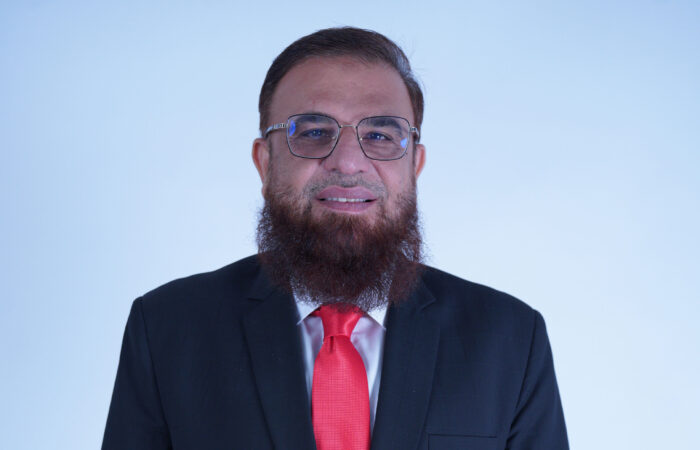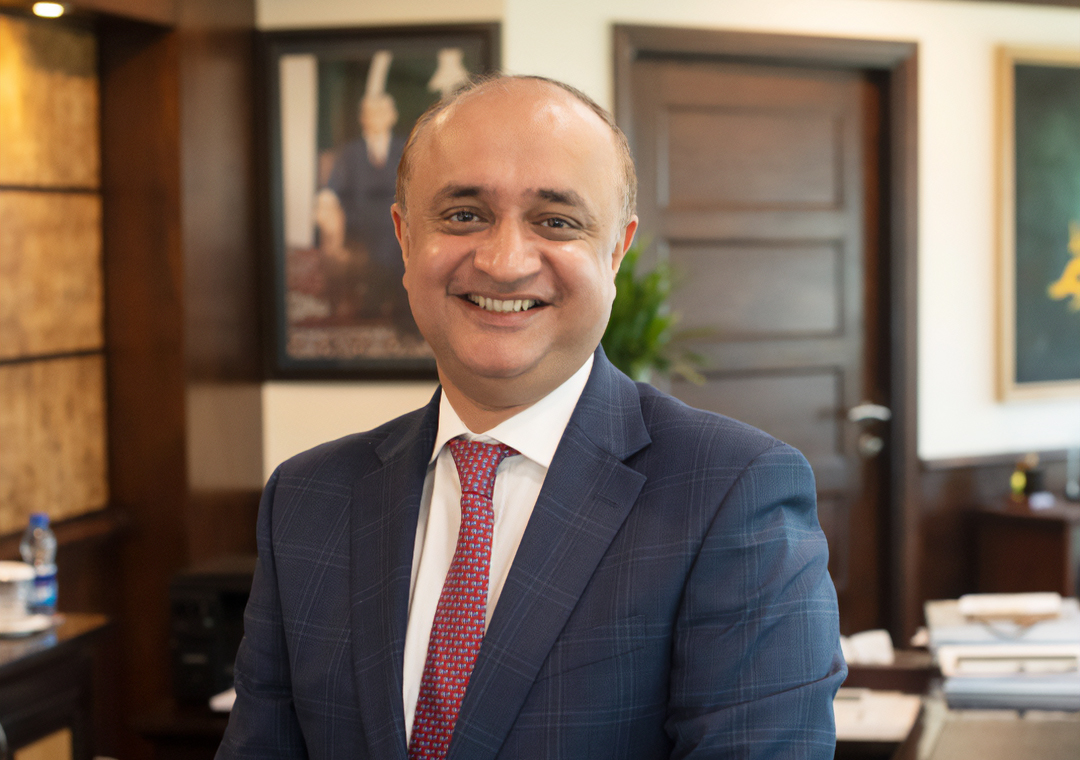

As Pakistan’s largest oil and gas company, OGDC plays a key role in the country’s energy sector and economic stability. Listed on all three domestic exchanges and the London Stock Exchange, the company accounts for 40% of Pakistan’s exploration acreage and a significant share of national output. Here, Managing Director and CEO Ahmed Hayat Lak outlines OGDC’s ambitious dual-track strategy to optimise core operations while positioning for continued growth through renewables initiatives and international ventures.
Read selected extracts from the interview below.
Q: How has OGDC evolved, and how is it preparing for the future?
Ahmed Hayat Lak: OGDC is the largest oil and gas company in Pakistan and the largest in terms of market capitalisation in the Pakistan Stock Exchange. It is the national company of Pakistan and as a result, it has a leadership status, and the company must be in the forefront and spearhead all its initiatives to meet the energy demands and energy security of the country.
Its core operation uses fossil fuels, but to remain sustainable and have a more authentic revenue stream in the future, it needs to transition effectively into a broader renewable energy landscape. We decided to focus on fossil fuels while identifying other opportunities which could create a sustainable revenue stream for the company. It is also part of our growth and diversification strategy to ensure that whatever the outcome of the fossil fuel industry would be, we must ensure the business also keeps us competitive and relevant as the energy market evolves.
Under that initiative, we decided to first focus on our core business to ensure efficiency, optimisation and excellence. The company is over 60 years old, and some of our fields are mature and need to be optimised. We optimised our business operations both in terms of sub and surface facilities. We have enough revenue streams from the core business, which we could use to fund our transition and diversification journey. Since 2023, we have been working on it and have prepared a five-year road map for our production optimisation plan, which is part of our business plan. The board of directors review it every quarter to ensure targets are being hit.
We are now in the implementation phase, and it was only when we reached this phase that I felt the satisfaction that we are on the right track. OGDC is known for its optimisation of its operations. The other part of the plan is to diversify and internationalise. We have investments in projects that are going ahead, following feasibility studies, procurements and we are very much integrated into the entire project development concept. We are not only involved at the board level, but our team of experts are engaged with operators to ensure the projects are fast-tracked with successful outcomes.
These projects gave us the confidence to venture into the other minerals sector. Hydrocarbon and rare minerals are two assorted products, but at the same time, they are formidable industries. As part of our diversification strategy, we started working beyond rare earth minerals. At the same time, we are looking at new relations and joint ventures with authentic international partners. We are also engaging with local players in the mining space, and we look forward to formalising the partnership in the coming months.
We must keep a close eye on the opportunities in the renewable sector. We have undertaken our first pilot project on geothermal in partnership with Schlumberger. In the next phase, we would have to decide on the way forward in terms of our investment in this sector. We are also engaged with the International Finance Corporation on the possibilities of geothermal opportunities, and if it is commercially feasible, OGCD and one of the operators would work on a joint venture to work on it.
We continue to look at internationalisation and are currently investing in an offshore block in Abu Dhabi through a joint venture between Pakistani consortium Pakistan International Oil Limited (PIOL) and Abu Dhabi National Oil Company (ADNOC). We continue to explore other opportunities from the Middle East in some projects taking place. We are also announcing our cooperation with other international companies, like Turkish Petroleum. At the same time, there are huge opportunities for Pakistan’s upstream, but it requires a lot of investment, especially for the exploration phase. We are working and engaged with our local upstream petroleum companies along with Turkish Petroleum.
Q: How is OGDC positioning itself internationally?
AHL: We like to be seen and perceived as a highly efficient company. A company that is on a growth trajectory and a company that wants to forge new relationships and ventures within Pakistan, outside with authentic partners, especially national oil companies. We know that we are a company that is sensitive about its obligations towards the environment and society. A company that is working on reducing its carbon footprint to ensure its operations remain sustainable, and this is evidenced by our investment in Abu Dhabi.
Another important measure we have taken is OGCD signing the oil and gas decarbonisation charter of the last COP held in Abu Dhabi. We were one of the first companies who signed the charter, and we are working with the charter’s secretariat, spearheaded by the UAE Government and ADNOC Chairman Sultan Al Jaber. We never miss an opportunity to communicate our commitment to the charter, which underscores our seriousness about being compatible with international standards.
We are a company which continues to explore new opportunities and new avenues while focusing on our core business. However, we are mindful of all the emerging trends and how we could position ourselves to remain relevant and profitable for long-term sustainability. We continue to invest in the minerals sector, especially copper and gold. It is a dynamic company in terms of its business outlook and how it positions itself for the future.
Q: How is OGDC sustaining its competitive advantage?
AHL: OGCD remains the market leader for exploration acreage as the company owns up to 40% of the total acreage. The same could be said for our oil and gas production. We plan to continuously sustain this position and grow it through our new strategy with the use of exploration licenses and the full optimisation of our fields. All our competitors, peers and joint-venture partners are fully invested in the sector, but we want to maintain our position while moving ahead in other areas.
Q: OGDC has drilled 97 wells and made 29 discoveries in recent years. How do you approach new exploration bidding rounds?
AHL: This shows that whenever the Government of Pakistan announces a bidding round, we take it very seriously. OGCD examines and evaluates all the blocks that are being offered through a technical team. At the same time, we have our own processes to go for the most prospective blocks, and we devise a strategy which would allow us to have the best chance of winning the bid. Most prospective areas fall in Balochistan and Khyber Pakhtunkhwa, apart from Sindh and Punjab. Balochistan and Khyber Pakhtunkhwa are underexplored areas, and we believe that these are promising areas.
Q: What made the Jhal Magsi project commercially viable, and what does it demonstrate about OGDC’s execution?
AHL: This commission reflects how industry flourishes if the government responds to industry demand. Jhal Magsi was a field that was discovered but was not monetised because of the distance to the nearest transmission system. We asked the government to give a price incentive so investment in the block could materialise, and the discovery could be monetised. As soon as the government approved the incentive, we were able to develop the facilities. Since it is a remote area, it was a challenge for connectivity and communication due to geographical issues, but our team persevered and finished it on record time.
Q: Why should Gulf-based investors consider Pakistan?
AHL: Pakistan’s upstream businesses would welcome investment from the UAE upstream petroleum sector, especially with Pakistan’s offshore blocks up for bidding. Investors will find very responsible, experienced and financially sound players with whom they can conduct joint ventures. We are looking forward to realising this industry.
Q: How would you describe your leadership style?
AHL: My longest tenure is with OGDC, but I have experience working for companies working on upstream, midstream, and downstream sectors, and even owned by a foreign group, which helped me understand the overall ecosystem of the petroleum sector. My previous work with the Pakistan Government also gave me an understanding of how government departments operate and function. All these experiences put together in more than a decade with OGDC gave me a lot of insight into the company’s operations while working with the board of directors and executive committee on the challenges, opportunities, policy making and functions of the company.