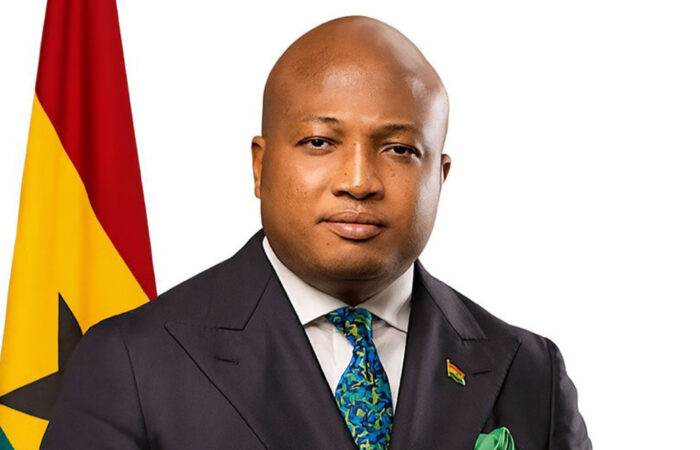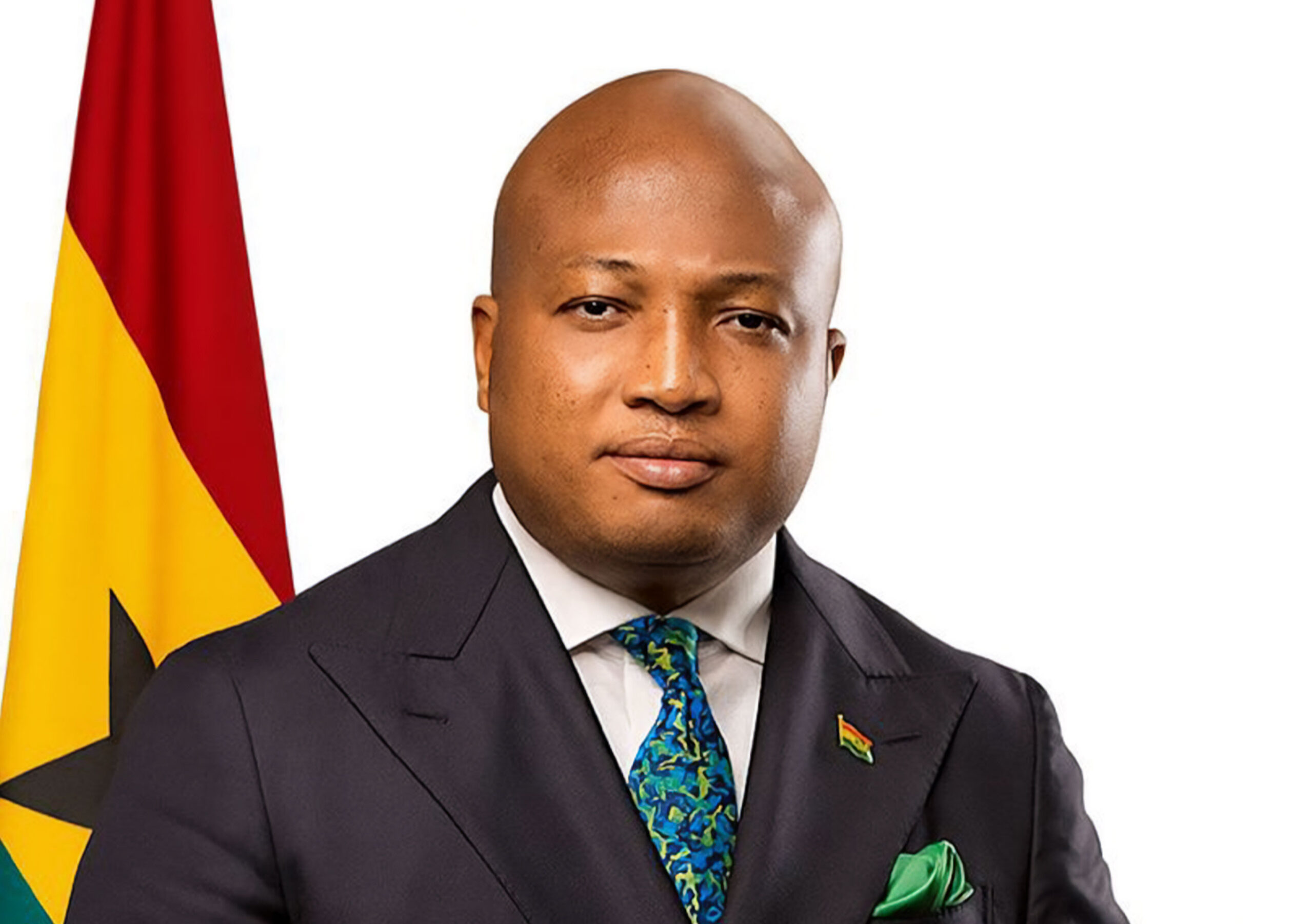

Ghana is leveraging diplomacy to achieve something more tangible than protocol, using foreign policy to pull in capital, open markets and strengthen confidence. For Samuel Okudzeto Ablakwa, Minister for Foreign Affairs, that means a more explicitly commercial foreign agenda, one tied to investment forums, labour mobility agreements, visa waivers and a stronger message of political stability. In this interview, Ablakwa outlines Ghana’s efforts to deepen UAE ties and support national recovery.
Q: Why has economic diplomacy become central to your ministry?
Samuel Okudzeto Ablakwa, Minister for Foreign Affairs: My broader vision for this Ministry is to enhance the image of our country, ensure that Ghana’s respectability is fully projected and that, within the community of nations, Ghana takes its rightful place. Our guiding principle is to be friends to all and enemies to none. We aim to maintain excellent relations with our neighbours, promote good neighbourliness and strengthen ties with all our international partners.
We seek to deepen our relationships, ensure cordiality and promote mutual trust and respect, so that in our engagements, other nations see Ghana as a reliable and dependable partner. Our focus is on enhancing Ghana’s image and maintaining positive, constructive relationships across the board. We do not seek to antagonise any country or be a source of conflict. Rather, we want to be recognised as a bridge-builder, a nation that promotes peace, stability and a fair and just world order.
We remain committed to the principles of multilateralism, to defending the values of the United Nations Charter and to upholding a rules-based international system. These are the foundations of our foreign policy vision, a vision we are actively advancing.
In pursuing this vision, we have identified key priorities, the foremost of which is economic diplomacy. This has become essential because we assumed office less than a year ago under the most challenging economic circumstances in living memory. For the first time, Ghana underwent a debt restructuring programme. We were declared bankrupt by all major sovereign credit rating agencies, Fitch, Moody’s and Standard & Poor’s. We were unable to service our debts, became insolvent and had to enter an IMF programme.
That is why the President made it clear in his inaugural address that Ghana would reset, reopen for business and pursue bold economic reforms to overcome the crisis we inherited. In alignment with this vision, this Ministry, under my leadership, has prioritised economic diplomacy as a key tool for restoring confidence, attracting investment and supporting national recovery.
For the first time in the history of this Ministry, we have developed Key Performance Indicators for all our ambassadors. The key deliverables are largely economic. Our ambassadors are now evaluated on their contributions to advancing Ghana’s economic interests. We expect them to focus on attracting investment, increasing trade volumes, promoting Made-in-Ghana goods and creating markets for Ghanaian products.
During the President’s state, official and working visits abroad, we have institutionalised the hosting of Presidential Investment Forums. These events are designed to showcase Ghana as a destination for trade and investment. We organise investment platforms to highlight Ghana’s opportunities, our rich natural resources, skilled and youthful workforce, stable political environment and the readiness of a new government committed to reopening and revitalising the economy.
We held one in the United Arab Emirates and the results are already evident. Since my visit to the UAE, several major companies have entered Ghana’s communications, defence and agricultural sectors. Following that visit, we launched a $1 billion digital initiative in support of our $1 billion CODES programme, marking a significant step forward.
I always remind my colleagues that our diplomacy must be impactful and deliver tangible results. Diplomacy can no longer be limited to the exchange of pleasantries. Handshakes and smiles are good and necessary, but beyond that, we must focus on addressing the challenges at home.
Q: How are you making diplomacy deliver practical economic gains?
SOA: We have therefore prioritised investment promotion, labour mobility agreements and visa waiver arrangements as key areas of focus. On labour mobility, we have signed several agreements allowing young Ghanaians to work abroad. Africa’s demographic advantage lies in its youth. We are the youngest continent, with a median age of around 20 and our young people are talented, educated and skilled.
We see this not as a brain drain, but as an opportunity. These short-term contracts, typically two to three years, provide exposure, skills and experience. Participants return better equipped to contribute to national development while also supporting their families through remittances. It is, therefore, a win-win arrangement.
We have pursued visa waiver agreements to facilitate trade, particularly for businesspeople and traders. In the few months since we assumed office, we have signed about 11 such agreements. These initiatives reflect our focus on making diplomacy directly beneficial to our people and economy.
The results are already visible. For instance, a young Japanese entrepreneur has invested $100 million in Ghana’s agricultural sector, particularly in rice production, following one of our Presidential Investment Forums. A Chinese company is also assisting us with irrigation projects, addressing a major concern. Ghana currently spends about $3 billion annually on food imports, largely due to the lack of year-round farming. Irrigation will enable us to farm continuously and reduce this import bill significantly.
In the area of defence cooperation, we are working with partners in the UAE, the Gulf and Arab countries, including Turkey, to retool our Armed Forces. We are undertaking strategic procurements to strengthen our security capabilities and guard against the threat of terrorism at our borders.
Q: What protections and advantages can UAE investors expect?
SOA: My visit to the United Arab Emirates was highly successful and we have maintained strong ties since then. We have exchanged several visits. I have hosted my counterpart here in Ghana and he has invited me to return to the UAE this December. This continued engagement demonstrates that our relations are gaining strong and positive momentum.
If you look at independent assessments, including the World Bank’s Doing Business reports, you will see that Ghana’s regulatory environment is highly investor-friendly. Ghana does not engage in expropriation. When you invest in Ghana, your investment is safe. The government does not nationalise private assets, nor does it interfere with the legitimate returns on investments.
We have a strong rule of law and our judiciary is independent. The government does not interfere in legal disputes. We allow the judicial process to take its course impartially. Ghana is a member of several international organisations that provide mediation and arbitration services. Investors who prefer international arbitration over local legal processes are free to use these mechanisms, as Ghana fully subscribes to them.
We are also in the process of amending the Ghana Investment Promotion Centre Act to create an even more favourable environment for investors. Beyond that, we offer significant tax incentives, particularly for investors who choose to establish operations outside the capital. The farther an investment is from Accra, the greater the tax benefits available.
Investors can also take advantage of Ghana’s Free Zones programme. Under this scheme, companies that commit to exporting a substantial portion of their output enjoy extensive incentives, including tax holidays, duty-free importation of machinery and duty-free export of products.
We have also made major improvements to the company registration process. The Registrar of Companies has undergone comprehensive reform and digitalisation, making it significantly faster and easier to register a business in Ghana. Many of the bureaucratic bottlenecks previously identified have been resolved.
When you combine these reforms with Ghana’s political stability and peace, our investment environment becomes even more compelling. Ghana remains the most stable and peaceful country in the subregion. These attributes, peace, stability, rule of law and social cohesion, are the real guarantees for investors.
Q: What gives Ghana its competitive advantages?
SOA: As I mentioned earlier, Ghana’s peace, stability and the law-abiding nature of our people are among our greatest strengths. Our society is anchored on the rule of law and the independence of the judiciary. Investors can have full confidence in the fairness of our legal system and the multiple avenues available for resolving disputes.
If business disputes arise, investors may choose to seek redress through our courts, or alternatively, through international arbitration mechanisms. Ghana recognises and allows arbitration in major global jurisdictions such as London and New York. More recently, we have also expressed our interest in joining the International Organisation for Mediation, the Chinese-led mediation framework. These steps are intended to assure investors that they have access to multiple, credible and transparent platforms for resolving disputes.
Our openness in this regard reflects our confidence and integrity as a country. We have nothing to hide, and we do not undermine investors. On the contrary, we want them to operate in an environment of trust, fairness and predictability.
Ghana enjoys a high level of political maturity. Our democratic values are deeply entrenched and political transitions occur smoothly. Investors need not worry about instability or uncertainty during election cycles. There is broad national consensus on the importance of democracy, peace and continuity.
These attributes, political stability, respect for the rule of law, judicial independence and reliable mechanisms for dispute resolution, combine to make Ghana one of the most attractive and secure investment destinations in Africa.
Q: How do renewables fit Ghana’s partnership with the UAE?
SOA: Renewable energy is a very important area in which we have set clear national targets and are actively working toward achieving them. Currently, renewable energy accounts for about 4% of Ghana’s total energy mix, a figure we acknowledge is below our potential. We have therefore set an ambitious target to increase this share to 10% by 2030, exploring the full spectrum of renewable sources, including solar, wind, hydro and biogas.
Ghana is already one of the best performers in Africa in terms of electricity coverage. Our current access rate stands at 89.03%, nearly 90%, and we have set a goal of achieving universal access by 2030. This ambitious target presents a strong case for scaling up renewable energy investments, as many of the communities yet to be connected are in remote or island areas that require off-grid solutions, most of which are renewable-based.
We have engaged several UAE-based companies that are already investing in Ghana’s renewable energy sector. During my visit to the UAE, I had very productive discussions with Masdar, one of the leading renewable energy companies in the region. I am confident that these partnerships will help accelerate Ghana’s green transition.
This focus aligns with the President’s vision, reflected in the decision to rename the Ministry of Energy to the Ministry of Energy and Green Transition. This change underscores the government’s commitment to a sustainable energy future and acknowledges that the era of fossil fuels is coming to an end.
Despite not being a major polluter, we recognise our responsibility to act responsibly and to set a good example. That is why we have committed to these targets and are confident that by 2030, Ghana will meet Sustainable Development Goal 7, ensuring access to affordable, reliable, sustainable and modern energy for all.