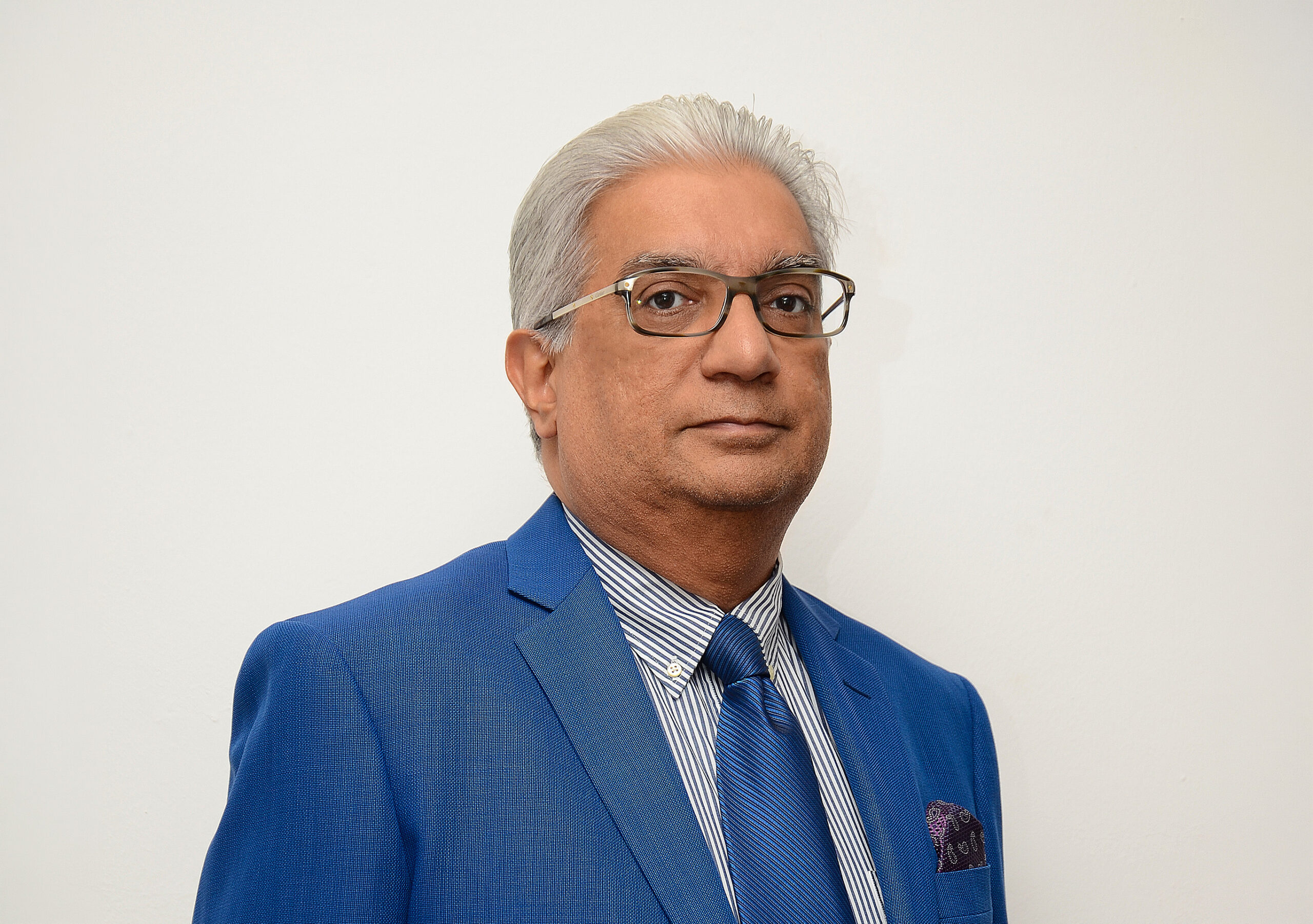

From a family run retailer to one of Ghana’s most diversified commercial platforms, Melcom has steadily expanded across logistics, manufacturing, hospitality and omni-channel retail. The company’s strategy now blends backward integration, technology adoption and sustainability upgrades to control costs while scaling nationally. With new delivery platforms, industrial investments and a growing restaurant portfolio, the group is positioning itself for the next phase of consumer growth in West Africa. In this interview, Ramesh Sadhwani, the managing director of Melcom, outlines how integration, digitalisation and operational discipline are shaping the company’s long-term strategy.
Q: How has your vision evolved since 1997, when you became Managing Director?
Ramesh Sadhwani, Managing Director: Over the years, we have grown and learned; some by design, some through trial and error and others by pure luck. We will continue to keep retail as our core, but we have started to diversify over the last few years. More importantly, we need to keep our foundation strong, which means investing heavily in backward integration.
We have invested in our supply chain, warehousing and distribution. We have found ways to keep costs under control, which include using solar energy and relying more on technology. We are firm believers that using technology will make us more efficient and help keep our costs down, despite the initial capital expenditure.
However, we cannot eliminate the human factor in retail because of customer service, and the biggest challenge we face now is getting skilled manpower. We are working on our own internal online training and learning centre. If all goes well over the next few months, we will be launching it soon. Our staff have already started on the training programme, and if it yields good outcomes, we will consider formalising it and making it a training institute open to the public. For now, that is still just a vision and not something that is cast in stone.
Similarly, we are looking at partnering with local farmers, entering a joint venture or starting our own backward integration into the farming of fruits, vegetables and poultry, because the output needed for the public is sizable. Many of these products are imported, although we buy locally and try to tie up with local producers as much as possible.
Tourism is growing, and for it to keep growing, all these other elements need to keep up or get ahead of the game. Tourism fuels improvements in standards, and better standards, in turn, fuel tourism.
Q: How is the company currently positioned among stakeholders?
RS: We are looking at backward integration not only in infrastructure, but also in product sourcing. We work with many local factories and try to support them as much as possible. In some cases, we commit to certain volumes and have products made under co-branded labels, because while the volume of imports into Ghana is huge, there is real potential for local industries to grow. And if neighbouring countries abide by the treaties they have signed and the AfCFTA comes into full force, the market becomes even bigger, covering the whole of West Africa, not just Ghana.
People must look at this from a bigger perspective, because we have customers coming in from neighbouring countries to buy from our plastic factory or even directly from our shelves. We often see an influx of these visitors during long weekends and holidays, buying products to take back home. We are not entirely sure of their motivation, whether it is price, quality or the range we offer, but it clearly shows that there is potential in many areas.
We are also looking to expand our industrial base. We already have a plastic production factory, and we are expanding on that side. We are considering the possibility of a food factory of some kind next year. Over the last three to four years, we have also diversified heavily into the hospitality sector, especially restaurants.
Q: How would you describe your market position?
RS: Executive Director Sonya Sadhwani’s family has been working in retail since 1946. Her late grandfather started Glamour, which grew to become the largest retail chain in Ghana at the time, and then, towards the end of the 50s and early 60s, her father joined the business. Towards the end of the 80s, her father and his first cousin, the sons of the founders, decided to part ways.
The use of technology is also crucial, and we are working on strengthening our online presence. We are about to launch a second platform called NOW, Ghana’s first hyperlocal multi-category mobile application which will focus primarily on groceries, food and pharmaceutical delivery.
We are aiming for a 20-minute delivery window from the time of order placement to customer’s delivery destination, using our stores as fulfilment centres. We have achieved a 5 minutes’ synchronisation of our stores inventory onto the NOW App, while simultaneously building our own last-mile delivery system. A few companies are offering last-mile delivery, but they are expensive and not as reliable as we would like.
The launch of NOW has been strategically delayed from the initial November target to incorporate key feature enhancements and comprehensive testing, ensuring an exceptional user experience from day one. We have successfully completed several thousand internal test deliveries across multiple locations within the Greater Accra region, and our vehicles, equipped with refrigerators for frozen and fresh goods, are prepared. We will be implementing a full cold-chain delivery service. While others are doing something similar, they rely on polystyrene boxes or coolers rather than refrigerated vehicles.
The property side of the business is primarily for our own commercial use. In the tourism sector, we are active in the restaurant and hospitality space. In 2021, we acquired the Pizza Hut franchise in Ghana. At that time, only two branches were workable, so we shut down the rest. We revamped the two stores and identified new locations where we opened additional branches. Today, we are at 22, and we expect to open four more before the end of the year.
We also operate around 20 other restaurants, including the Spanish frozen-yoghurt franchise Yolé; the Lebanese restaurant Hallab; the Indian restaurant Maharaja; and the Japanese restaurant Wasabi. We currently manage three to four coffee shops and just opened a higher-end concept called Sip Gourmet. We also run Art Kitchen, which offers live cooking inside our supermarkets and on the shop floor. It gives customers a place to sit and eat while shopping.
We also operate bakeries and butcheries. We try to keep our game at an elevated level by bringing in consultants to regularly help and train our staff on the best standard operating procedures.
Q: How do you approach ESG within your operations?
RS: One of our key initiatives is an annual blood drive, which usually raises 2,000 to 3,000 pints of blood. This year, we were able to collect around 3,000 pints in a single day, which we donated to the National Blood Bank. Over the last four years, we have not only organised the event in collaboration with the Red Cross and the Ghana National Blood Service, but we have also donated blood and vaccine refrigerators to hospitals. We run a scholarship scheme every year, benefiting both Melcom employees and non-employees. Our CSR focuses mainly on education and health, and occasionally we also support sports.
We began looking at solar energy, LED lighting and more modern air conditioners. One thing led to another, and we were then approached by IFC EDGE. We were already making sustainable changes by building underground water tanks and harvesting rainwater from rooftops for firefighting emergencies or cleaning the compounds.
We now have six properties that are EDGE certified, four of which are at the advanced level. We are looking at our older properties to see how we can bring them up to standard, and we have already converted to LED lighting and inverter air conditioning nationwide. We are also implementing dual-flush systems and push taps for water conservation. We continue to expand our solar installations, and we are currently reviewing the addition of another 400 to 500 MW of solar over the next six months. We are already generating around 2.6 MW and hope to reach 5 MW in the next three or four years.
We also collect empty cartons from our shops and send them back to our central warehouse to be sold to paper factories for recycling. We usually sell around 40 to 50 tonnes a month.
Q: Why now is the time to invest in Ghana?
RS: We have always been bullish on Ghana, because we would not have been able to keep expanding if we were not. We see long-term potential as the middle class continues to grow, and the country’s asset base, minerals, oil, gold, cocoa and agricultural products, presents clear opportunities. We are already seeing investors come in to convert raw materials into finished or semi-finished products instead of exporting them directly. With these industries taking shape, especially in agriculture and the metals and minerals sectors, we expect to see economic growth, rising income levels and improvements in standards of living. In line with that, purchasing power will also rise.
The economy will continue growing and improving, and it is not too late for investors to come in, as there are still plenty of opportunities and niches to tap into. The early starters have already made good returns, and although the COVID-19 pandemic was a tough time for everyone, we benefited during the pandemic. However, the first year post-COVID was more difficult. The hesitation we see from people we meet is largely around the informal market, but the government is trying to address this. There are still opportunities despite these concerns. The government is aware of the issues; it is now a matter of how to address them and how quickly the screws can be tightened.
Q: How would you describe your leadership style?
RS: Work experience makes a significant difference to my leadership style, and Nigeria is a bigger, more diverse and more aggressive market. The difficulties I faced in Nigeria made it easier to understand how to operate here and to find solutions to some of the problems we came across. When I obtained my degree in computer science, it was long before Apple computers even started, so we are talking about a completely different era. I have not kept up to date with the technology, but I still understand the theory behind much of it, which is why I am always pushing for innovation. I encourage the team to find solutions using IT, software and technology to help us become more efficient, improve productivity, cut down waste and reduce shortages as much as possible.
Q: What would you say to global investors about your market and portfolio?
RS: Investors looking for opportunities in West Africa should consider Ghana. Everybody can find something, a niche or a specialisation, worth exploring. When I am at the airport, I often watch people arriving and wonder what business they might be doing in Ghana. While many visitors come for tourism, a large number are also coming for business. Just last week, I had guests who struggled to find hotel rooms. Ghana is increasingly being used as a hub for conferences, as many multinationals now have their offices here.
Hotel rooms are expensive, and it shows that there are still opportunities for hotels because $200 to $400 a night is not cheap by any standard. The hotels are not necessarily up to par with international standards and service standards. There are also investments coming in for theme parks and safaris as entertainment tourism grows. The government is working on a project on Marine Drive that would see a tourism area around the coastline. There are a lot of things to do in Ghana, and it is just a matter of people opening their eyes and being inquisitive.