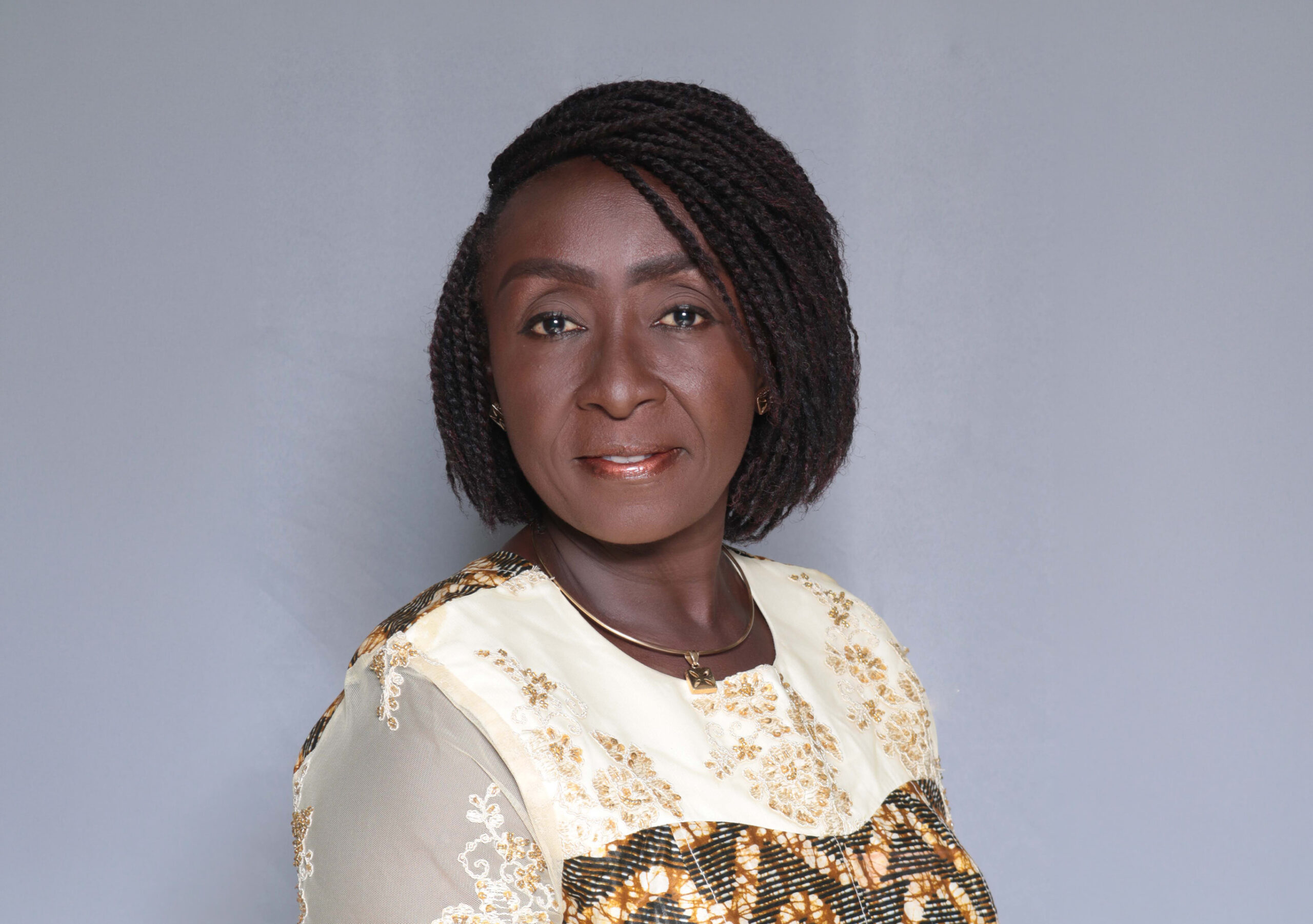

Ghana’s pitch to investors is becoming more defined and more ambitious. Beyond heritage tourism, the government is making a broader case for investment across hospitality, training, waterfront development and the creative economy, while also tying that agenda to pan-African identity and diaspora engagement. For Abla Dzifa Gomashie, Ghana’s Minister for Tourism, Culture, and Creative Arts, the country’s comparative edge lies not only in its history and landscapes, but in the cultural force of its people and the scale of untapped opportunity beyond Accra. In this interview, Gomashie outlines Ghana’s effort to attract new investments and strengthen both sectors.
Q: What makes Ghana a compelling tourism investment story?
Abla Dzifa Gomashie, Minister for Tourism, Culture, and Creative Arts: Between 2013 and 2016, during my tenure as Deputy Minister, we prioritised positioning Ghana to better tap into the global tourism market and engage more effectively with UN agencies. We began by ratifying conventions to which Ghana was already a signatory. Between 2015 and 2016, we successfully ratified seven UNESCO conventions. The one that excites me most is the Intangible Cultural Heritage Convention, as Ghana’s tourism strength is rooted in cultural heritage. Ratifying it has helped shift the national narrative, deepened public appreciation for our heritage and laid a foundation we are committed to strengthening through the end of our term.
Ghana holds one of the largest concentrations of forts and castles in the world and is also the only country where three key pan-Africanists, Kwame Nkrumah, George Padmore and W.E.B. Du Bois, are buried. These figures are central to pan-African history and positioning Ghana as the hub of pan-Africanism and the gateway to Africa and its diaspora explains the growth in our visitor numbers. We are working to make Ghana the natural homecoming destination for Africans on the continent and in the diaspora.
Our football legacy has also contributed enormously. Icons such as Abedi Pele, Asamoah Gyan and Stephen Appiah have elevated Ghana’s global profile. Wherever one goes as a Ghanaian, the first names mentioned tend to be Kwame Nkrumah or one of these football stars. Their achievements have helped shape positive perceptions of our country. No single individual can take credit for our growth in arrivals or tourism’s contribution to GDP; it is the cumulative effect of many efforts. We also acknowledge the role of President John Dramani Mahama, respected by his peers across Africa and the world and the enduring leadership legacy from Kwame Nkrumah to the present, which has supported Ghana’s image as a peaceful nation in the sub-region.
While not all past actions were part of a deliberate tourism strategy, they have collectively benefited us. We are now at a stage where strategic investment, especially in infrastructure, is essential. This was one of the key points I shared with Shaikha. Ghana’s natural attractions already draw visitors, but stronger infrastructure would significantly enhance the experience. Ideally, tourists should be able to stay near the sites rather than return to Accra because the best hotels are concentrated there. We are seeking investors across the tourism, culture and creative arts ecosystem to develop facilities close to our main visitor attractions.
There remains immense untapped potential, particularly in the eco-friendly landscapes of the Volta, Northern and Eastern regions.
The Western and Central Regions are known for their forts and castles, but investors interested in nature have significant opportunities elsewhere. We need hotels, guesthouses, Airbnbs, recreational parks, walkways and canopy bridges. The Volta Region, in particular, holds strong potential.
In President John Dramani Mahama’s first term, an airport was built there, improving connectivity and creating the possibility for smaller aircraft to move visitors from Accra directly to the region. It also provides easier access to northern Ghana compared to routes through the Ashanti Region. Of course, the Ashanti Region’s heritage and cultural assets also remain attractive.
If one were to invest in Ghana today, the Volta Region and the northern regions are among the most untapped. We encourage investors to express interest and Ghana can offer litigation-free land and negotiate incentives that ensure safe, profitable investment once formal expressions of interest are submitted.
Africa has long been portrayed through narratives of hunger and poverty, yet much of what the world values, its minerals, raw materials and resources, comes from Africa. Concerns about safety often arise when investors are invited to build infrastructure, but these concerns rarely deter those who come to extract gold, cocoa, uranium, diamonds, timber or other resources.
If Ghana and Africa are safe enough for resource extraction, they are equally safe for leisure, investment and repeat visits. We urge the world to look beyond negative narratives and reconsider the ease with which they already travel here for commodities.
Ghana welcomes investors in hospitality, culture and the creative arts. What we do not lack is talent. Our creatives excel in weaving, carving, sculpture, music, film, fashion and more. We are ready to partner not only on infrastructure but also with production houses and specialists who bring best practices to the sector.
Another key priority is the establishment of a training institution for tourism, culture and the creative arts. Ghana lacks a world-class facility that offers both theory and hands-on training. Existing institutions are strong on theory but do not provide comprehensive, practical instruction in hospitality, gastronomy, film, or other creative disciplines, all of which feed directly into tourism.
Across the entire tourism and creative ecosystem, Ghana has no state-of-the-art training institution from back end to front end. We would be proud to serve as the hub for such an institution and are open to partnerships on a BOT basis, PPP arrangements, or any investment model that suits our prospective partners.
Q: How are you reducing barriers for private investors?
ADG: If there is anything we must assure investors of it is that we are the ones seeking investment and we will not create barriers to their entry. As I have said, we are ready to work on terms that allow their investments to yield the best possible returns, a genuine win-win. I ask that the confidence I have in my President and the confidence the world has in the President of the Republic of Ghana, serve as reassurance that investors will be welcomed not with resistance but with Ghana’s well-known hospitality.
While I do not carry a list of incentives, we are prepared to work with all interested investors. The nature of each investment will determine the incentives offered; each partnership will have its own rhythm.
Investors can be assured of Ghana’s political stability. We have maintained peaceful democratic transitions since 1992, more than 32 years of continuity. His Excellency the President strongly supports the Ministry of Tourism, Culture, and Creative Arts and is committed to elevating the sector.
Tourism and Culture stood alone as a ministry, with Creative Arts lacking a defined home. It was the President’s vision to merge them into the Ministry of Tourism, Culture and Creative Arts, recognising the strength that cultural and creative industries bring to tourism.
We are also promoting sustainable tourism, culture and creative arts as well as the Blue Economy. We recently launched a Blue Economy manual from the Office of the President, further demonstrating his recognition of the sector’s potential. There are significant opportunities for investment in water transport, water sports and all forms of aqua-related tourism. Ghana has a 550-kilometre coastline, offering abundant possibilities. The rivers, lagoons and natural landscapes also present extensive untapped opportunities for the business community.
Q: Where do Ghana and the UAE align best?
ADG: The world is increasingly recognising that Africa is the last frontier of opportunity, a region that holds the key to development for all partners involved. It is therefore not surprising that countries, each in their own way, are committing resources to this space. The creative arts and the film sector together account for the USD 40 million we are discussing.
Africa has the youngest population in the world and Ghana is no exception. We have an abundance of creative talent; what we need are platforms for young people to showcase their abilities and opportunities for international exposure, such as performances in the UAE. Recently, Chief Mumin staged Mansa Musa in Dubai, illustrating the collaborative potential between the UAE and Ghana.
I told the Minister for Finance that while he smiles about the funding allocated, I am asking for more, because I know that every additional investment in this sector can yield triple its value. As His Excellency noted, we will continue discussions with Minister Atul together. This is the direction we must take and we appreciate both governments for investing in the sector.
The icing on the cake would be deeper collaboration between the UAE and Ghana, through expertise exchange and investment from the UAE business community. I can assure them, with full confidence, that I have the President’s support for this sector and that any investor who comes will not regret their decision.
Q: How has your early career as a creative shaped your ministry?
ADG: As a young creative, all I wanted was visibility, the chance for the world to see my talent, to be given opportunities to showcase it and to earn a livelihood from my work. That experience now drives me to create similar opportunities for the sector, tourism, culture and the creative arts, because these three are inextricably linked.
When people look at Ghana, they may not focus on infrastructure in the same way they would in places such as the UAE, Saudi Arabia or Egypt, which recently unveiled an extraordinary new museum. What sets Ghana apart is its culture and its creative space. The talent is raw, abundant and ready, but apart from the National Theatre, we have no other major venue for artists to exhibit their work.
This is why I am seeking investors interested in building theatres, state-of-the-art facilities in all 16 regions. For every performance by a single artist, say Stonebwoy, you engage directors, costume designers, sound and lighting technicians, public relations teams, administrators, lawyers and more. We hope to reach investors who can seize these low-hanging opportunities.
Q: Why is this the right investment moment?
ADG: This is the best moment for investment because we have a President who understands and believes in the creative, tourism and cultural sectors. It is also a great moment because I am here, committed to leaving a legacy for my people. Before I retire, I want to be able to say that we created real opportunities for creatives.
I am not the only person from the sector who has been honoured by this President; many creative artists are now serving in government, something that was not common in the past. This recognition reinforces a simple truth: if you invest in this sector now, you will have the full support and blessing of the President of the Republic of Ghana. No two ways about it.
Q: Why should the Gulf pay attention to Ghana?
ADG: The UAE should also place itself among the countries whose citizens visit Ghana. There are many UAE businesses operating in Ghana and we hope to see greater inbound travel as well. When we assess the success of this era, it should not be measured only by hard investments, but also by cultural diplomacy, strengthening ties and bridging the gap between the Arab world and us.
Like Africa, the Arab world has suffered from negative publicity shaped by the global north. We now have an opportunity, as part of the global south, to change that narrative. As our forebears say, until the lion learns to write, the story will always glorify the hunter. We must take charge of our own story and show that the Arab world is not what others portray it to be, just as Africa is not the stereotype the world has been taught to believe.
Ghana is not only its minerals. It is a nation of people with warmth, hospitality and abundant sunshine to share. The Arab world, Africa and Ghana have a real opportunity to rewrite that story, together.