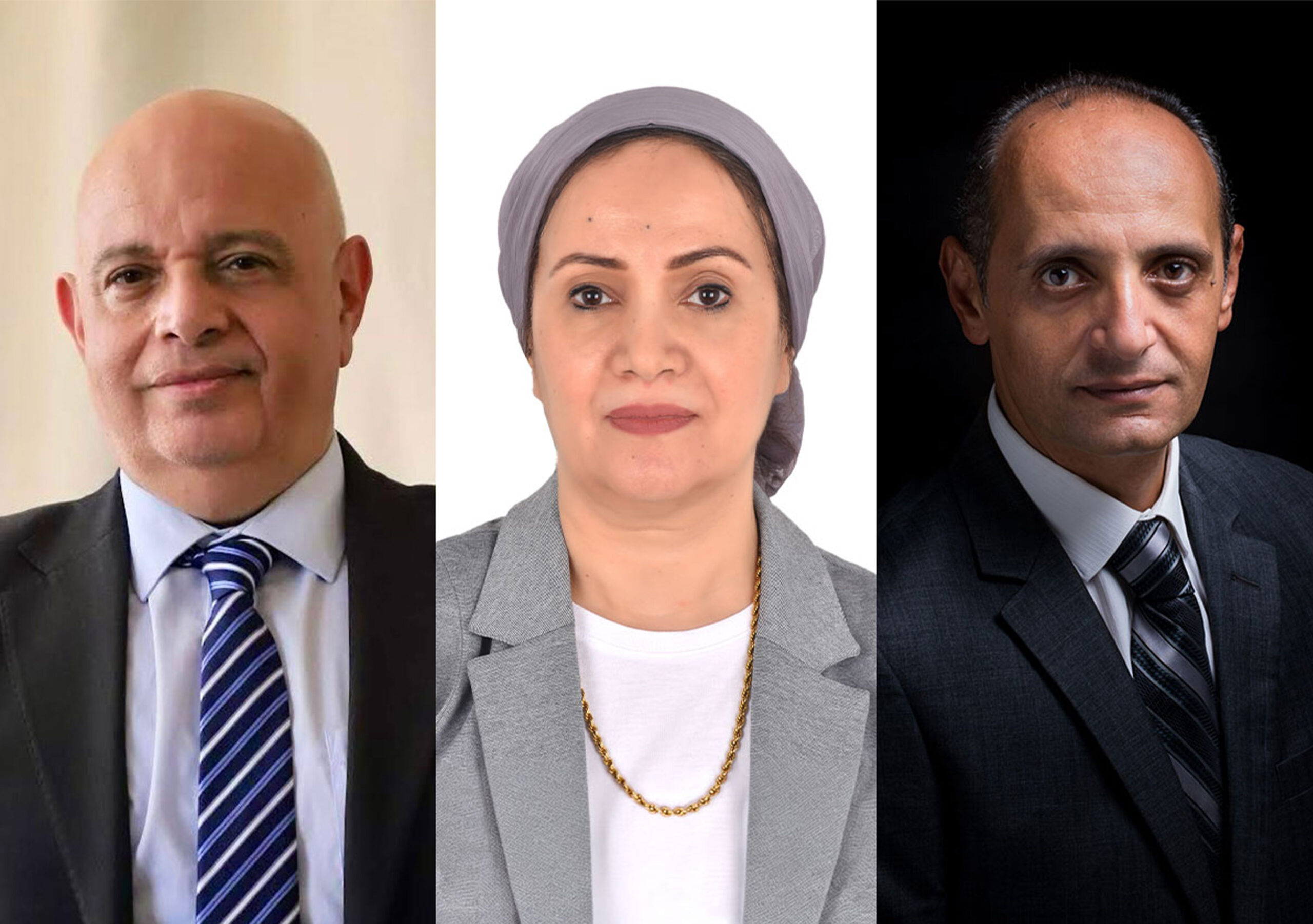
Founded in 1976, the Egyptian Engineering Company (EEC) has steadily expanded its footprint across Egypt and the Gulf. With projects spanning Saudi Arabia’s developments to national strategic irrigation infrastructure, the company has positioned itself at the intersection of hydraulic protection and water treatment solutions. In this interview, CEO Tarek Adel, General Manager Mohamed Ibrahim Adel and Deputy CEO Iman Ibrahim Adel outline the company’s expansion strategy and commitment to quality-driven manufacturing.
Q: How is the second generation building on the company’s original values?
Tarek Adel, CEO: Our father founded this company in 1976. The key moment was when we realised it was better to work with colleagues and customers rather than compete. We started EEC, the Egyptian Engineering Company, as a manufacturing firm for AEO, then decided to manufacture for other companies and treat them as partners in the energy and water sector. Eventually, we expanded beyond Egypt to the Gulf and North Africa, including Libya, Algeria, Saudi Arabia, the UAE and Bahrain.
Our father initially built the machines himself. We made our own machines until around 1995, then upgraded in 2010 to new ones. The first facility was about 3,600 square metres; the second, 7,000. We now operate both, totalling 10,000 square metres. We are also establishing another factory in Dammam, Saudi Arabia, this time 11,000 square metres, to serve the Gulf. With the new production line, we earned accreditations like ASME and ISO, which helped us enter the Saudi market.
The first Egyptian-made anti-hammer system was built in 1980. Today, we are likely the leading manufacturer of protection systems in the Middle East. Our goal has been to preserve our father’s legacy and pass it to the third generation, who now work with us.
As the second generation, our duty was expansion, starting with 600 square metres, then 3,600, 7,000, 10,000 and now adding 11,000 more.
Mohamed Ibrahim Adel, GM: AEO began as a water treatment and electromechanical contracting company founded by our late father in 1976. It started small, with a modest workshop to make the equipment we needed. As the business grew, we needed a proper manufacturing facility, so we started EEC. When we acquired our first land in 6th of October City, we planned a production line, which was a major investment. Regarding legacy and the second generation, we all worked closely with our father and inherited his values, integrity and commitment to quality.
Iman Ibrahim Adel, Deputy CEO: And a pioneering spirit. We were the first local manufacturer of anti-hammer systems in 1980.
Q: How did EEC grow in market position?
Tarek: The key is investing in our people, constantly developing their knowledge, technical skills and capabilities, and in our facilities by upgrading machines and workshops and acquiring all relevant accreditations. We have obtained ASME U1, U2, S and R stamps, and we are now working on the UL stamp.
Investing in people, machinery and accreditations, these are the three pillars driving our company’s growth.
Iman: Every certificate we earn opens new markets and sectors for competition.
Q: Which key projects in Saudi Arabia, the UAE and the region would you highlight?
Mohamed: One of the most active areas now is Neom city in the Western region in Saudi Arabia. We were among the first companies accredited to work there. In Egypt, we have also supplied many systems for the Toshka Lakes project, also known as the New Valley project.
Tarek: We installed over 80 systems for one company alone, about 120 anti-hammer systems in total. Each system can include two or three vessels. This project is vital for Egypt’s agriculture since irrigation depends mainly on the Nile. Water levels fluctuate, and the High Dam helps balance them. Excess water is diverted from Lake Nasser to Toshka Lakes. The government launched irrigation projects with pivots and pipelines, which require proper hydraulic protection.
We have been working in the UAE for about eight years, delivering several sophisticated projects. We are now considering establishing our company there.
Mohamed: Regarding EEC’s presence in the UAE, the market is highly demanding in terms of quality. We knew that maintaining high standards was essential to achieving a strong position. Our focus is on delivering high-quality products using the latest technology in line with international standards.
Q: How are you approaching sustainability and the Vision 2030 goals?
Tarek: Our region suffers from water scarcity, which is worsening daily. We must contribute to solutions. RO, or reverse osmosis, converts seawater into potable water. We supply RO units and compact wastewater treatment units, which are among our key areas of work.
Our first system was installed in Hurghada city in 1992. Wastewater can be used for non-edible crops. We have developed treatment solutions such as extended aeration and MBBR units to recycle water effectively.
RO is used for seawater, and we have installed about 240 manganese removal units in the Upper New Valley. The New Valley region has high iron and manganese content, so we remove these to make the water suitable for domestic use.
Iman: We were among the first companies to supply and manufacture these systems locally. Our systems are highly effective and easy to use, providing quick solutions for water treatment. This allows irrigation of green areas without using fresh water.
Mohamed: With climate change and water scarcity, responsible water use is essential, whether from rain, seawater or recycled wastewater. Treated wastewater can be reused, especially for irrigation. These systems purify well water for practical use.
Q: What is EEC’s approach to innovation?
Tarek: Expos and similar events are opportunities to exchange technologies with other companies, meet colleagues and competitors and challenge ourselves. They help us stay updated with the latest developments. Learning never stops.
Mohamed: They are also a chance to share our accomplishments.
Iman: And to meet new customers and partners.
Q: What has been your proudest moment at EEC?
Tarek: I have been working for over 36 years. I graduated in 1990, but even before that, I worked during my school years, starting at age 12. I am a mechanical engineer and manage the mechanical engineering department. Alongside our studies, we gained valuable business experience.
Our new facility began in 2010, just before the revolution. The slowdown allowed us to focus on earning accreditations like ASME stamps and ISO certifications. When the market recovered, we were fully prepared. When things restart, the most prepared companies gain the advantage.
Mohamed: One of the most challenging times was when we took over the company after our father. We had to preserve his vision while ensuring further growth. Another major challenge came when we built the new factory, soon after, the 2011 revolution hit. We had invested heavily while the economy struggled. That challenge pushed us to focus on exports, which turned out to be an opportunity rather than a setback.
Iman: I am proud that, as the second generation, we developed the company beyond what our father built, expanding our presence in the Gulf. I was also particularly proud when we obtained the ASME accreditation for the first time as we have worked hard for it. We learned design fundamentals from our father and later developed them further, using new software to enhance our work.
Q: Why should investors see Egypt as an opportunity?
Tarek: Egypt is now in a strong position with a growing economy. The tourism sector, particularly along the North Coast and Red Sea, attracts significant investment. The industrial sector also offers great opportunities, supported by skilled and reasonably priced labour, engineers and workers alike.
The government is encouraging investment and has trade agreements with most African countries, making Egypt a gateway to both Africa and the Arab world. Establishing a factory here enables exports across these regions. The Suez Canal industrial zone, in particular, presents major opportunities for investors.
We believe no one can succeed alone. Just as investors from the Gulf benefit from expanding abroad, we also invest in the Gulf. In our view, Egypt today offers genuine opportunities for growth and partnership.