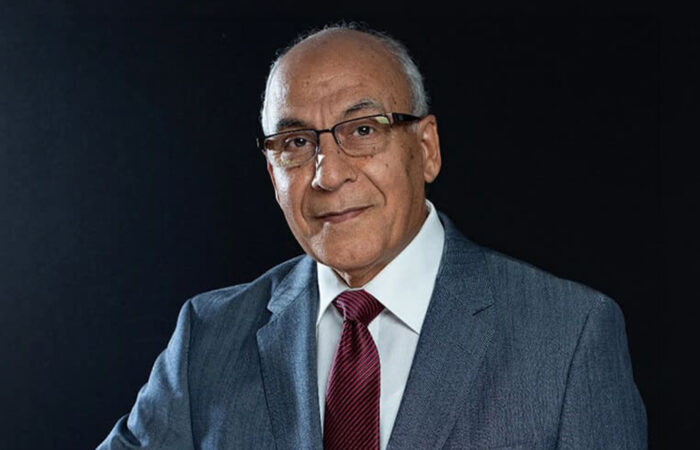

Founded in the late 1980s New York, Concord International Investments Group began in wealth management, then rebuilt itself around Egypt’s reopened markets, research-led investing and governance-first discipline. From acquiring TrainSmith, a $1 billion manager, to running government mutual funds for more than 20 years, the firm has managed 16 funds, including 8 offshore across four jurisdictions, and distributed $28 million in dividends on $1 million of initial capital. In this interview, Mohamed Younes, Founder and Chairman, outlines Concord’s long-term strategy and share plans for a UAE-linked joint venture expected to be operational in the first quarter of 2026.
Q: How did Concord evolve over the years?
We founded Concord in the late 1980s after I retired from my banking career in New York. My initial goal was to manage U.S. portfolios for my overseas network. We soon realised that starting a firm, even with strong investor connections, was challenging. Initially we competed with major industry players.
We identified a market gap: Investors with $25 million or more could afford private offices and staff, while those with smaller sums relied on brokerage accounts, bank investment management departments, who mainly sold pre-packaged products, or mutual funds. The mid-range investors were underserved.
We stopped working with large banks and their marketing teams and shifted focus to filling that gap. Our breakthrough came when we acquired TrainSmith, an old-line firm managing about $1 billion, which strengthened our position and credibility.
While we achieved modest success in the U.S., competition remained fierce. We faced 18,000 competitors; in Egypt, only a few. It was the right move at the right time. When Egypt reopened its markets, we saw a new opportunity and decided to expand there.
We decided to move forward. I began my career in 1957 and witnessed major changes. I lived in Egypt and in 1961 the entire country’s stock market was wiped out as a result of the total nationalization programme of the economy. In 1960, Egypt ranked sixth among the world’s most active markets, not because it was large, but because the New York, London, and Amsterdam markets were small markets at the time.
Therefore, from 1961 to 1993, there was no stock market or securities trading in Egypt. When we returned, we aimed to establish a sound, professional investment management business, not a brokerage or trading operation. Our foundation was research. We refused to manage portfolios without in-depth analysis because, for 30 years, no research existed, an entire generation had grown up without securities markets. We recruited skilled credit analysts from banks and trained them as securities analysts.
We launched our first fund in 1994, when market trading was below $10 million. Since then, activity has grown sharply, and our business expanded rapidly, faster than we had ever anticipated.
Q: What values define Concord’s leadership?
The Concord Group’s senior management includes several Egyptians, as well as some who have immigrated in the 1960s and have returned to Egypt with the intent of helping us build significant entities in Egypt which could be profitable institutions.
These individuals share four characteristics: first-rate educational credentials; significant success in attaining senior positions in leading international financial institutions over several years; determination to create a successful profitable institution in Egypt; and assist Egypt in any way possible in the development of its capital market with a heavy emphasis on enforcing governance and ethical practices.
The group has actively assisted on a pro bono basis the development of the reborn Cairo Stock Exchange by lending one of its managing partners to be the first full time Chairman of the Cairo stock exchange for a 2-year period.
One of our co-founding partners played an active role as a co-founder and Board member of the key professional associations in the investment area including the Egyptian Investment Management Association. In addition, I have personally served for two consecutive 4 year terms as a member of the board of director of the Central Bank of Egypt, in that capacity I was a member of the Investment Committee which was entrusted with setting the strategy, reorganising the operations and the supervision of the management of the $30 billion foreign-exchange reserves. I was also a member of the Banking Industry Restructuring Committee. I was also on the four-men Audit Committee of the Central Bank.
The government entrusted the firm to manage two mutual funds with assets of LE 800 million owned by the four largest government banks, the state’s pension fund and Egypt’s largest insurance company. These funds were successfully managed for over 20 years.
Q: How strong was your peak position?
From the time the Egyptian markets reopened after a 30-year closure to the present, significant fundamental changes have taken place. A new financial industry was reborn with a large number of brokerage firms, investment management firms, insurance companies, etc. The old stock exchange was reborn and while its market capitalization is still small by international standards, it is very active with approximately 180 companies listed in over 20 different economic sectors. A mutual fund industry was created from scratch.
Our group was able to distinguish itself as a leader in the investment management field and starting in 2000 entered into the direct investment arena with its first private equity fund.
Throughout this period, we were considered one of the leading firms in the market and as a result we were considered the partner of choice for several leading international firms interested in developing their business in Egypt.
All our other offshore funds had independent Boards of Directors which included several chief executives and/or managing directors of some of the world’s largest financial institutions.
In the mutual fund sector, we became the largest player in what was then a nascent market. The domestic mutual fund industry barely existed when we began. By 2022, around 35 funds held total assets of about EGP1.3 billion, with individual accounts adding another 3 billion. When Egypt reopened its market in 1993–94, regulations encouraged open participation. Brokerage fees and investment management fees dropped sharply.
We shifted focus around 2000 from asset management to private equity. Over the next 30 years, that strategy proved highly successful. By the time we exited and liquidated our first fund in late 2016, which had total distributions of $126 million compared to a total initial investment cost of $26 million.
To balance risk and sustain operations, we also began offering advisory and transactional services for fees, marking a strategic shift in our business model. Our private equity team transitioned to lead broader activities within the group, focusing on stability and sustainable growth. This restructuring created a stronger, more resilient organisation. Economically, it allowed us to optimise resources and adapt effectively to changing conditions.
Q: What should UAE investors look into?
We strongly believe that the most attractive areas to invest in Egypt reside first in the economic sectors which will benefit, for the foreseeable future, from the tremendous population expansion we have witnessed. These sectors are food, selective real estate and education (one of the fastest growing and most profitable).
These sectors will grow because of the sheer momentum of the increasing population. In addition, they are quite defensive as their development is inevitable regardless of the overall political ideology of the countries’ rulers at any given time.
Another very strong growth area lies in segments of the tourism industry which have consistently proven their tremendous growth and resilience in the face of the occasional terrorism problems. The stability of Egypt and its strong internal controls have protected it from terrorist incidents.
Q: What achievement best defines Concord?
Our proudest achievement is that we were able to enter into a pre-emerging market on the ground floor and were able to build an outstanding firm in the investment management field. The firm was able to become the leading partner of choice for major international institution interested in Egypt.
Throughout this period, we organized and successfully managed 16 funds of which 8 were offshore. The offshore funds were incorporated in four different countries. Some were listed on major international exchanges, and the independent board of directors included a few selected leading international bankers. The Group’s strong governance and controls allowed it to operate for 30 years without ever committing any infraction to any law.
Our Group’s success over 30 years is entirely due to the team effort of its management team and employees, the independent board members of its funds, the strong professional backing of some of its shareholders and in great part the major contribution of its advisory board.
The most important feature of our management was the long tenure which in some cases exceeded 30 years. In addition, over the years women occupied a large percentage of our senior positions. Our well documented performance as well as the frequency and the number of nominations ranking the Group as one of the best performance attests to the quality of our management.
Q: Why buy Egypt equities now?
Egypt represents an exceptional investment opportunity. Despite regional political uncertainty and economic challenges, valuations are extremely attractive. Of 181 listed companies, 114 trade at less than six times earnings. The fundamentals are strong, but investor sentiment is weak, making this a uniquely favourable time to buy, not retreat.
A fundamental shift has taken place over the years which culminated in the final realization in the Middle East and in the Gulf in particular, of the importance of helping Egypt develop economically and military.
Recent events have certainly reinforced that point of view and as a result, the major Gulf countries and Saudi Arabia have committed to make very significant investments in Egypt which are very well documented elsewhere. This included among others, the UAE’s spectacular $ 33 billion Ras El-Hikma project last year, and last week’s announcement of Qatar’s new 30 billion investment in the North Coast, among others.
In addition, private sector investments from the Middle East are also increasing dramatically. Remittances of expatriate Egyptians have helped increase the country’s foreign exchange reserves to a record of $50 billion.
Q: What are your plans for future partnerships?
The Emirates are very supportive and anxious to expand in Egypt. With this in mind, we have been approached by a prominent Dubai-based group to enter a joint venture to organize and manage two large funds dedicated to investments in Egyptian listed securities and private equity direct investments. We expect to make a public announcement in the first quarter of 2026. Other projects are presently under discussion. Our goal in private equity is to acquire strong, well-managed assets.
We also developed the concept of the Concord-Stanhope Investment Club, which brings together major, mid-sized and high-net-worth investors interested in direct investment in Egypt. This structure allows collective investment without reliance on traditional funds, aligning with the global trend of large investors moving away from fund-based models toward direct participation in quality assets.
We asked each investor to indicate their investment appetite for direct investment, without commitment. Once we find an attractive opportunity, we present it to them; some will join, others may pass, but the collective strength remains and our credibility with target companies is strongly reinforced. The club provides credibility and improves our negotiation power when approaching companies.
The agreement includes entering cross-participation in the two firms’ capital later in 2026. This brings together two groups managed by well-known and experienced professionals with very deep links to Egypt built over several generations of leadership and accomplishments. These individuals have all held senior positions in some of the world’s largest and most sophisticated financial institutions, prior to them joining their respective firms in Cairo and Dubai. By uniting Concord’s decades of excellence and 30 years presence in Egypt with Present Perfect Capital’s global reach.
Our focus has always been on strict investment discipline, strong governance and uncompromising ethics. We never adjust our standards or compromise the principles of sound money management. We are not here for quick gains or short-term profits.