From e-commerce-ready warehouses to green office buildings, Poland’s economic transformation is fuelling demand for infrastructure projects.
Poland’s construction industry is forecast to grow at an annualised rate of 3.5% to 2028, reflecting a sector at the crosscurrent of trends that are reshaping the Polish economy. Large-scale investments in transport and renewable energy are joined by rising sector-specific needs—such as increased demand for logistics capacity, resulting from increasing e-commerce activity—and a drive for buildings that meet modern environmental standards, in propelling the market forward. “Poland’s rapid infrastructure development, especially in the warehouse sector, has created a highly advanced and sustainable market,” says Chris Zeuner, Co-CEO of developer Grupa 7R.
Challenges faced by the industry include higher interest rates, inflation and build costs, which contributed to a more subdued picture in 2024, but with firms reporting a significant uptick in tenders at year’s end, and underlying trends pointing to continued growth, the outlook remains positive for both companies and investors. Wojciech Trojanowski, board director at construction giant STRABAG highlights hotels, waste management and energy transition projects as areas of opportunity for German companies entering the market. “Poland is an attractive market,” he says, “and each sector has something to offer.”
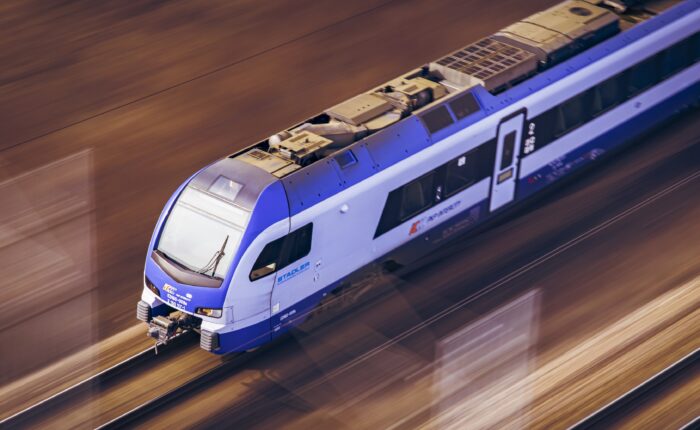
PKP Intercity provides long-distance rail passenger transport in Poland, offering high-speed domestic and international city connections.
PKP’s 2030 development plan encompasses significant investments in rolling stock, digitalisation and customer care. Building on the introduction of state-of-the-art Pendolino trains in 2014, the company is currently tendering for models with top speeds of 300 km/h, in preparation for new direct connections to Poznań, Berlin and Prague.
Q: What are your current objectives?
By 2030, Poland’s long-distance rail passenger market will open, and PKP Intercity’s main goal is to prepare for this as effectively as possible. We project PKP transporting around 110 million passengers by 2030, up from 80 million. Our priority is to accommodate this passenger growth through substantial investments in rolling stock, as well as enhancing our sales and customer-care systems.
Q: How important is EU interconnectivity?
The development of rail infrastructure and connections, which reduces travel times, significantly enhances mobility and promotes regional growth. This also boosts international exchange. Mobility plays a key role in fostering development, and we are committed to expanding connections to Germany and the Czech Republic.
Q: What are the key opportunities for the sector?
Our primary competitors are not other rail operators, but personal cars, buses and air transport. Given Poland’s size, rail can easily replace domestic air travel, which is the main focus of our efforts— who currently travel by air or car.
The strong performance of Poland’s real estate sector has attracted the attention of investors across Europe—and shows few signs of slowing.
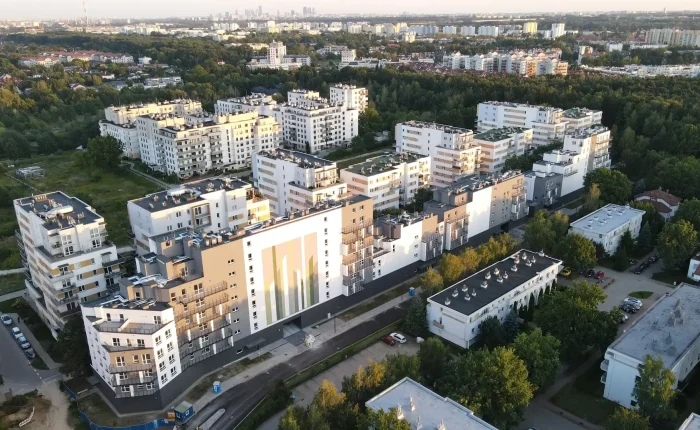
Recent developments in Poland’s real estate market reflect the nation’s rapid transformation. At the forefront is the residential sector, with data cited by Reuters showing property values rising 26% in the last two years, making Poland’s housing market one of the fastest growing in Europe. This stands in comparison to neighbouring Germany, where prices decreased 12% over the same period. Poland’s surging residential values are being driven by rising levels of disposable income, continuing urbanisation and government initiatives such as mortgage subsidy programs. The Warsaw Business Journal estimates an overall shortage of two to three million units, making for a buoyant market outlook. “Over 100,000 new apartments have been completed in Warsaw in the past five years, and nearly all are occupied,” says Waldemar Wasiluk, vice president of residential developers Victoria Dom. “This highlights the market’s strength.”
The evolution of Poland’s economy means demand for quality offices also remains robust, particularly in central urban locations, with new construction tempered by high development costs and limited availability of prime land. Similarly, economic growth is propelling demand in both the retail and industrial markets, with retail parks and warehouse space leading the way.
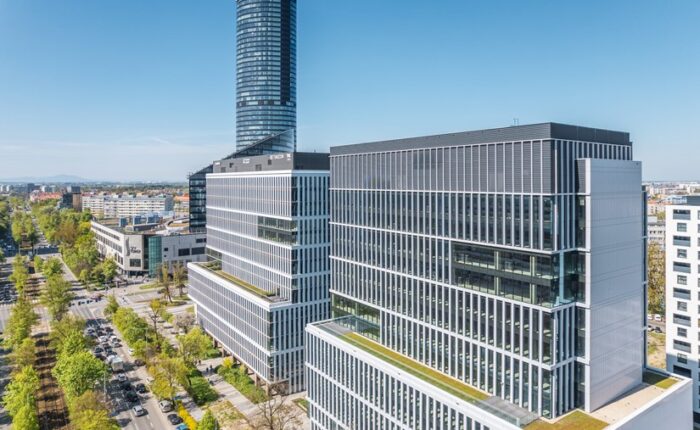
Karimpol Poland is a real estate development company and part of the Karimpol Group, a European commercial real estate developer established in 1991, specialising in office, retail, and mixed-use properties.
Q: What is your geographic focus?
Karimpol operates primarily in four markets: Austria, Slovakia, Czechia and Poland. In Poland, we focus exclusively on office developments, completing nine projects with over 200,000 square metres of gross leasable area. Our flagship project, Skyliner (Warsaw), spans 49,000 square metres, with a second phase adding another 24,000. It is the largest project in Karimpol Group’s history.
Q: What unique factors set Karimpol apart?
We are recognised for delivering the highest quality in finishing, architecture and efficiency. This reputation for excellence defines our work.
Q: How are you leveraging innovation?
We are introducing a new concept to Poland—Squarebizz—which has been extremely successful in Austria and Slovakia. It combines high-quality service and production areas with retail space, together with offices catering to international businesses as well as medium-sized compWanies that need commercial space close to urban centres.
Q: How is Karimpol evolving?
While offices remain our core business, we are expanding into the energy sector with the acquisition of a photovoltaic farm.