Airports of Thailand (AOT) is responsible for the management, operation and development of some of the country’s leading international airports.
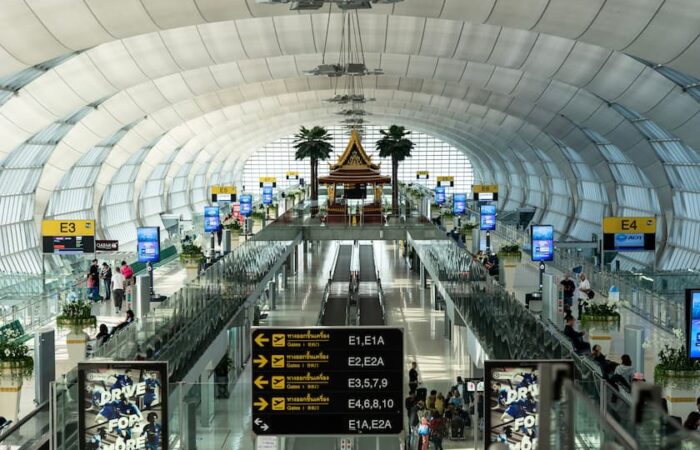
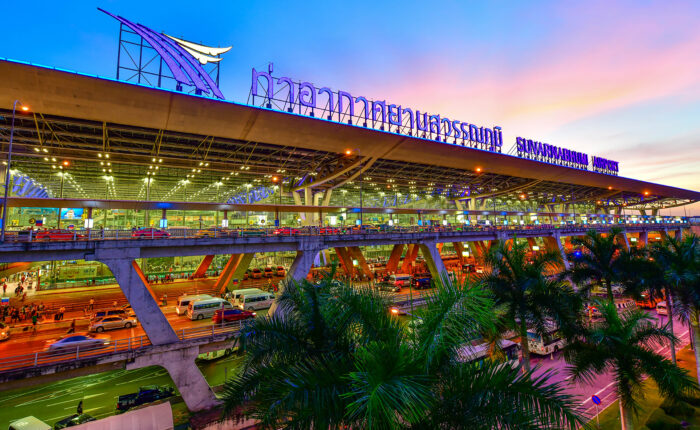
Since its opening in 2006 to serve as Bangkok’s primary international airport, Suvarnabhumi – dubbed ‘a gateway to the golden land’ – has grown to become one of Southeast Asia’s most important aviation hubs. Serving more than 50 million passengers in 2023, the facility is one of six key sites managed by AOT, a public company majority owned by the Thai Ministry of Finance which acts as Thailand’s leading airport business operator.
Under the leadership of President Kerati Kijmanawat, the company has embarked on an ambitious expansion program across all of its sites, which include Bangkok’s second international airport, Don Mueang, and facilities in the key cities of Chiang Mai, Chiang Rai, Phuket and Hat Yai. The opening of a new satellite terminal at Suvarnabhumi in September 2023 is part of a sweeping plan to more than triple passenger numbers there to 150 million a year.
“People want to visit Thailand, and airports shouldn’t be bottlenecks,” says Kijmanawat. The drive for greater capacity goes hand in hand with AOT’s overriding goal to provide passengers with the best possible service. “Our philosophy is that customer satisfaction brings airports success,” Kijmanawat continues. “The airport is the first point of the experience as it shows how Thailand will take care of its visitors.”
Non-aeronautical revenues at AOT reached US$240m for the first quarter of 2024, a 93% increase year-on-year, driven by strong commercial performance at the company’s concessions and lounges. To capitalise on this growth, the business remains focused on boosting arrivals. “The key to driving performance for both non-aeronautical and aeronautical revenue is to gather more flights, which also helps the country,” Kijmanawat explains. A recent government initiative to allow visa-free travel from five major tourist markets saw an increase in Chinese and Indian arrivals, and AOT is working closely with both the Ministry of Tourism and major carriers in the UAE to encourage more visitors from the Middle East.
As part of its upgrade and investment program, the company has harnessed innovation both to streamline operations and to further its sustainability efforts. Self-service bag drop and check-in options have been instituted to expand customer choice and reduce queues, while the implementation of automated immigration gates have halved processing times to fifteen minutes. Meanwhile, solar panels have been installed on buildings and land at all of AOT’s airports, with the goal of being fully powered by renewables within four years. Says Kijmanawat: “We view sustainability as our path to the future.”

Airports of Thailand President Kerati Kijmanawat discusses the company’s expansion program, efforts to attract UAE and Middle East visitors, and the importance of sustainability.
Q: What is your vision for Airports of Thailand (AOT) since being appointed president?
The vision for AOT is to become one of the best airport operators in the world. Our mission is to provide the best customer satisfaction in terms of airport service. We have significantly changed the service and capacity we provide to passengers.
Five to ten years ago, there was a lot of congestion at Suvarnabhumi Airport. We wanted passengers’ time at the airport to be pleasurable, not a burden, so we focused on providing a fast and reliable service that follows international standards.
We opened the Midfield Satellite-1 Buidling (SAT-1) last September, increasing capacity by around 40%, and the third runway will open this September, increasing flight capacity from 68 per hour to 94. This will alleviate congestion and give a better customer experience.
During my first year, I initiated expansion projects for all six of our airports, including the regional airports. And we plan to further increase Suvarnabhumi Airport capacity by expanding the east wing – a project costing around one billion baht.
However, if we want to become a regional hub for ASEAN, we have to become bigger and faster. The Prime Minister agreed to our plan to build a south terminal of Suvarnabhumi Airport, which will double the current capacity. We expect to see around 150 million passengers a year.
As for Don Mueang International Airport, we are looking at rebuilding the international terminal. The two airports could host up to 200 million passengers per year, serving Bangkok and its vicinity, which would be enough for the next 30 years.
Q: How would you like to communicate your company’s values and branding to the UAE and beyond?
Our philosophy is to provide better service. If customers are satisfied, they will have a better experience coming to Thailand.
Q: AOT reported strong first-quarter results for 2024. What is your strategy to further enhance the company’s performance?
One of the key hurdles to getting more people is visas. The government decided to allow five key countries for Thai tourism to go visa-free. After initiating the program, we saw around a 40% increase in Indian and Chinese tourists.
We are also working aggressively with the airlines by providing incentives to create new routes to Thailand, such as a 90% reduction in parking and landing fees for the first year.
Q: What opportunities will the CEPA between Thailand and UAE create for AOT and for UAE investors?
We strongly support the CEPA agreement. We have worked closely with Emirates and UAE airlines to increase their slots because they are the gateway to the other half of the world. They bring in people not only from the Middle East but from Europe and the US. The agreement brings opportunities for growing together. During discussions with Emirates, they showed interest in opening their second-largest lounge in our SAT-1 Buidling.
Q: How does AOT plan to boost tourism between the UAE and the Middle East in a broader context?
We are working closely with the Tourism Authority of Thailand to make people from the Middle East aware of the country and encourage them to see us as a tourism destination. We participated in the tourism promotion campaign in Berlin, and there were a lot of inquiries about opening new routes to Thailand. In the past, airports acted like landowners, but we have to play a more proactive role in getting new customers.
Q: What is AOT’s approach to sustainable aviation?
We view sustainability as our path to the future and a key to our survival. We want to change the source of our electricity from buying from the grid to using renewable energy. We are working with our subsidiary company to build solar farms in all our airports – we want to be free from the grid in the next four years.