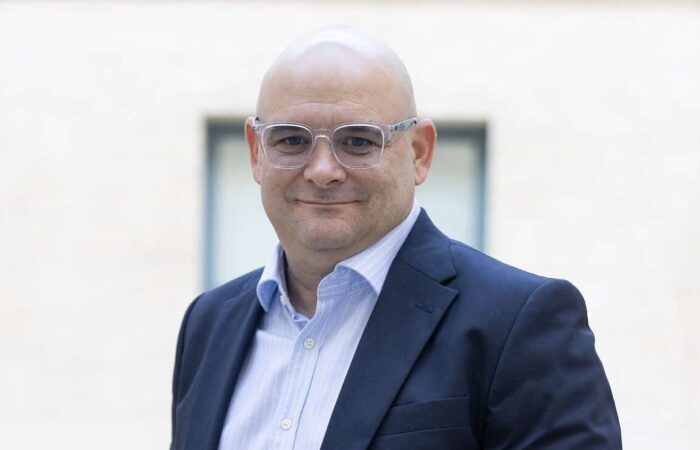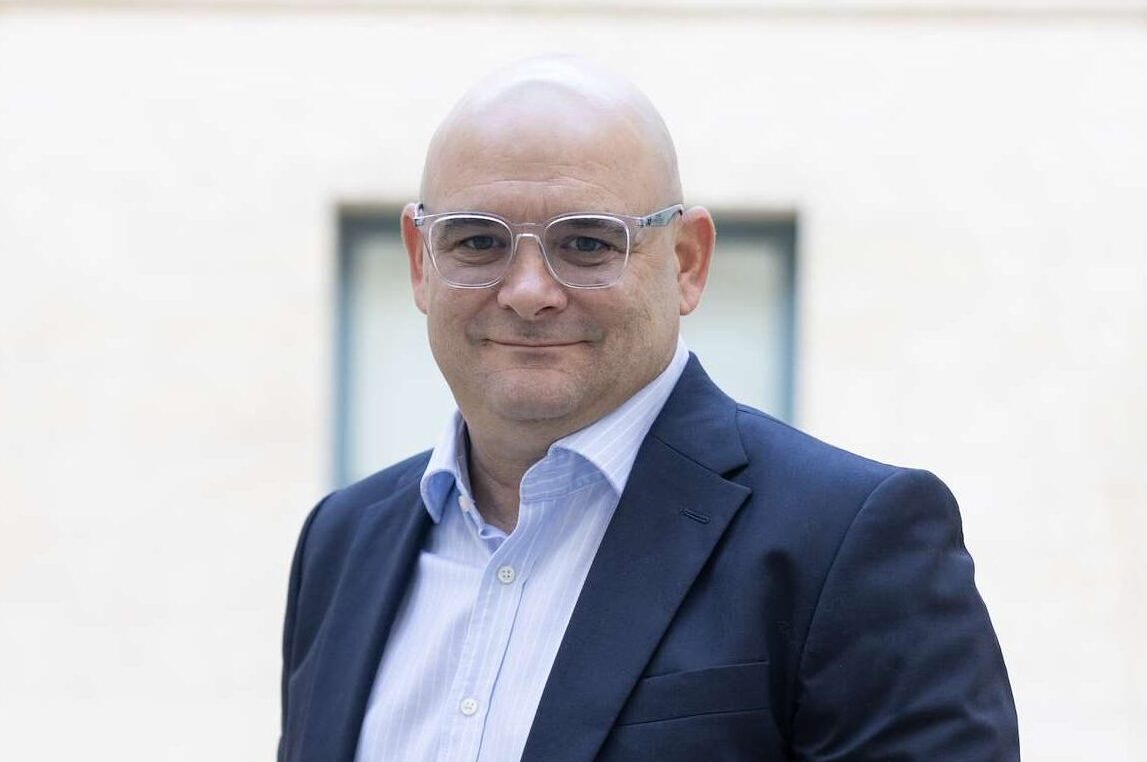

Since taking the helm of Malta Enterprise in September 2024, George Gregory has restructured the corporation around three dedicated units and pushed investment forward across semiconductors, aviation, pharmaceuticals and sustainability. Here, he explains why Malta’s stability and agility continue to draw in German investment.
Q: What drew you to Malta Enterprise, and what is your vision for its role in attracting higher-value investment?
Throughout my career, I have always set goals over a five- to seven-year horizon. By my mid-fifties I felt it was time to do something different, to give something back. Malta Enterprise sits at the intersection of policy and commerce, and my background in advisory work, tax and corporate services gave me a clear sense of what investors need on the other side of the table. Within the first weeks, that combination was already unlocking value: a client I met early in my tenure had been hesitating over an expansion for years. Once we reframed the financing and tax structure together, his adviser called me the same afternoon to say he was ready to proceed. That kind of direct impact is what drew me here.
Q: You have restructured Malta Enterprise to be more customer-centric. What has that involved?
The core change has been establishing three independent units – one for SMEs, one for startups and one for large and FDI projects, each with tailored services. Equally important, I wanted the client experience to be seamless from start to finish within a single team. Previously, attraction, evaluation and implementation were handled by three separate departments, so an investor might speak to a different person at each stage. Now the same team walks a project from first conversation through to delivery. That continuity matters commercially and from a governance perspective: the team that made the commitment is the team that upholds it.
Q: Malta Enterprise balances national development, attracting FDI and support for existing operations. How do you manage these together?
They must carry equal weight. A decade or more ago, the primary imperative was employment. Today Malta has a stable, mature economy, and the focus has shifted to generating higher value-added activity that translates into a better quality of life for citizens, which is precisely the logic of Vision 2050.
A recent example: we announced a close to €150 million FDI project in the MedTech sector that will create 250 high-quality jobs. At the same time, we assist around 3,500 individuals annually through reskilling and upskilling programmes so that when those positions come online, a trained workforce is ready. Attraction, retention and skills development are one continuous cycle.
Q: What are the two words you lead with when speaking to foreign investors about Malta?
Stability and agility. A CEO considering a €50 million expansion recently asked about energy tariffs. I was able to tell him that successive governments have held prices stable for more than 12 years and that this trajectory is projected to continue. That certainty closed the conversation.
On agility: one operator spent nine months simply to obtain a meeting with authorities in another EU jurisdiction before approaching Malta. Here, within nine weeks, he had a concrete plan of action. For any company wishing to innovate, test a new model or navigate EU regulation quickly, our scale is an asset, not a constraint.
Q: What other competitive advantages set Malta apart within the EU?
Diversification, above all. Our economy has no single dominant sector – semiconductors, aviation, pharmaceuticals, maritime, financial services and others all contribute meaningfully. If one area faces headwinds, the others provide balance.
In semiconductors, our partnership with STMicroelectronics anchors an entire supply chain of designers and service providers. The Malta Semiconductor Competence Centre – developed jointly with academia and industry in under six months – is already accelerating 12 startups.
In aviation, a large aircraft registration base, combined with multiple maintenance, repair and overhaul providers (MROs) and growing interest in finance leasing, has created an integrated cluster.
In pharmaceuticals and MedTech, the cycle runs from research through to production and certification, all within Malta.
Q: How important is innovation, particularly AI and advanced manufacturing, to Malta’s next phase of development?
Innovation must be understood broadly. It includes AI and digital technologies but also manufacturing process innovation – STMicroelectronics will operate the largest back-end semiconductor facility in Europe from Malta, and it will be entirely dark. Budget measures now provide a 175% rebate on qualifying research and development expenditure, and the government is actively incentivising Manufacturing 4.0 and 5.0 approaches. The more automated and knowledge-intensive our operations become, the less exposed the economy is to external shocks and labour shortages.
Q: How is Malta Enterprise embedding sustainability into its strategy?
Smart and sustainable development is one of the pillars of Vision 2050, and it is fundamentally citizen-centric: a more sustainable economy is a better-quality environment for the people who live here. We have restructured internally to include a specialist in sustainability, and we are actively supporting projects that close resource loops – recently approving one that will recycle and reuse industrial residues within Malta, reducing both waste and operating costs for the investor.
Q: What is your message to German investors on why now is the time to invest in Malta?
Germany has been a consistent partner for Malta since the 1960s, and German companies that have come to Malta have expanded their operations in Malta and grown into sustainable higher-value added operations over the years. The sectors I have described – semiconductors, aviation, pharmaceuticals, maritime, financial services – all have significant German participation, from Lufthansa in MRO to Playmobil in manufacturing. That continuity reflects the fundamental point: Malta is stable, and that stability is measurable. The EU, the IMF and Malta’s own projections all point to continued growth through 2030 and beyond.
In the current global environment, where geopolitical uncertainty is reshaping supply chains and investment decisions, operating from a stable, agile, EU-member jurisdiction carries real strategic value. And for any company that wants to understand EU regulation from the inside before scaling across the bloc, Malta offers exactly that – a fully integrated, manageable entry point into a 450-million-person market.