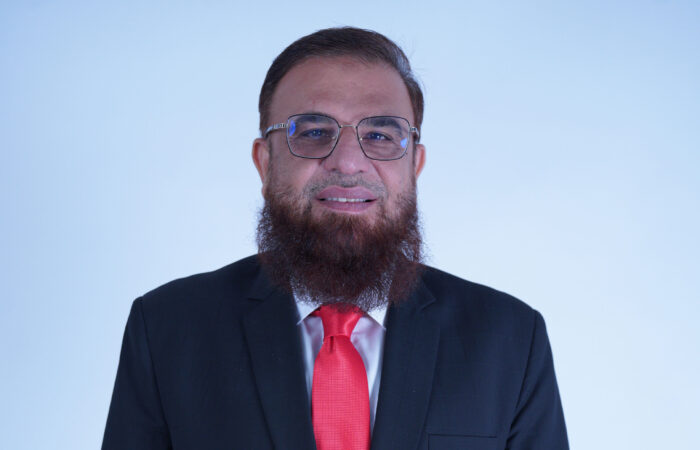

Faheem Haider, CEO, Mari Energies Limited, leads one of Pakistan’s most expansive integrated E&P platforms, supplying 31% of the country’s gas. Since 2020, the company has scaled its exploration footprint from 19 to 72 blocks across 155,703 square kilometres, secured 23 offshore blocks in the Indus and Makran basins and extended Mari Field plateau production to 2035. Alongside core hydrocarbons, MariEnergies is diversifying into mining within the Tethyan Belt and into data centres in Islamabad and Karachi, while advancing Pakistan’s first Smart Well, AI engineering tools and a pioneering Carbon Capture and Storage (CCS) project.
Q: What brought you back to Pakistan in 2020 and how has your vision evolved since then?
After a significant international career, my return was driven by the desire to contribute to Pakistan’s E&P sector. I was appointed as Managing Director & CEO of MariEnergies in 2020, at a time when several multinational companies were exiting or scaling down operations, despite Pakistan’s considerable potential for sustainable production and new discoveries.
The initial vision focused on strengthening existing operations and onshore exploration, followed by a phased entry into offshore exploration through partnerships with international companies. A key decision was to prioritise the flagship Mari Field by extending plateau gas production from the Habib Rahi Limestone (HRL) reservoir for fertiliser customers. Through a pressure enhancement project undertaken in collaboration with customers, plateau production was extended from 2023 to 2029 and, following the Ghazij discovery, to 2035 and beyond.
Focused onshore exploration across the existing portfolio validated the belief that Pakistan’s onshore potential remains significant, resulting in several discoveries. These include Ghazij and Shawal (2023) within the Mari Field; Shewa (2022) and Spinwam (2025) in the Waziristan Block; Soho (2025) in the Sujawal Block; and Benari, Jhim East and Pateji discoveries in the Shah Bandar Block in partnership with Pakistan Petroleum Limited.
The exploration footprint was expanded through participation in successive bidding rounds since 2020, increasing the exploration portfolio from 19 to 72 blocks and extending coverage to approximately 155,703 square kilometres, creating a sustainable future exploration portfolio.
In October 2025, participation in Pakistan’s offshore bidding round covering the largely underexplored Indus and Makran basins—spanning 281,000 square kilometres with only 17 wells drilled to date—resulted in securing 18 blocks as operator and 5 as a joint venture partner. We would welcome international partners for technical collaboration and to diversify exploration risk, with Turkish Petroleum having already executed offshore exploration agreements in Pakistan.
In parallel, diversification initiatives were undertaken to mitigate oil and gas commodity price cycles, including entry into the mining sector and investment in data centres through the development of a nationwide network of Tier III/IV-certified, purpose-built facilities.
Q: Which decisions most reshaped MariEnergies since your appointment?
MariEnergies has expanded its footprint by acquiring new onshore and offshore acreage in Pakistan and diversifying into the mining and technology sectors, including data centres. Gulf-based investors and partners are invited to evaluate these opportunities. As Pakistan currently imports oil and RLNG, new domestic discoveries can support local demand, while additional volumes—particularly from a major offshore discovery—can position the country for international exports.
In mining, Pakistan holds significant untapped potential, particularly in Chagai, Balochistan, a largely under-explored region capable of hosting world-class copper and gold porphyry deposits. The Tethyan Metallogenic Belt, extending over 3,000 kilometres from Europe to Balochistan, has yielded more than 240 discoveries in the past six decades. Mari Minerals has secured a sizeable portfolio of mining licenses within this belt. With rising global demand for minerals and rare earth metals, mining represents a key future growth pillar for both the company and the country.
In the technology domain, subsidiaries Mari Technologies and Sky 47 are developing large-scale data centres in Islamabad and Karachi, providing cloud, managed and colocation services, along with AI-powered solutions and cybersecurity. Building on the strong brotherly relations between the Gulf countries and Pakistan, we look forward to mutual investment and the sharing of expertise between the two nations.
Q: What competitive advantages enable you to sustain leadership within Pakistan’s petroleum exploration and production sector?
I believe we have few competitive advantages, one being that MariEnergies is an integrated E&P company. Mari Services division (MSD) as our services arm provides gravity, magnetic and seismic surveys along with inhouse seismic processing centre. We also have a mud logging unit and five drilling rigs catering to drilling depths of 2,500-8,000m with associated crews.
We have footprints in all the four provinces of the country and have experience of exploration in all the major basins in the country. We also have competent in-house technical teams available, who work collaboratively to sustain a pipeline of drillable prospects. Once the discovery is made other departments move in for various phases of project development.
Another advantage is our excellent relationship with various stakeholders in the industry and our Joint Venture partners. Our shareholders include Government of Pakistan, Oil and Gas Development Company Limited (OGDCL) and Fauji Foundation a hybrid social enterprise primarily engaged in welfare of ex-servicemen.
Q: What concrete investment opportunities are emerging from MariEnergies’ UAE partnerships?
Our collaborations with leading UAE institutions are creating meaningful strategic alignment between Pakistan and the UAE across the energy and minerals value chains. These partnerships combine Pakistan’s strong technical, operational and resource base with the UAE’s global reach, capital strength and commercial expertise, resulting in mutually reinforcing synergies.
In the upstream energy sector, such collaborations demonstrate international confidence in Pakistan’s exploration and development capabilities and support portfolio diversification beyond domestic assets. They also enhance knowledge transfer, operational benchmarking and access to global best practices, strengthening long-term value creation.
Similarly, in the mining sector, partnership with UAE-based entity is accelerating exploration activities in highly prospective areas, improving project execution standards and opening pathways for downstream development. These joint efforts are helping to de-risk early-stage projects while positioning them for scalable investment.
Overall, the success of these collaborations is expected to catalyse further cross-border investments, not only between Pakistan and the UAE but also by attracting broader international interest. We see expanding opportunities across exploration, development, processing and associated infrastructure in both the energy and mining sectors, contributing to deeper economic and strategic ties between the two countries.
Q: How are you approaching innovation and digital transformation in Pakistan’s energy sector?
The deployment of Pakistan’s first Smart Well underscores MariEnergies’ commitment to integrating advanced instrumentation, real-time monitoring and data-driven decision-making to optimise production, enhance reservoir management and operational safety, reduce intervention costs, maximise recovery and minimise environmental impact.
In parallel, the deployment of first ever AI-powered engineering assistant marks a major step in MariEnergies digital transformation journey, enhancing Operational excellence through intelligent data management. This tool empowers field engineers with accurate, up-to-date information for troubleshooting, inspections and planning. Its advanced capabilities improve operational efficiency and reduce downtime.
Together, these initiatives highlight our approach to digital transformation: adopting proven global technologies, localising them to Pakistan’s operating environment and scaling solutions that deliver measurable operational value. By building strong internal capabilities and partnering with leading technology providers, MariEnergies is setting new benchmarks for digital excellence and leading the evolution of Pakistan’s energy sector toward a smarter, more resilient future.
Q: What has been your sustainability strategy as an ESG leader in Pakistan’s energy sector?
With Pakistan highly vulnerable to climate change, sustainability has become central to its corporate decision-making. In alignment with its ESG Policy, MariEnergies has issued its first integrated annual report and aligned its operations with global sustainability standards, emphasising carbon footprint reduction, responsible resource management and community engagement.
MariEnergies is actively working on a Carbon Capture and Storage (CCS) project, the first of its kind in Pakistan which is aimed at capturing CO2 from Sachal Gas Processing Complex waste gases and injecting it into a saline aquifer. The company is also undertaking a project jointly with a partner to capture slip stream of hydrocarbons and supplying them to industry for creating economic value instead of venting.
Our participation in COP28 and ongoing alignment with the Oil & Gas Decarbonization Charter (OGDC) reinforce our commitment to be part of the solution, not just through advocacy, but through action, at home and globally.
We aim to position MariEnergies as a national ESG leader by 2030. There is still much to achieve but our vision is clear, our ambition continues to grow and our commitment remains unwavering.
Q: Why should global players consider invest in Pakistan?
UAE investment in Pakistan is occurring in diverse sectors such as renewable energy, Artificial Intelligence, minerals, agriculture and Fintech. Pakistan has tremendous potential for collaboration in these sectors and together the two countries can drive forward innovation that is beneficial for both the countries and the wider region.
In January 2024, Pakistan and the UAE signed multiple agreements worth more than $3 billion for cooperation in railways, economic zones and infrastructure. Pakistan considers the UAE an optimal export destination due to its geographical proximity, which minimises transportation and freight costs while facilitating commercial transactions.
In the last couple of years Pakistan has stabilised its economy and is now pursuing policies for economic growth and it seems to be the right time for UAE investors to invest in Pakistan and take advantage of the governments investment friendly policies.
Q: How would you describe your leadership style?
Over more than 28 years, I have held diverse functional and leadership roles across the exploration and production value chain, providing a strong understanding of E&P projects from both technical and commercial perspectives. Exposure to leading international organisations has reinforced the importance of disciplined execution, robust systems and sound processes in building sustainable businesses.
These experiences have shaped a leadership approach that is collaborative and people-centric, while firmly anchored in professional excellence. I believe lasting performance is achieved when capable teams operate within strong institutional frameworks, supported by clear processes, accountability and shared values. At MariEnergies, the focus is on strengthening systems and institutions so that performance is consistent, resilient and not dependent on individuals, but on enduring organisational capabilities.