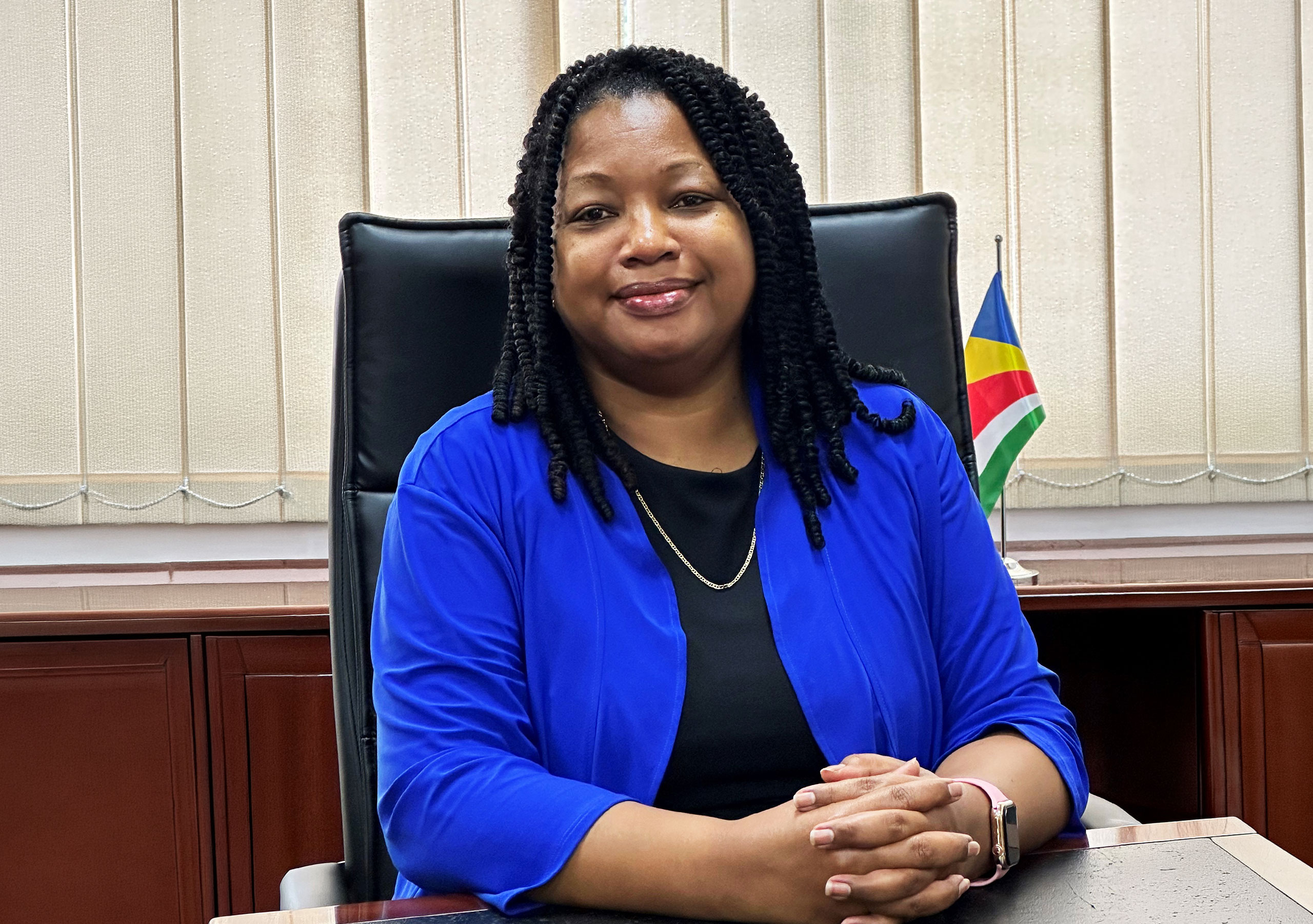

From foreign direct investment to green industry, Anne Rosette, CEO of the Seychelles Investment Board (SIB), is responsible for turning national policy into bankable projects for global investors. Here, she explains how SIB is positioning Seychelles as a strategic, investment-ready partner for the UAE.
Q: How has your role evolved since you became CEO in 2021?
My focus has been strategic positioning: attracting the right global investment into Seychelles while balancing two responsibilities. SIB executes government priorities, and we also serve as the custodian and primary partner for investors. The core work is aligning the Government’s national development strategy with investors’ needs and requirements, so outcomes are win-win for Seychelles and for investors bringing ambition and capital.
We have modernised how we engage: clarifying policies and procedures, reducing duplication and red tape, strengthening constructive dialogue with internal and external stakeholders and removing barriers where they are unnecessary. We also refreshed SIB’s brand and messaging to reflect clarity, simplicity and impact.
Q: How do you want investors to perceive SIB?
As a world-class service provider that operates to a high standard. That depends on a committed team with strong planning and strong execution. We are improving capability and service delivery efficiency, introducing tools and resources that help the team perform and investing in staff development so they can support the business effectively.
I set strategy; the team delivers day-to-day. They must be empowered, prepared and able to spend the time needed with investors to provide the level of service we expect.
Q: What drove the $67 million rise in FDI in Q3 2025?
Coming out of COVID-19, we worked intensively to help rebuild momentum as the country stabilised. With limited budget and a team of 25, we increased the volume of projects assessed and accelerated assessment turnaround. When counterpart agencies lacked information, we sourced and provided it to enable faster decisions. We do not wait; we proactively find answers, validate them, and move processes forward.
Real estate grew following reforms last year, reaching $48.07 million. Tourism maintained momentum, with a focus on quality tourism; we recorded USD 28.23 million across four projects. The United Arab Emirates was a valued partner, with $24.5 million across two projects.
Q: How are you inviting UAE investors into energy and green industry?
In 2023, we worked with the United Nations Development Programme to develop the SDG Investor Map, which identifies priority Sustainable Development Goal areas for investment. On energy, Seychelles spends about $400 million importing fossil fuels for electricity generation. We already have UAE support, including Masdar, and a photovoltaic project that will be implemented on the lagoon.
In 2024, we developed an industrial policy aligned to green industries. We are assessing export value chains and opportunities, including medicinal plants, and exploring a biodiversity or biocentre concept that would cover both terrestrial plants and marine resources.
Q: How are you working to streamline entry for UAE investors?
We are reviewing fiscal predictability and double taxation-related arrangements with the UAE, and we are developing investor-attraction programmes that respond to practical needs, including the ability to stay for extended periods, bring family, move in and out easily and reduce friction in travel and entry processes. We have not finalised these incentives, but that is our direction.
On digital connectivity, we are advancing digital platforms to make trade easier domestically and internationally, and we are exploring models such as economic zones, learning from arrangements with strategic partners, including the UAE.
Q: Which technologies are you investing in?
The investment portal, which will streamline investor interactions with government for approvals and processing. SIB will operate as the back office overseeing the process, and investors will use one interface to connect across approvals, including planning, licensing, permits, passports and work visas or permits.
We are improving internal tools and capacity so the team can respond faster to queries and deliver information more efficiently, including through analytics, artificial intelligence, large language models, machine learning and related systems.
Q: How does sustainability shape your outlook?
Sustainability is central and aligned with Seychelles’ priority sectors and the 2024 national strategy. Economic planning has advanced work on climate finance, including with the World Bank, and supported projects to develop bankable opportunities in climate and energy.
For me, sustainability includes environment, people and community. Development must raise living standards, and improve access to electricity, water and services, so growth is balanced and socially stable. That stability supports long-term investor confidence.
Q: Why is now the time for UAE investors to consider Seychelles?
Seychelles is growing, and the data reflects that. There are green opportunities ready to move from early-stage concepts into commercially viable development for the private sector. Investors can also build partnerships with local investors where required, creating trust and shared value. UAE partners regularly ask which projects are available, and our job is to bring them bankable opportunities as quickly as possible.
Q: What still needs to be strengthened?
Seychelles is at a transformative point. To realise its potential, we must be strategic, build trust, strengthen the business mindset and improve de-risking mechanisms.
That requires stronger systems, including insurance, and a more developed financial sector, moving beyond international business companies and offshore structures toward investment vehicles, capital markets and funds that can work with local investors and finance businesses on the ground. We do not restrict investors from repatriating funds, but we must also improve practical processes such as the ability to bring funds in and open bank accounts efficiently.
Q: How did your years at Seychelles Breweries shape your leadership?
It shaped how I build and empower teams. I am not here to do the work of my team; I build people who can deliver, with clarity on responsibilities and trust in execution. Managing a target-driven team required daily planning, rigorous follow-up and accountability. I lead with empathy, but I expect commitments to be delivered.
It also reinforced a solution-driven mindset. In government, obstacles are constant; progress depends on moving from problems to solutions. Seychelles is small, with limited resources and capacity, so we must be deliberate about what we want the country to become.