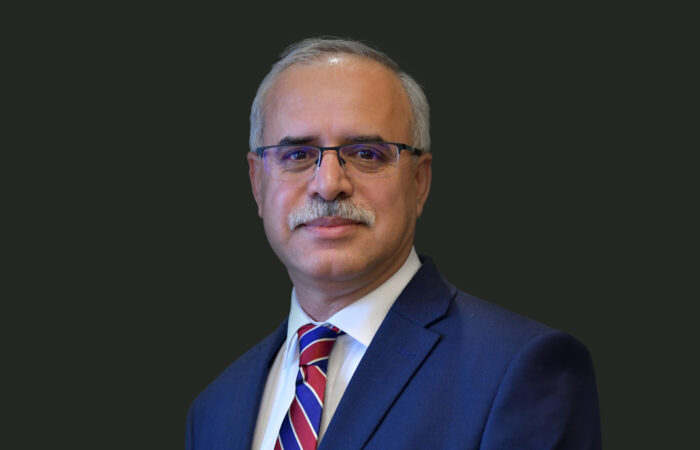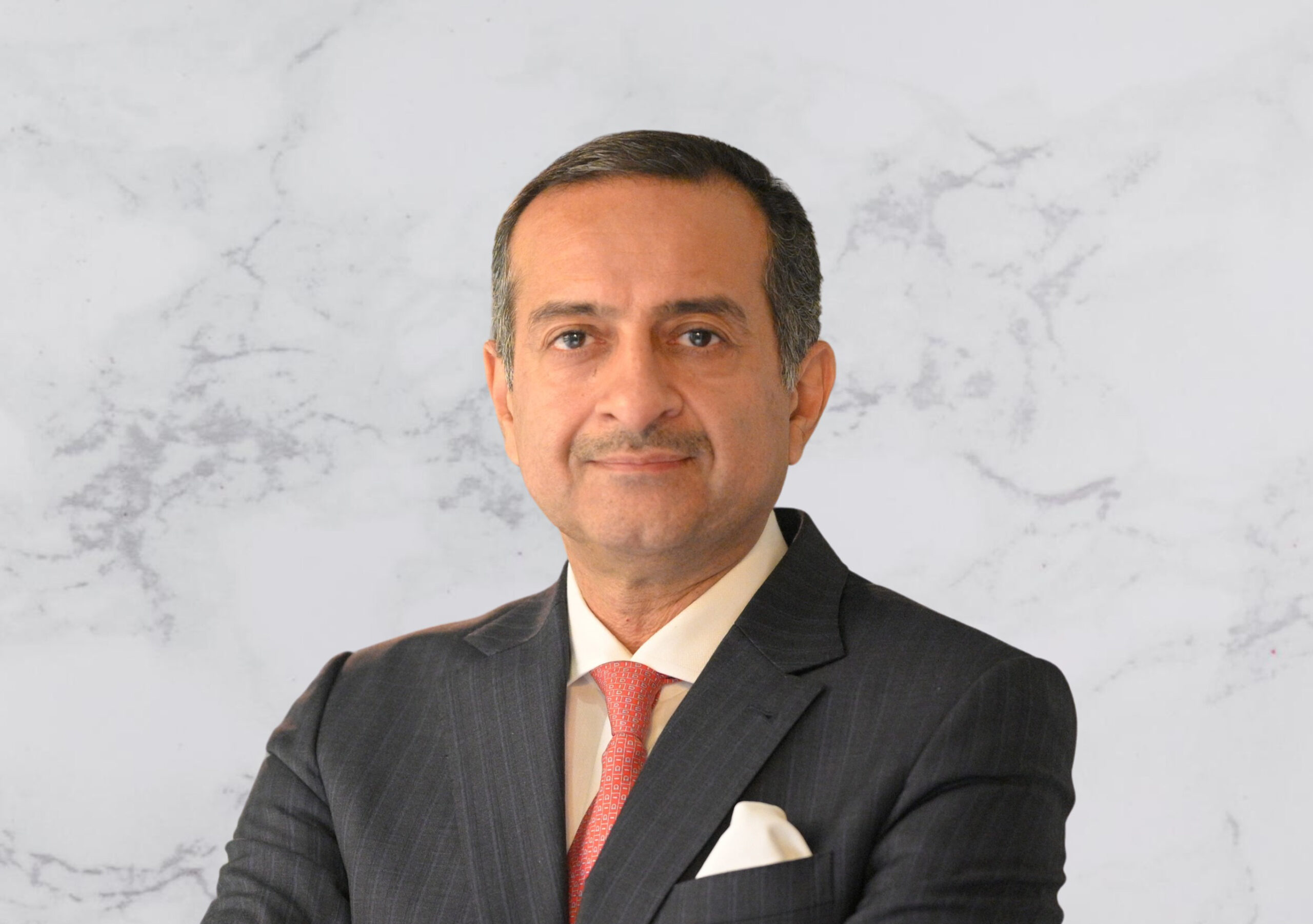

Since his appointment as CEO of Al Baraka Bank (Pakistan) in 2022, Muhammad Atif Hanif has driven a transformation anchored in culture, innovation and differentiation. Operating within the Bahrain-headquartered Al Baraka Banking Group, his strategy has focused on unlocking domestic potential while deepening international engagement. A flagship initiative, the Al Baraka Group Inter-Franchise Collaboration, was launched to connect Pakistani exporters with new markets across Africa and the Middle East. Today, the bank is positioning itself at the intersection of Islamic finance and economic development, with the halal economy emerging as a central platform.
Read selected extracts from the interview below.
Q: What have been the priorities of your tenure so far?
Muhammad Atif Hanif, CEO: Al Baraka Bank (Pakistan) has operated in Pakistan since 1992 as the country’s oldest Islamic bank. When I joined in 2022, I found we had grown more slowly than the industry, despite being part of Al Baraka Banking Group, a strong global Islamic banking group headquartered in Bahrain with sponsors from Saudi Arabia and operations in 13 countries.
Within one month, I presented a strategy to the Board, identified weak areas and set a simple goal: become a sought-after employer first, then a sought-after bank for customers. With 2,300 employees, transformation had to be executed largely with existing people, with selective hiring at senior levels over time.
We launched major human resources reforms in the first 60 days: aligned remuneration and benefits with peers, upgraded staff health Takaful limits and introduced parents’ health Takaful, which was uncommon in Pakistan’s banking sector. This created immediate trust and positive momentum across the bank as employees’ parents received coverage and used it for major treatments.
After establishing internal confidence, we launched the business strategy; the turnaround started early, and we achieved our year-end profit target by April or May.
As a smaller bank, we pursued non-routine, innovative initiatives. We leveraged Al Baraka’s presence in markets where few Pakistani banks operate (including Jordan, Egypt, Tunisia, Algeria, South Africa, Türkiye and Bahrain) to build cross-border business.
In 2023, amid Pakistan’s foreign exchange constraints, we launched Al Baraka Group Inter-Franchise Collaboration to Enhance the Exports of Pakistan, starting with South Africa. We identified 12 traded sectors, selected 60 leading Pakistani exporters and 40 leading South African importers, and built an internal trade finance portal that functioned as a first-level business-to-business platform, searchable by country, import/export, sector and company profiles with contact details. We deployed it on both countries’ websites and held a webinar with participants across Karachi and multiple South African cities, attended by stakeholders including the State Bank of Pakistan, diplomatic representation and our Group Chief Executive Officer from Bahrain.
The initiative expanded group-wide, became a recurring requirement across subsidiaries, and earned Al Baraka Bank (Pakistan) an Innovators Award at the Group level, followed by another recognition the next year for sustaining the programme.
We then introduced a product-focused webinar model, starting with Sialkot sports goods. We engaged Sialkot exporters by demonstrating the portal’s value in opening new markets beyond Pakistan’s traditional export destinations in North America, Europe and the United Kingdom. This shifted participation toward Pakistan’s top corporate exporters.
Given Al Baraka Bank (Pakistan) is a smaller bank, what is your key differentiating factor versus the rest of the banking sector?
MAH: Al Baraka Banking Group is sponsored by the Dallah Group (Saudi Arabia), a diversified group with 260 companies; its founder, Sheikh Saleh Kamel, also established the Islamic Chamber of Commerce and Development.
The Islamic Chamber of Commerce and Development established its headquarters in Karachi in 1982–1983 and engages member chambers across 57 Muslim countries, including through an annual Global Islamic Finance and Economy Conference in London. After meeting its Secretary General, I decided we would activate and sponsor its work in Pakistan.
Our differentiation is that we consistently create and execute new initiatives for customers, policymakers and businesses rather than business-as-usual banking. A key platform is the global halal economy, beyond meat, including pharmaceuticals, cosmetics, tourism and fashion. We hosted Pakistan’s first halal conference in Lahore in June and a second in Karachi, including a full-day halal fashion workshop.
We also took 10 leading Pakistani corporates to the London Halal Forum to exhibit halal products. This has strengthened our brand with government stakeholders and industry as a bank known for direction-setting ideas.
We extended the export portal model into Sialkot by hosting a sports goods webinar connecting 70 leading exporters with 10–15 importers across 12 countries, focusing on new markets.
We also addressed Pakistani family business continuity challenges by bringing a leading Saudi family business consultant to Pakistan for sessions with 35 leading corporate groups in Karachi (September 2023), then repeating the initiative in Lahore the following year. These programmes are sequential and recurring, not one-off events.
Q: What strategic synergies do you see in GCC-Pakistan linkages, especially remittance corridors and cross-border Islamic finance flows?
MAH: Pakistan is strategically important due to its location, population and ties to the GCC, with approximately 12–13 million expatriate Pakistanis concentrated in Saudi Arabia and the United Arab Emirates and contributing significant remittances.
Connectivity is reinforced by direct flights from multiple Pakistani cities to GCC destinations. The Group is also launching a digital bank in Saudi Arabia, creating further synergy potential with Al Baraka Bank (Pakistan).
Our innovation also targets niche segments where scale is less relevant. Pakistan is among the largest Hajj markets globally, with around 180,000 pilgrims annually, close to Indonesia’s total; roughly half travel under a government programme and half via private tour operators.
We built a wholesale solution for private Hajj tour operators by offering competitive corporate-rate service pricing (including remittances to Saudi Arabia) through a consortium-style approach. In 2023, we signed a memorandum of understanding with 130 of 904 operators, then expanded via conferences in Karachi, Lahore and Peshawar. Market share in this segment rose from about 18% to about 48% the next year and reached about 60% over the last two years, with spillover into operators’ broader business and personal banking relationships.
Q: Beyond initiatives like Raast real-time payments and partnerships with Nift ePay and PayFast for e-commerce, what are your key innovation priorities?
MAH: The trade portal is being converted into a mobile application, planned for launch in December as a global event.
Our Chief Information Officer received recognition in Pakistan at a Chief Information Officer community event in Karachi for the portal as a game-changing banking technology initiative, and later received recognition at a global Chief Information Officer conference in Egypt; we learned we were the first bank globally to launch a customer-facing product of this type across multiple international jurisdictions.
Pakistan has a young demographic, with approximately 65%–67% of the population under 30. We cannot assume older leadership understands youth needs, so we designed engagement through experience and purpose.
We selected nine students from six universities in Karachi and sent them on a study tour to Gilgit and Skardu, with defined deliverables by skill (videography, documentary, photography, art, poetry, writing and culinary work). Their assignments included documenting people over 100 years old, profiling porters supporting K2 expeditions and their families, visiting gemstone mines and documenting apricot-kernel oil production and cuisine.
They returned and held a roadshow at our Head Office showcasing documentaries and artwork, with the culinary student serving regional dishes; we later hosted a similar roadshow at a five-star hotel for customers and diplomats.
We used this platform to launch NextGen Banking and a co-branded card, with participating universities engaged for campus roadshows. Many selected students were scholarship recipients who could not otherwise afford such travel.
We then brought 10 students from Gilgit and Skardu to Karachi to experience coastal life and key civic institutions; this strengthened our credibility and engagement with youth.
Q: Why should global investors consider Pakistan?
MAH: Pakistan is underrated: reported gross domestic product is about $400 billion, but inclusion is a core issue, with at least 50% of the economy undocumented; actual economic size could be closer to $800 billion to $1 trillion.
Even during the 2023 crisis (inflation and foreign exchange constraints), domestic consumption remained strong, visible in fully occupied restaurants, overbooked car dealerships and continued international travel, reflecting the scale of the undocumented consumer economy.
From a banking perspective, Pakistan has exceptional potential: roughly 150 million adults, about 53 million bank accounts, with 13–14 million dormant, implying about 40 million unique active account holders. Approximately five million people transition into adulthood each year, while banks open fewer than four million accounts annually, leaving around 100 million adults unbanked, including many in agriculture and other productive sectors.
For investors, opportunities include consumer franchises, transport, education, tourism, mining, banking and financial inclusion, fisheries, textiles and information technology.
Domestic tourism has expanded significantly, especially in northern regions such as Gilgit, Skardu, Naran and Chitral, driving extensive hotel construction. Coastal tourism is emerging; a new coastal resort is fully booked at minimum room rates around €300, with predominantly Pakistani guests.
Tourism demand includes expatriate Pakistanis increasingly splitting visits between family time and leisure travel within Pakistan, and rising interest from foreign visitors. There is also headroom for higher-value tourism infrastructure (cable cars, island resorts, scuba diving and adventure sports).
Education demand is strong; Pakistan has limited capacity relative to its population, and there is potential for global education providers to expand, including from the United Arab Emirates. Medical education also reflects willingness to pay, with annual tuition around $8,000–$10,000 in some institutions.
Information technology is a priority; we established a branch at NASTP, an information technology hub, to engage the sector and develop relevant banking products.
Q: How would you describe your leadership style?
MAH: My career has been a sequence of turnaround and build assignments, typically requiring five to seven years to develop portfolios and teams before moving to the next build.
My core message is to unlearn past approaches to pursue larger targets with creativity, keep strategy simple and apply the 80/20 rule by focusing on a few high-impact objectives that set momentum.
We executed a major corporate growth push driven by a regulatory change that penalised banks if advances were below 50% of deposits via an additional 5% tax. While many banks pursued large transactions, we focused on core banking by using our trade finance portal pipeline: 120 leading Pakistani companies were mapped (30 existing borrowers and 90 non-borrowers), processed through structured review batches with frequent monitoring.
By 28 December, we achieved 52% advances-to-deposits ratio and onboarded 67 top corporate customers within five months, representing 52% growth in corporate advances over that period.
Our strategy has been brand-building leading to balance sheet growth and profitability. Our credit rating improved from A+ to AA within two years, driven by brand momentum and high-quality advances growth.
This year, we paid our first dividend in 35 years, reactivating engagement from Gulf-based shareholders who had been difficult to reach previously due to incomplete documentation.
Regulators and industry have also recognised our trajectory; State Bank of Pakistan leadership has participated in our events, including our halal conference. We are now at a take-off point, and our strengthened brand and improved affordability have enabled us to hire top talent from leading banks.