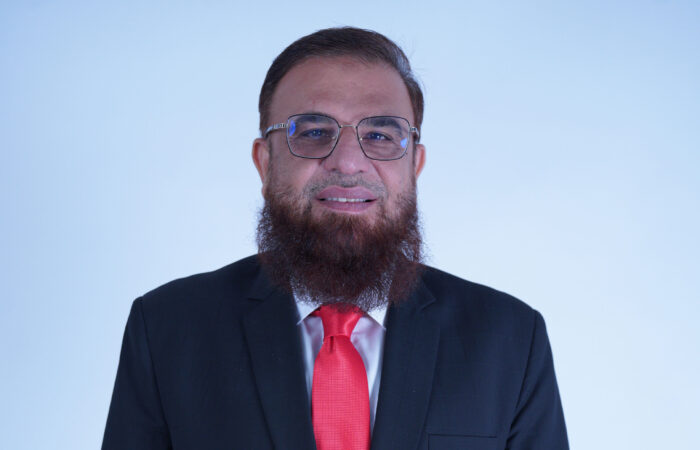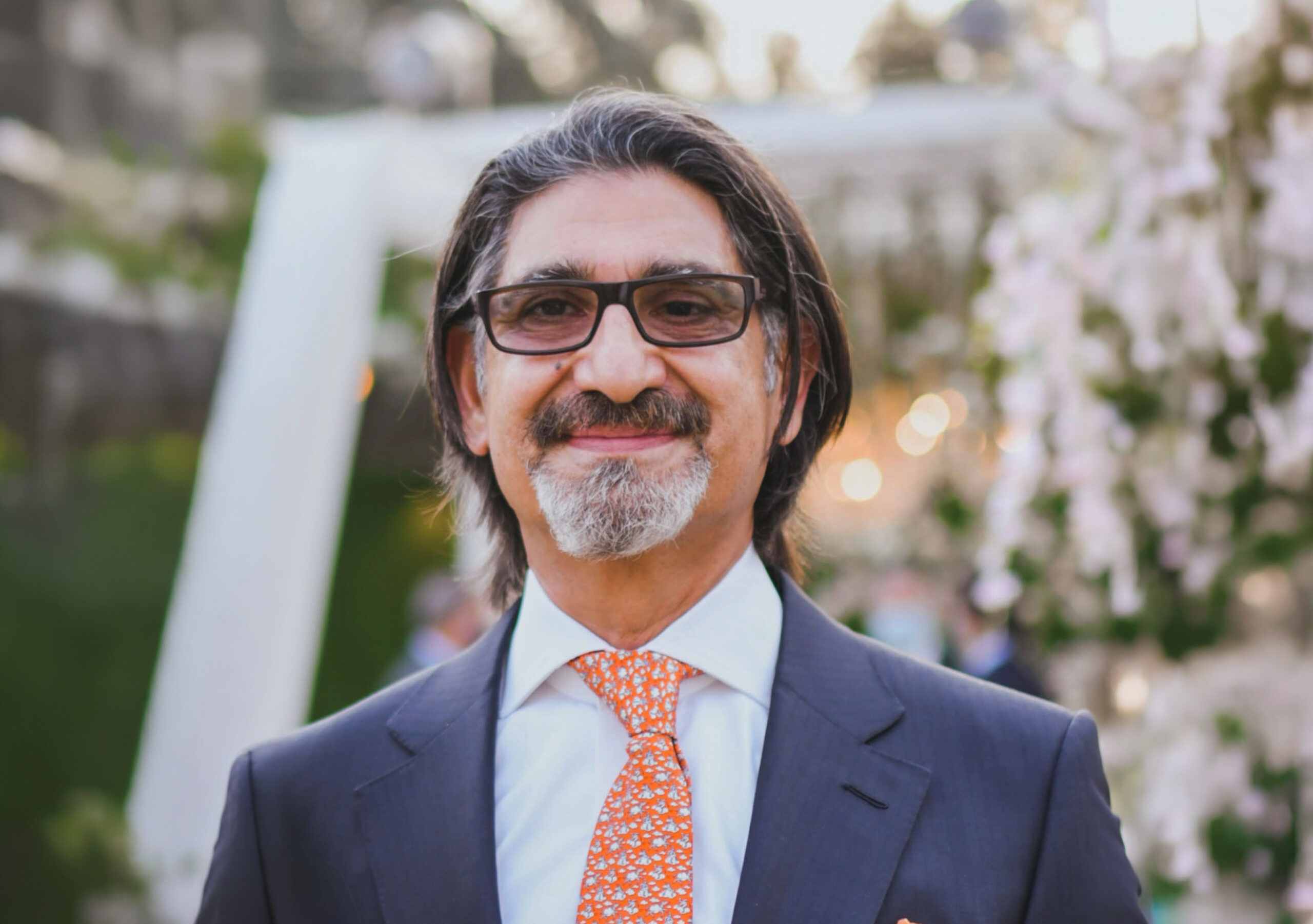

Crescent Steel and Allied Products Limited (CSAPL) has emerged as one of Pakistan’s foremost industrial groups, with diversified operations spanning engineering, textiles, capital markets and power. Incorporated in 1983 and publicly listed, the company employs more than 700 people and operates five independent business units, anchored by its flagship steel segment.
Read selected extracts from the interview with CEO Ahsan M. Saleem below.
Q: Why is infrastructure so central to Pakistan’s development, and how has that shaped Crescent Steel’s history?
Ahsan M. Saleem: We started conceiving this company in 1983. The idea was to do something downstream of steel. And why it was so was because I believe to this day that the engine for growth in Pakistan lies in the engineering sector.
Pakistan has a lot of industry, like textiles and other basic industries. These sectors employ a lot of people, which is important, but they don’t add that much value. Engineering, on the other hand, adds a lot of value. The per capita value is much higher if you are in the engineering sector. That was the thinking behind Crescent Steel from day one.
What we do is make large-diameter pipes for oil and gas. We do pipe coatings and internal lining of large-diameter pipes. When I say large diameter, our smallest size is eight inches and the largest is 120 inches. You can drive through that. Our key customers are in oil and gas transmission, which is fundamentally infrastructure development.
Q: How important is Pakistan’s gas infrastructure today?
AMS: Pakistan has the second-largest network of gas pipelines in the world. It’s a very vast domestic network. In many major gas-producing countries, you don’t get piped gas into homes or industry. People rely on cylinders. But in Pakistan, gas is piped extensively for domestic and industrial use.
Almost 70% of our population is covered by piped gas. The network started in the 1950s, at a time when very few countries outside Europe had piped gas infrastructure. Today, the network exists, even though natural gas availability is depleting. That makes pipeline integrity even more critical.
As population density increases, safety codes become stricter because gas is transmitted at very high pressure. If pipe integrity is compromised, it becomes extremely dangerous. That’s why quality standards are non-negotiable in this sector.
Q: How do you define quality at Crescent Steel?
AMS: For oil and gas pipes, the Bible is the American Petroleum Institute (API). To supply this sector, you must have API certification. They come and inspect how your quality systems operate. These are the highest standards globally.
Our idea was to build a company that does these pipes to a level comparable with the top 5% of manufacturers in the world. That’s the benchmark we set for ourselves, and that’s what we try to maintain.
These pipes must be made to very exacting standards. There’s no margin for error. Quality, consistency and traceability are everything.
Q: Beyond energy infrastructure, you have also been deeply involved in Pakistan’s water projects. How significant is that opportunity?
AMS: Gas transmission pipes usually don’t exceed 56 inches in diameter. So people ask why we have the capacity to manufacture pipes up to 120 inches. The reason is water infrastructure.
The water sector is massive. Large cities have large requirements. Karachi, for example, is a desert city. We recently completed the first phase of a project called K-IV, which brings water to Karachi from a source about 120 kilometres away. That project used 84-inch diameter pipes.
That’s only phase one. More phases are coming, and once water reaches the city, you need major augmentation inside the city as well. Water infrastructure is going to be a huge area of demand in Pakistan going forward.
Q: Why diversify beyond steel at Crescent Steel?
AMS: Engineering businesses face a universal challenge: maintaining a full order book. Our products are bespoke. Every project has different diameters, wall thicknesses and steel grades. You cannot manufacture in advance and hold inventory.
There are times of feast and famine. A large project ends, and sometimes there is a gap before the next one starts. Diversification helps smooth those cycles. Some business units are not very remunerative, but they keep people employed and provide steady income.
We also have an investment division. That acts as a shock absorber during downturns. Part of the portfolio is strategic, and part is in blue-chip investments that generate returns. It allows us to maintain stability across cycles.
Q: How is the current financial performance?
AMS: In the last three years, we’ve grown about 93%. But we know that cannot continue indefinitely. Growth has to be sustainable.
Engineering requires continuous reinvestment in plant, machinery and people. Returns don’t come instantly; they come after a few years. If we can grow at 10 to 15 percent annually on a sustained basis, that is good enough. That’s the kind of growth that doesn’t break the organisation.
Q: How do you want Crescent Steel to be perceived by international partners and investors, particularly in the UAE?
AMS: We believe a company must be a good company. Profit matters, but you have to appeal to all stakeholders. We are a listed public company, so shareholders matter. Employees matter. We invest a lot in people—training, learning and well-being—because happy and competent people are essential.
Suppliers are also stakeholders. Communities matter as well. Any company that cannot touch the community where it operates has not done its job. As a policy, a minimum of five percent of our profit before tax goes into giving. We don’t just want to be profitable. We want to be a company that touches everyone in the right places.
Q: Given that your operations are globally integrated, with strong links to the UAE, how do you view this relationship strategically?
AMS: The UAE is extremely important from a supply-chain perspective. For pipe coatings, we source high-density polyethylene, epoxies and other materials from the UAE. Many of our global suppliers—especially European ones—now operate through UAE-based hubs. That makes the UAE a critical node in our ecosystem.
There is also potential for serving regional pipeline demand, but logistics remain a challenge. When you ship very large-diameter pipes, you are paying for a lot of air. Freight availability and cost can become prohibitive. Improving bilateral trade logistics is an opportunity waiting to be unlocked.
Q: How do you institutionalise innovation without destabilising the organisation?
AMS: Strategy is not a plan. Strategy is about looking five or ten years ahead. We invest heavily in technology and in people. Innovation has to be somewhat disruptive. If you don’t disrupt every four or five years, you run out of steam.
My role is to make sure that disruption happens in a controlled way and leads to new ways of doing things. At the same time, succession matters. Indispensable people all end up in the graveyard. The company must survive individuals. If I’m not around tomorrow, the company should go on.
Q: Why should global investors consider Pakistan?
AMS: First, Pakistan is a big market and a friendly market. Many large markets have significant barriers to entry. Pakistan does not. Second, there are vast greenfield opportunities. Many things simply haven’t been done yet. Third, returns here are very attractive. You don’t get these returns in many other places.
There are security concerns that get exaggerated. Pakistanis are fundamentally hospitable people. Yes, there are outliers, but the overall business environment is workable, regulated and familiar. People can talk business here.
Q: How does the company approach ESG responsibilities?
AMS: We are not doing sustainability for global investors. We are doing it for ourselves. If investors like it, that’s fine. We want to be a good corporate citizen. Anything we produce that affects the environment, we believe we must nullify that impact. We’ve planted close to 100,000 trees, not just on our campuses but elsewhere.
We don’t want sustainability to be a hobby horse of the C-suite. It has to be owned by everyone. If someone is running environmental initiatives but leaving taps running at home, that defeats the purpose. Each drop matters. We recycle water on our campuses and use recycled water for plantation. The idea is to take ownership of the environment.
In the social aspect, about 70% of our corporate giving goes to education, because education is a major issue in Pakistan. Around 20% goes to health. The remaining 10% is split between the environment and support for culture, writers and the arts.
Q: Tell us more about your work with The Citizens Foundation (TCF), which you co-founded and which the company supports?
AMS: In 1995, a few of us decided to do something about education. We believed the failure of education in Pakistan was both a supply-side and demand-side failure.
We set out to take education to underprivileged children and had what seemed like an audacious goal at the time: 1,000 schools. Today, we have over 2,000 schools across more than 150 cities, educating over 300,000 children.
We build more than 100 schools every year, roughly two every week. Our annual budget is around $60 million. One of our students recently got into Harvard. That shows the potential that exists when opportunity is provided. That’s why I say one card is what I do for a living, and the other is what I live for.