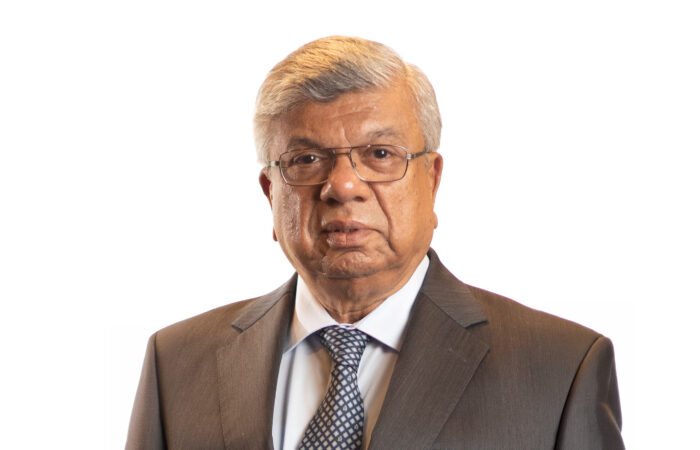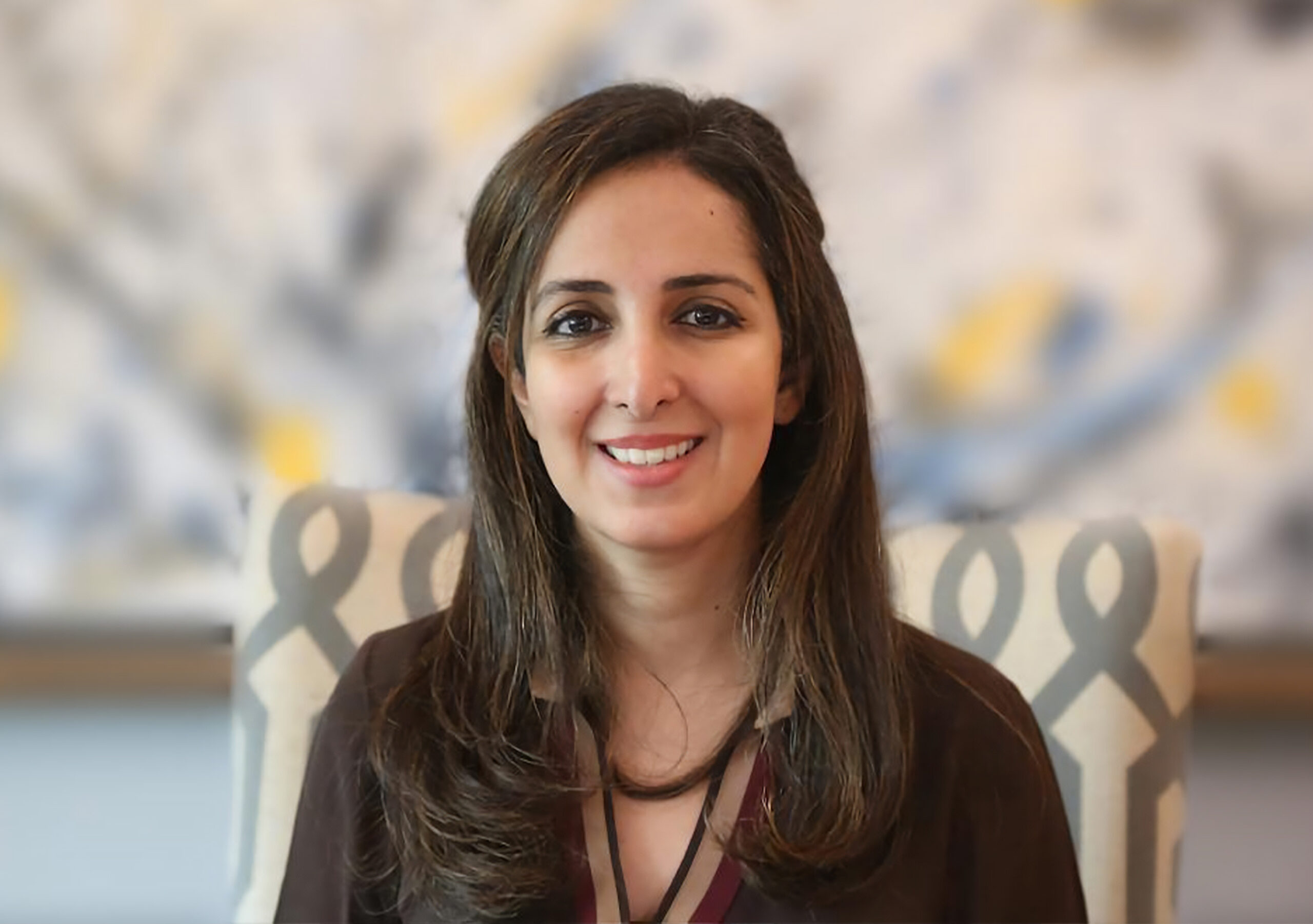

As President of TCS Group, Saira Awan Malik is steering one of Pakistan’s most entrenched logistics platforms through its next phase of growth. With more than 1,000 express centres and reach extending to around 95% of the population, she positions TCS at the centre of the country’s evolving delivery economy. The company’s operations bridges documents, parcels and e-commerce, while laying the groundwork for regional trade, digital payments and supply chains.
Read selected extracts from the interview with Malik below.
Q: How has your vision evolved since the company’s foundation?
Saira Awan Malik: TCS was founded in 2021 at a time when there was limited domestic delivery infrastructure. The company started as an attempt to set up a reliable, efficient and time effective distribution network. It has grown organically over the last 40 years when it started within the major cities. What gave TCS’ growth a boost in the mid-80s was an interesting contract with the Pakistan Banking Council, ensuring cheques were turned around within 72 hours, as mandated by the finance minister. The growth was driven by a very real need to create a financial ecosystem.
We now have over 1,000 express centres, and they have become hubs for local communities to grow their shops and industries through connectivity. Starting from that, we were able to lay the foundations for the distribution networks within this country. With our physical network, every single part of the country is reachable within 24 to 48 hours, covering about 95% of the population. We are immensely proud of this, and it gives us a strong competitive advantage, especially with the changing delivery landscape, from documents to parcels and e-commerce.
On the back of our overnight courier express capability, we grew progressively into several different verticals, both on the B2C and B2B sides. We provide services for ordinary walk-in customers, who can access our express products and other offerings such as e-commerce, visa facilitation, gift delivery and home moving.
On the B2C side, we have overland trucking, warehousing, distribution and are moving into regional trade, domestic and international freight forwarding. This forms a complete logistics services environment that addresses both individual needs and complex corporate requirements. We like to call ourselves a third-party logistics provider, offering end-to-end services on the logistics front.
I’m the president of the group, but TCS is a family business, and just like any mature family business we have been working very hard to ensure a seamless transition to the next generation because we want to preserve everything that was built by my father, the founder. My role as the president of the group is to oversee the entire businesses and companies.
Creating efficiencies within the supply chains of our big industrial and corporate customers has been an integral part of our work since it started in 1983. As a third-party logistics provider, we see that all major corporate and industrial groups are looking to create efficiencies within their supply chains. We are seeing a lot of opportunity.
Pakistan’s regional trade is in single digits because most of our exports are focused on the EU and the US market. As a logistics company, we are looking into tapping into the Central Asian, Middle East, East Africa and Chinese markets.
There is a strong focus on the export-driven agenda of the government, and the role of logistics is particularly important; they must be conducted in a cost-effective way. We feel that there is a great need to invest in local supply chains, especially in agriculture where 40% of fruits and vegetables get wasted because of the farm-to-market inefficiencies. Investments in local warehouses, fruit and vegetable processing plants, cool storages and agricultural supply chains are crucial. This is the scope that I see for the role that we can play with the right level of investments in people process and technology.
Q: How do you describe your current market position?
SAM: Our current market position remains that of a leader in express and e-commerce delivery, as well as overland trucking. In the traditional express business, we hold about 65% of the market, largely on the conventional corporate side, which is driven by documents and consumers. E-commerce is a separate dynamic because it has attracted a lot of investment over the last decade with a lot of venture players coming in and being disruptive to our model. Due to overreliance on cash, about 90% of e-commerce delivered are cash in delivery, making the courier an integral part of the chain between merchant and customer. This is the space where we saw a lot of competition, and although we hold the dominant position, it’s just around 30% to 35%. There are players who came in and are increasingly using technology and fintech-based solutions. We have increased our focus on the digital ecosystem for the e-commerce space, while also digitising our own processes.
I am working with great focus and intentionality with key stakeholders on the idea of encouraging the switch to digital payments. That is going to be a real game changer in this space, especially as the government is also strongly focused on building a cashless economy. I am currently engaged at the policy level with the government and key industry players to explore solutions such as digital wallets and digital banking licences. We are positioning ourselves as a key player in driving these efficiencies, since it is our couriers delivering the parcels and enabling QR-based payments.
Meanwhile, overland trucking in Pakistan is handled mainly by single operators, who are unregulated and with very few taxpaying players. At the same time, there is dependence on road transportation because our railway system is not up to par with other countries. Rail tends to be the most cost-effective and efficient way to transport cargo and freight, but that is not the case in Pakistan. In the formal sector, we are one of the key players, and there is a need for more such participants, as customers take comfort in knowing the business complies with axle load requirements and their goods are insured.
We have expanded our warehousing footprint over the last two years, and we are now the largest warehousing in Pakistan. We are looking to expand further, focusing on automation, with one of the most fundamental value-adding innovations being racking.
The next one is automation, and we have developed our own warehouse management systems. We are looking to offer our customers very sophisticated inventory management tools, real-time visibility on the products that are in those warehouses and eventually move towards end-to-end fulfilment models for e-commerce customers in addition to our corporate, industrial and FMCG customers.
Q: What strategic synergies are you developing to attract UAE-based investors?
SAM: All these hubs grew organically, driven by customer demand. The company, too, expanded organically, without the opportunity to bring in external funding to pursue growth. It has been entirely customer-driven and market-led. We have had a UAE and a UK hub since the late 80s because they are places with a large Pakistani diaspora. The Pakistani diaspora is about 10 million strong, with major concentrations in North America, the UK, the Gulf and the UAE. We as a Pakistani logistic company with an extraordinarily strong brand recognition, a customer-oriented mindset and entrepreneurial spirit have always followed those demands. These hubs were catered to the logistic needs of Pakistani communities and Pakistani businesses in those areas.
Our presence in the UAE offers us an important logistics gateway to the rest of the world. It’s an especially important hub for dealing with large cargo volumes inside and outside of Pakistan until such time those capabilities are available within Pakistan. We see Pakistan becoming an important logistic hub for the region in the next three to five years. However, The UAE’s central position remains unmatched and, with our connectivity to Central Asia, the Middle East and African markets, the role of our UAE hub cannot be underestimated. We are looking to grow beyond just serving the needs of Pakistani businesses to adding value within this ecosystem of regional connectivity.
TCS also has a Tashkent Office and TCS pioneered the overland trucking connectivity between Karachi and Tashkent which is a route through Afghanistan. Over the last three or four years, we have done hundreds of commercial cargo shipments through this route successfully. We are working at the highest levels of government with Kazakhstan and Uzbekistan to unlock regional trade potential. Uzbekistan alone is expected to reach $1 billion.
One of the challenges we face in regional connectivity is the need for truck fleets that comply with both Pakistani regulations and global standards, so that Pakistani businesses and logistics companies can position themselves to take advantage of these trade routes. We are exploring investment in compliant, energy-efficient fleets, but this will require a certain level of government support to enable private companies to meet the challenge.
Q: Why should global investors consider Pakistan?
SAM: All the fundamental economic drivers are there, and the Pakistani business community is extremely optimistic about the country’s growth. This sector is primed for growth. The Pakistani economy holds significant potential, with strong connectivity and a growing middle class that is particularly attractive from an investor’s perspective.
From the logistics perspective, our geopolitical significance is such that Pakistan can become a freight corridor and a logistics hub with better multimodal connectivity which companies like us can take advantage of. In addition to the road network, we are making investments in aviation and airlinks as well. The trends in Pakistan make it a wonderful place to invest in, with e-commerce growing around 20% to 25% every year. We have been outpacing this growth as a company in this segment, but e-commerce will only continue to grow.
The areas to watch in Pakistan include strong growth in data-driven and digitally enabled logistics platforms. We are working on expanding cold chain and specialised warehousing. Growth is also being driven by last-mile delivery, particularly in e-commerce, as well as cross-border trade and regional connectivity. We want to not only be the dominant domestic player, but a regional player.
We work across the entire economy—from government and education to pharmaceuticals, fashion and textiles, FMCG, banking, traditional corporates, manufacturing and auto parts—which gives us a unique perspective on the economy. The tech journey of Pakistan is still in its initial stages, and it poses a challenge. We are investing in technology to make our internal systems more efficient, while our customer-facing solutions increase transparency and visibility, providing real-time tracking. We are also exploring predictive load analysis using AI tools to optimise loads and improve planning for our trucks, leading to greater cost and fuel efficiency.
Our B2B segment is seeking end-to-end solutions and fulfilment, allowing third-party logistics providers to take over supply chain functions so that companies can focus on their core activities. At the same time, we must remain cost-effective. This requires investment in automated warehousing, fulfilment, inventory management services, cost-efficient trucking, regular compliance and insurance. On the B2C side, our e-commerce and walk-in customers are increasingly demanding convenience, shipment visibility, real-time tracking and payment solutions. These are the areas in which we are fully invested today, and they will help make the entire logistics landscape more sophisticated.
TCS is not only a courier company, but it has a mandate to help grow the country. My father wants to play a role in national service despite being a commercial enterprise. Our role in connectivity is an important part of the company’s DNA.