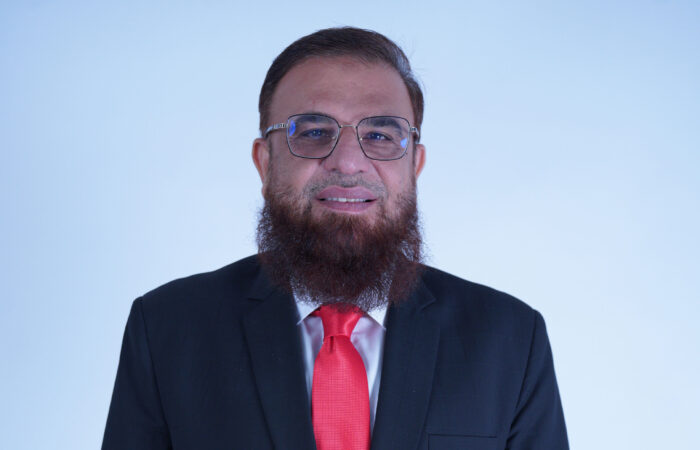

Founded around one of Pakistan’s most-loved consumer brands, Mehran Bottlers combines industrial scale with a global mindset. The Karachi-based company has manufactured Pakola, the first locally produced soft drink, since 1979, building on a legacy that dates back to 1950. Under CEO Zeeshan Habib Teli, the business has undergone a significant transformation and grown its international reach.
Read selected extracts from the interview below.
Q: How did Pakola establish itself as a national brand?
Zeeshan Habib Teli: Pakola was founded on 14 August 1950, Pakistan’s Independence Day, and launched at the PAF Museum in the presence of Prime Minister Ali Khan. The name combines “Pak” for Pakistan and “ola” from cola. It was the first soft drink of Pakistani origin. The green colour represents the national flag.
When travelling abroad, people often assume Pakola is a cola, but as you tasted, it is completely different, featuring blends of flavours like vanilla and rose and it is sweeter than Pepsi or Coke. It is a Karachi-based drink, launched and primarily produced in Karachi, with additional presence in interior Sindh.
Originally, the brand operated under Pakistan Beverage Private Limited. As the family expanded, we ran Pakola under that name for many years. In 1979, we obtained the Pepsi license, which included a non-compete clause prohibiting us from producing Apple Sidra and Bubble Up under Pakistan Beverage.
To continue making Pakola, we bought a former ice cream facility, established Mehran Bottlers, and began production there. Pakola has been produced at Mehran Bottlers since 1979. I am a third-generation bottler.
My grandfather and his brothers started this business. Then my uncles looked after it, and my father was also involved for some time. The company was passed down to the third generation when I came back from my studies in the UK. I joined as a director for a couple of years, working under my uncle. After that, I was appointed as CEO in 2005.
Q: Since then, which key decisions have defined your tenure?
ZHT: When I started in 2005, the company was very small and largely neglected because our main focus was textiles, as Pakistan is a textile-driven market. Pakola had been set aside with limited work happening there. However, I saw a 50-year legacy: one of Pakistan’s oldest brands and the first launched by our family. I wanted to revive and grow it, so I was given responsibility for this business. At the time, we had a modest setup with two small glass lines and minimal activity. I approached it with a global mindset.
In 2004–2005, we installed one of Pakistan’s first canning lines, alongside Pakistan Beverage (now Pepsi-Cola), to enable exports, as PET bottles have a shorter shelf life. Cans provided a one-year shelf life, allowing us to target markets such as the United States, Canada, Australia and Dubai. Today, our products are available in 18 odd countries, in cities including Toronto, Sydney, Houston and Las Vegas. From there, we continued to upgrade, improve efficiency, reduce waste, and modernize operations, evolving into what we are today.
From 2005 to 2020, we imported all the empty cans from Dubai, filled them locally, and exported the finished product. In 2019, a representative from the Ashmore Group, a capital investment firm, decided to invest in a can manufacturing facility in Faisalabad. As cans were central to our business, and given that I had introduced can packaging and the 250-mililitre format to Pakistan. This development immediately caught my attention. While I was in Amsterdam, I sent someone to Faisalabad. He confirmed the facility, Pakistan Aluminium Beverage Cans Limited (PABC), was being built. I asked if the land next to it was available. It was, and because it was in a special economic zone, only a 10% token payment was required. I instructed him to purchase it immediately. He asked whether I wanted to see it first; I said no, buy it the next day. We purchased it and, upon my return, I visited and decided to build a can-filling plant next door.
Within 18 months, we established our facility directly beside the can manufacturer, sharing a boundary wall. This proximity allowed us to drive growth in the can market. Previously, Pakistan consumed around 200 million cans annually. Today, it consumes 400–500 million cans, and about 150 million of them are filled by us in Faisalabad.
Every morning, our trucks collect empty cans, we fill them the same day, and finished goods leave in the evening. There are no lead times, transport costs or storage costs. This unique setup, cans from one plot, filling on the adjoining plot, created the ideal supply chain equilibrium and is rare in Pakistan. It is a major reason we are where we are today, and whilst having almost zero carbon footprint in supply chain.
Q: How do you position yourself to UAE investors?
ZHT: Our facility gives UAE investors a direct way to test the Pakistani market without upfront investment. They can use our plant, fill their products, evaluate demand and then decide whether to continue or build their own facility once volumes justify it. It is a win-win model. Pakistan is ready for UAE investment. We offer everything from the mountains to the sea, with two major ports, Karachi and Gwadar. From Pakistan, investors can access markets like China, Afghanistan, Iran and potentially India, reaching nearly three billion people.
Geography has given Pakistan immense strategic potential, power and we just have to maximize it. For UAE investors, now is the right time. Agriculture is a major opportunity, as many UAE leaders already visit the interior for hunting and own land here. Tourism also remains untapped; the coastal drive from Karachi to Gwadar has world-class beaches that few people know or visit. With UAE interest, tourism, both along the coast and in the northern areas, which are more scenic than Switzerland, could flourish.
I am also seeking beverage-industry partnerships in Dubai. I learned about AirWater in Abu Dhabi, which produces water from air. Since water is my primary raw material and sourcing high-quality water is becoming increasingly challenging and technical, this concept interests me. AirWater’s project, developed with the Abu Dhabi government, is something I am exploring further.
Q: What would you point to as your key competitive advantages?
ZHT: We are not the only company making these products; companies like Pepsi-Cola do as well. Our operations may have been unique 10–15 years ago, but the market has evolved. What makes us different is that about 50% of our volume comes from toll manufacturing; we were the first to introduce it in Pakistan.
No other bottler here toll manufactures. Tolling means producing for others: they supply raw materials, we convert them into finished goods and they take them back. Other bottlers only produce their own brands. We serve companies that lack capacity or prefer not to invest in production and deal with compliance, labour and operational issues. Our Faisalabad facility operates entirely on tolling. Its key strength is its location beside the can producer. There is no working capital involved because we do not buy or sell materials. Clients deliver materials, we produce and they collect the finished goods; they simply pay for capacity. Aside from the initial capital expenditure, the model runs itself by design.
Q: How are you scaling production and expanding export networks?
ZHT: In the past two years, we have added two new lines at the Karachi plant, with one currently being installed. It is a vertically integrated line that will also produce our own bottles, new for us, though established in the industry. Next year, we plan to double capacity in Faisalabad; construction and warehouse expansion are underway.
Growth projections for Pakistan’s carbonated segment are overstated. Consumption patterns are shifting, especially among Gen Z, who avoid sugar. In the UAE, a 50% sugar tax also affects our exports, so we must move toward healthier products. Water sales in Pakistan have risen significantly, as consumers increasingly value quality water for long-term health.
Our focus is on health, wellness and functional beverages rather than traditional carbonated drinks. We are developing products such as collagen drinks, mineral waters tailored to morning and evening consumption and functional beverages that go beyond electrolytes and sports hydration. These products may be costlier and technically more complex but have strong potential, especially in the UAE.
Q: How are your digital platforms and high-tech production systems driving innovation across the Mehran Bottlers portfolio?
ZHT: We were among the first beverage companies to sell online and operate our own e-commerce platform. We manage the entire process; fulfilment, delivery and a dedicated online-sales truck, because third-party platforms have high fixed costs and demand heavy margins.
Direct online sales give us direct access to consumers at home and align with rising demand for convenience; customers increasingly prefer ordering essentials online, even at a small delivery premium. Beyond e-commerce, we are early adopters of digital compliance. Pakistan’s government launched a real-time POS system that sends sales data directly to the Federal Board of Revenue. When our truck leaves and an invoice is created, it is instantly transmitted in FBR portal in Islamabad.
We are likely the first local beverage company to fully implement this, alongside only a few Pepsi bottlers. I believe in staying ahead of the wave—timing and innovation let you ride the wave, not get swept under.
Q: How are you approaching sustainability?
ZHT: There are three core elements in beverages: water, packaging and energy. In packaging, we have focused on lightweighting. Ten years ago, our 1.5-litre bottle weighed about 53 grams. Through technology, research and process improvements, it now weighs 39 grams, a 10-gram reduction per bottle. Across years and volumes, that translates into significant material savings for just one SKU.
For water, we recycle rather than waste RO reject water. Standard RO yields roughly 65% usable water and 35% reject. Instead of discarding the reject, we mix it with raw water and run it through a second RO. The second reject then goes through a third RO, with each system designed for its water quality stage. This process minimises waste and gives us one of the best water-to-drink ratios in Pakistan. On energy, we have invested in solar and are aligned with Dubai’s 2030 vision to cut carbon footprint by 30%. As always, the goal is to stay ahead of the curve.
Q: How did your international academic training shape your leadership style?
ZHT: Travel teaches you a lot. People come to Pakistan with certain perceptions; I hope they are now better. Studying and living abroad broadens understanding of culture and the world. My MBA was an European MBA (EMBA), I spent three to four months at ESCP in Paris for Management and then at the University of Economics in Prague around 1999–2000. It was a cultural shock, but I learned how people live, think and work.
My leadership style differs from the typical CEO. I sit with four or five GMs and make joint decisions. I do not issue directives; I seek their input so they take ownership. The decision is mine, but involvement builds responsibility. I aim to be a passive leader who can still hold teams accountable.
Over 20 years of trial and error, I have learned one constant thing across life and business: change. If you understand that change is the only constant and adapt to it, you succeed. For example, when I started, we had two glass lines. I removed them as the market shifted to PET for convenience.
Now I am bringing back a glass line after 20 years because the wave has turned. If you stay at the Serena in Islamabad or dine at good restaurants and you will see glass bottles. This time I plan to ride the wave at the right frequency. Stay consistent about adapting, and you will be fine.