
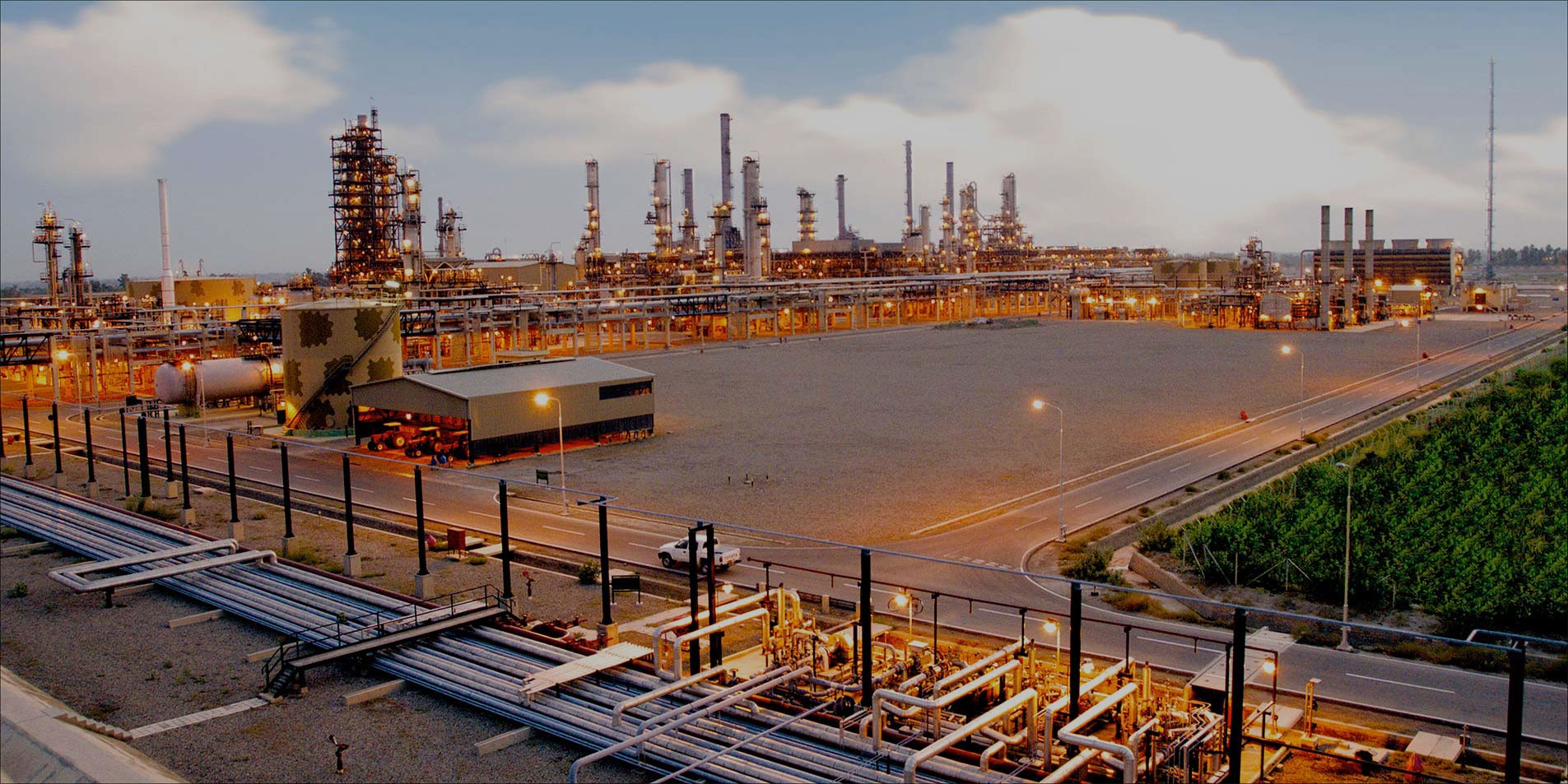
As Pakistan’s largest and most modern operating refinery, Pak-Arab Refinery Limited (PARCO) accounts for over half of national refining output, positioning it as a pillar of economic stability and long-term development. Founded in 1974 as a strategic joint venture between Pakistan and the UAE, the company was designed to strengthen bilateral ties and lay the foundation for an energy-secure Pakistan. The partnership underscored an enduring commitment to building infrastructure for Pakistan’s growing energy needs.
Read selected extracts from the interview below.
Q: How has your vision evolved since your appointment?
Irteza Ali Qureshi: I have been Managing Director for the past one and a half years. My top priority on taking charge was to maximise asset utilisation and throughput. This meant running the refinery at full capacity and using our 2,000-kilometre cross-country pipeline network to replace road tankers, which is safer, more environmentally friendly, and justifies our past investments. In my first full year, ending June 30, we recorded our highest refinery utilisation at 97%. Our two major pipelines also achieved historic throughput: the White Oil Pipeline (WOPP) carried 5 million tonnes, and the MFM pipeline from Bhutan to Lahore carried 4 million tonnes.
Although the refinery averaged 97% due to occasional electricity trips and other issues, it largely ran at full capacity. Higher utilisation increased white oil product output and reduced imports, contributing to the economy.
The second priority was reliability, ensuring asset availability from Karachi to Lahore. Our refinery, the most complex in the country, requires strong asset integrity and availability to maintain operations.
The third priority was optimisation and efficiency. With a fixed capacity of 120,000 barrels per day and rising costs, we focused on reducing costs and improving operations. Refining performance is measured by GRM (gross refining margin), expressed in dollars per barrel. GRM depends on crude oil prices, which are set globally and product yields. Each barrel of crude produces multiple products: petrol, diesel, kerosene, jet fuel and fuel oil (FO), among others. Petrol and diesel are profitable; FO is loss-making. For example, with crude at $70 per barrel and diesel at $80, there is margin, but FO priced at $60 results in losses.
Over the past year, we reduced FO production by one-third, converting more output into profitable products like petrol and diesel. This improved GRMs despite volatile global oil prices and shrinking refining margins.
Through maximising throughput, optimising assets, and reducing FO production, we remained profitable in difficult market conditions while ensuring operations remained safe, our most critical focus.
Q: How do you manage your company’s reputation, and how do you want it perceived by UAE-based investors and clients?
IAQ: This question has two parts. First is reputation, which in this business comes from reliability and safety. Consistently meeting the country’s energy demand is crucial, and over time we have shown that we are likely the only refinery that has always met government and stakeholder expectations. Last year we averaged 97% utilisation, by far the highest compared to others at 70%, 50% or 30%. The government views us as the nation’s energy lifeline because we are an integrated company, from pipelines to refinery to sales, serving the majority of demand in the north, particularly Punjab. The government can rely on us to consistently deliver, never shutting down or underperforming. We always over-deliver on commitments, which has built our strong reputation and goodwill.
Second is our integration with the UAE. We are a 50-year-old company, established in 1974, with a modular growth strategy. We began with a pipeline from Karachi to mid-country, followed by a refinery and further pipeline investments, and later expanded into oil marketing. Our joint venture with Total created the second-largest oil marketing company in the country, after PSO. Although Total exited in December last year, selling its share to Gunvor, a Switzerland-based global oil and commodity trader, the company remains the second largest. We also own Pearl Gas, the largest LPG marketing company in the country.
Q: How do you view your role in supporting Pakistan’s energy security and economic development?
IAQ: Our 1.5 million tonnes of storage capacity is strategically placed, starting from Karachi and extending to Lahore. We maintain storage facilities along this route, which is key to integration. Storage in only one location would not provide the leverage and efficiency the country needs. By offering facilities in multiple regions, we serve stakeholders more effectively. All facilities are connected through pipelines and the refinery, which is our strength, supported by the oil marketing company that delivers to retail, where consumers can refuel. This integrated approach, adopted since the beginning, has enabled us to build storage and provide efficient service to oil marketing companies, retail customers, and others.
Q: How do you see the planned $1.3 billion hydrocracker project with the UAE advancing energy cooperation?
IAQ: PARCO has always led in innovation and advancement. We remain the most modern and complex refinery in the country. A few years ago, we asked the government to introduce a brownfield refinery policy to provide incentives for upgrades, enabling production of cleaner products. Euro 5 is the current standard; we already produce Euro 5 petrol, while diesel is at Euro 3. We aim to reach Euro 5 for diesel as well. Work on this began four to five years ago, and we continue to evaluate cost-effective options to produce Euro 5 products and reduce furnace oil (FO) output.
FO demand in the country has sharply declined over the past five to six years, forcing us to export about 95% of production, roughly 50,000–55,000 tonnes every month. Since our refinery is located mid-country near Bhong, 80 kilometres from Bhong, and there is no pipeline to Karachi, exports require trucking FO downcountry for shipment. This is environmentally unfriendly and incurs heavy costs.
Our goal is to reduce FO production as much as possible, but investments must remain economically viable. We are working with international consultants on different models to identify a practical project. The board is expected to decide on the way forward in the next two to three months.
Q: What aspects of your operations have been most instrumental in achieving the industry’s recognition?
IAQ: PARCO’s name carries credibility and reliability, with leadership in optimisation, innovation and addressing industry challenges. Another refinery in the family has a higher nameplate capacity, but it does not operate at that level. When we call PARCO the largest refinery, we mean the largest operating refinery. Currently, we account for 50% of local refinery production, while the four other refineries combined contribute the remaining 50%, though they run at much lower capacities.
Q: How do you embed sustainability into corporate and long-term strategy?
IAQ: Sustainability is at the core of our operations. We recognise our responsibility to the community, the country and the environment, and all our efforts prioritise sustainability. We focus on reducing carbon emissions and adopting green practices. For example, transporting products through pipelines instead of trucks is environmentally beneficial. At the refinery, we monitor emissions and have conceptualised a project to capture flare gas, clean it, and convert it into usable gases, ensuring what is released is free of pollutants.
We are also adapting to the global energy transition. A solarisation study is underway, and several smaller installations are already solarised, with many more planned for next year. We are exploring renewable energy, biofuels from used cooking oil and sustainable aviation fuel (SAF).
As part of our duty to the community, we promote a cleaner, safer environment. This includes large-scale tree plantation drives, conducted both through CSR initiatives and internal operations, with annual targets for planting that we continue to expand.
Q: Why should investors consider Pakistan?
IAQ: The UAE, with whom we share a long-standing and close relationship, knows us better than any other country. They understand our environment and have been among our oldest investors, witnessing our journey to today’s macroeconomic stability. From the COVID era through 2022–2023, we faced devaluation, high inflation and declining credit ratings. Yet, in a short time, the country has stabilised: the current account is in surplus, inflation is below 5%, the exchange rate is stable and State Bank reserves stand at about $19 billion. Signing with the IMF again marks another achievement.
Economic leadership has turned the platform around, creating macro stability. S&P, Moody’s and Fitch have already upgraded ratings, with more expected. Two and a half years ago, confirming international letters of credit was a problem; today, conditions are strong. Profit repatriation to foreign investors now occurs on time, reassuring shareholders.
The UAE understands us deeply and values this partnership. Our UAE partners, including directors, are proud of the company and often call it one of the best in their portfolio. We see this venture not only as a jewel in Pakistan’s crown but potentially in Abu Dhabi’s as well.
Q: How have your diverse experiences shaped your leadership style today?
IAQ: As an auditor training to become a chartered accountant, I was exposed to many companies. Audits required understanding their control environments, businesses and how they made money. This inquisitiveness shaped my learning and helped me think like a business manager, marking the start of my grooming. Over time, through various positions and a mix of private and public sector experience, I built strength in balancing public accountability with private sector modernisation, governance and mindset. This blend has helped me fast-track work and accelerate business transformation.