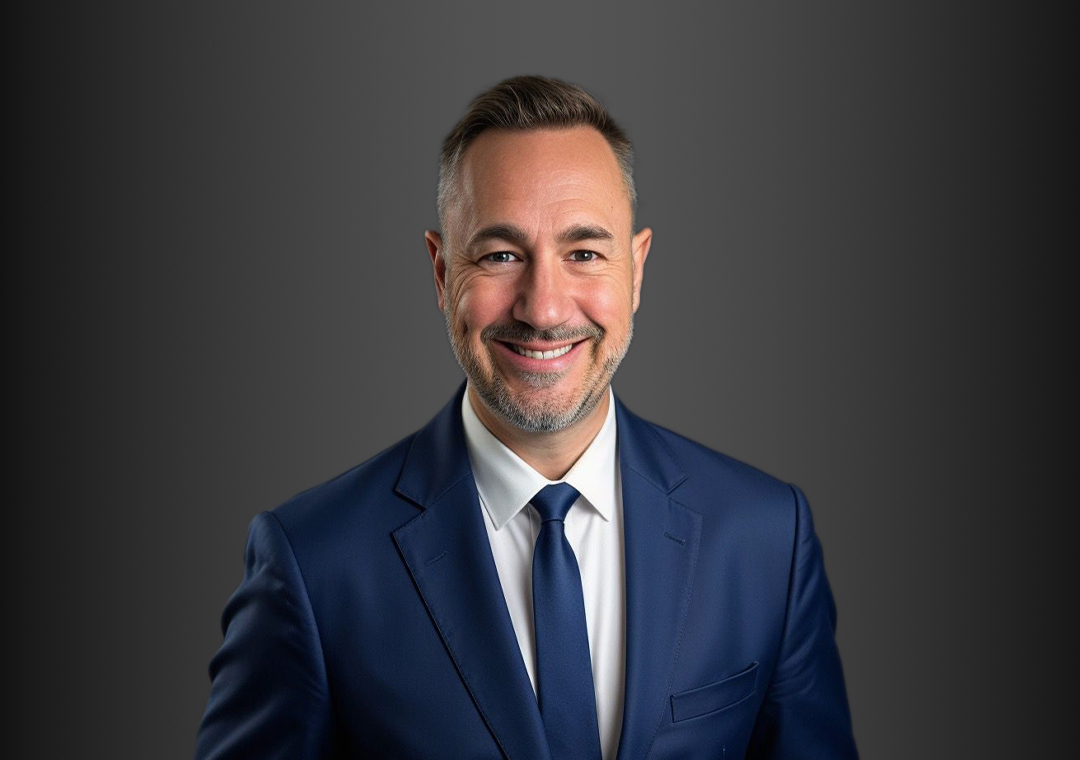

Hashoo Group’s portfolio spans hotels, restaurants, travel and tours and a hospitality management training school, now brought together in an integrated ecosystem designed to maximise value across physical assets and business synergies. With plans to grow to more than 60 hotels by 2026 and deepening Gulf partnerships in place, here Bastien Blanc, the CEO, sets out the priorities driving the group’s next phase.
Read selected extracts from the interview below.
Q: How has your vision for the company evolved over the years?
Bastien Blanc: At the beginning of 2024, our chairman, Sadruddin Hashwani, our deputy chairman, Murtaza Hashwani, and the board resolved to drive the hospitality division in a new direction. Although the group has been the largest conglomerate in the country and grown to become one of the largest in Asia over the past 50 years, its businesses had traditionally not been fully integrated. The board’s vision was to create a unified hospitality ecosystem that leveraged not only our physical assets, many of which we own, but also the synergies among our hotels, restaurants, travel agency, car rental and education business lines.
I was brought in to implement this vision. Our primary focus has been to integrate these businesses through modern platforms that support operations and cross-business communication. This includes hotel PMS upgrades, revenue-management systems and strengthened distribution supported by new internationally focused websites. Recently, we signed chain-level agreements with Ctrip.com and Booking.com, with more to follow, ensuring our entire portfolio is aligned for growth both domestically and internationally.
We also examined how different business lines can reinforce one another. For example, while many of our restaurants remain hotel-based, we have begun expanding into standalone, street-level, retail locations. We recognised that to provide the brands people love and respond to evolving consumer behaviour, we needed to bring our well-loved Connoisseur collection brands (our restaurants division) closer to customers, similar to the dining clusters seen in Dubai.
This led us to develop those brands differently through franchising and managing restaurants across the country and beyond, with a recently signed master agreement to develop Bukhara by Pearl Continental in Saudi Arabia. This is one example of how we are extending bringing those flavours to new markets, domestically and internationally.
Talent development is another key area. Talent incubation has long been central to my work personally as well as for the Hashoo group, and we have doubled down on the progress made by the Hashoo School of Hospitality. With five campuses, the school offers internationally recognised, degrees certified by CTH UK (Confederation of Hotel and Tourism). These programmes enable students to secure employment across Pakistan’s tourism sector including in our hotels and restaurants but not only, and they also open doors to further studies in Switzerland, the UK and Canada to mention a few.
Most recently we joined an international hospitality Dubai based platform, the FLC (Future Leaders Challenge), where the Hashoo School of Hospitality is now the first Pakistani institution to participate. This aligns with our broader commitment to building a future talent pipeline for the country, supporting not only our businesses but the wider hospitality and tourism industry.
This commitment reflects the long-standing vision of our chairman: to build businesses that serve as a backbone for Pakistan’s tourism sector.
Q: How have you positioned the company for Gulf-based investors?
BB: The company has existed for over 50 years, and its various businesses, hotels, restaurants, travel agencies, car rental and schools have been developed gradually over time. The guiding principle has always been that every business must meet international standards. Our approach to managing the group’s reputation is anchored in three core elements: financial resilience, strong governance, essential for a diversified conglomerate, and operational transparency. These pillars underpin our market leadership and international recognition, supporting our ambitions for global expansion.
For investors in the UAE, there are multiple ways to work with us as a listed company: investing through the stock exchange, investing in properties would it be domestically or engaging with our international projects. Pakistan is the largest market outside the GCC for spiritual tourism, to Makkah and Madinah. This positions us uniquely, as we bring not only a well-established hospitality brand but also a robust travel network and a strong talent pipeline capable of operating hotels in these destinations.
We operate the country’s largest hospitality network, with over 36 hotels today, expanding to more than 60 by the end of 2026. Our portfolio spans mid-scale to luxury across the brands Hotel One, Hotel One Vogue, PC Legacy, Pearl Continental Hotels & Resorts and PC Signature, along with our serviced-residence brand, PC Residencies. Across these brands, we deliver consistent operational excellence, which drives strong investor confidence, essential for growth through management and franchise agreements.
While we have historically owned many of our assets, current expansion is driven primarily through asset light models. Operational excellence and investment security are therefore critical. When a partner can operate a diverse portfolio not only in major cities but also in secondary and remote destinations, and can do so at an international standard, it signals reliability and expertise for any market in which we choose to develop.
Q: What drives your division’s strong market position?
BB: We differentiate ourselves through three key elements. The first is our brand ladder across both the hotel and restaurant businesses. In hotels, we cover every segment of hospitality, from mid-scale to luxury. Hotel One represents our mid-scale offering, PC Legacy our upscale segment, Pearl Continental Hotels & Resorts our luxury portfolio and PC Signature our luxury boutique brand. We are the only company in the country offering this full brand spectrum.
The second element is our end-to-end ecosystem. While many may attempt to replicate it, it is not easy to operate all verticals seamlessly, from talent development to deploying that talent across hotels, from opening new properties to driving business through international and domestic partnerships. We are currently the only player in Pakistan capable of delivering this integrated ecosystem, which is a major competitive advantage.
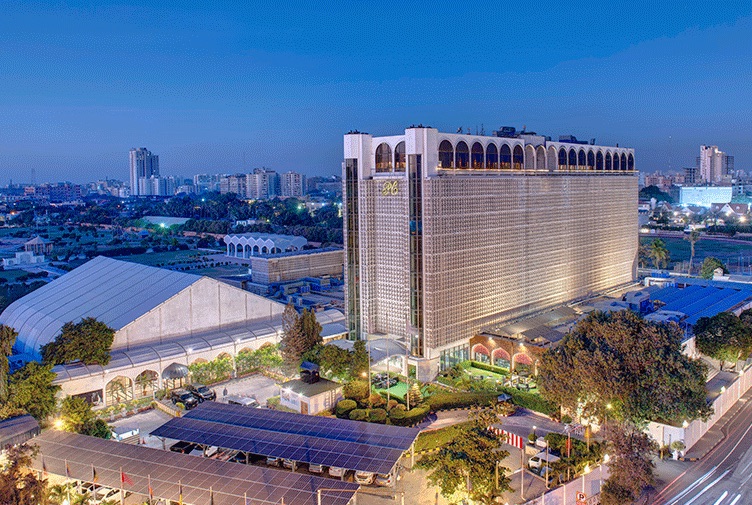
The third element is the strength of our assets. As an owner, manager and franchisor, we hold some of the most iconic properties in the country. Pearl Continental Lahore, where we meet today, is Pakistan’s largest hotel, with 607 rooms and conference facilities for over 5,000 guests, an operation of true scale. Pearl Continental Bhurban, located an hour from Islamabad, effectively created the destination when it was built, transforming what was once an undeveloped area to a place to be.
We opened Rumanza by Pearl Continental, a PC Signature property and the largest golf course in Asia. Designed by Nick Faldo, it is a stunning destination only a short flight from Dubai to Multan and a brief drive onward, an ideal experience for golfers from the UAE. Since opening, Rumanza has hosted tournaments with participants from Canada, the UAE, Australia, the UK and France, among others.
These unique, unmatched assets within our portfolio reinforce our leadership position and strengthen the overall value of our collection.
Q: How will the Master Franchise Agreement with Global Business Bridge (GBB) strengthen your operations?
BB: It is important to recognise the partnership and the people behind it. GBB is already one of our franchise partners domestically. We have successfully developed one restaurant with them in Lahore, and a second is currently under development. Working with partners who share our passion is essential. Partners who love and cherish the brands enable the best final experience to guests.
We have set clear targets for locations in Punjab, Islamabad and Saudi Arabia. Demand is particularly strong for Pakistani flavours. Within our Connoisseur Collection, we have multiple “flavours”, restaurant concepts such as Sakura, Tai Pan and Baker’s Boutique. These brands are extremely well known locally, though our international strategy, focuses on Pakistani concepts, such as Bukhara by Pearl Continental and Dumpukht by Pearl Continental, bringing authentic flavours we have perfected over decades and for which we hold unmatched expertise.
For now we start with Saudi Arabia, and GBB has been eager to partner with us there. There is meaningful demand in the UAE as well, and we are considering partnerships there too. The business impact is clear: revenue diversification and a more balanced risk profile across markets. But the greatest impact is the brand halo. All these concepts fall under the PC Hospitality, hence development abroad opens doors for our hotels and restaurants, as well as opportunities for our school, strengthening the overall ecosystem.
We are already in discussions with partners in Saudi Arabia about expanding the Hashoo School of Hospitality. This aligns fully with our chairman’s vision: everything we do must support tourism and contribute meaningfully to the industry, not simply exist as an isolated initiative.
Q: What additional opportunities would you emphasise to UAE-based investors?
BB: Privilege Club is the most holistic membership programme of its kind in the country, with members drawn from the elite of the business, political and leadership communities. To support our growth and offer greater value to our clientele, we explored ways to extend member benefits beyond domestic’s borders. Many of our members travel frequently to Dubai, whether as expatriates or business travellers, so we looked for a solution that could deliver immediate, reciprocal value between a UAE partner and our Privilege Club base.
Through member surveys, we found that when travelling, their first priority is often restaurants, not hotels. They think through their taste buds, seeking memorable dining experiences with friends. Therefore focusing on restaurants made strategic sense. This led us to SupperClub Middle East, a strong platform with an extensive restaurant network. The partnership allows SupperClub members visiting Pakistan to enjoy benefits across our properties, while Privilege Club members gain special privileges at numerous restaurants across the UAE. The reciprocity and lifestyle relevance made the partnership a natural fit.
For us, it was never about simply signing an agreement. We examined member needs and ensured the offering complemented our existing services. Lifestyle is a central expectation for our clientele, and dining is at the core of that lifestyle. SupperClub Middle East aligns perfectly with this focus.
Beyond Privilege Club, there are broader UAE investment opportunities. From a hospitality-development standpoint, Hotel One and Hotel One Vogue are our priority brands development-wise for the UAE. It is strongly recognised among Pakistani clientele and fits a niche that remains underserved in markets like Dubai and Sharjah.
There is also opportunity to grow our restaurant portfolio. While our master franchise covers Saudi Arabia, we are exploring expansion of Bukhara by Pearl Continental and Dumpukht by Pearl Continental into the UAE. Demand is significant. Since signing the SupperClub agreement, I am asked almost weekly, when we will bring “the food from home.” Even with the many excellent restaurants in Dubai, diners still seek the authentic flavours they grew up with.
Q: How do you approach sustainability?
BB: You do not need to reinvent the wheel. One advantage of operating in a developing market is that others have already tested many approaches, so we adopt best practices and gradually deploy them across our network.
We have invested significantly in solar panels and modern extraction systems to reduce consumption. I often describe this as being financially responsible. Financially responsible measures, such as solar power, or transitioning to LPG, have been gamechangers. These initiatives improve energy efficiency, reduce utility costs, benefit the environment and protect profit margins. They strike the right balance.
Regarding net-zero, responsible sourcing plays a central role. Beyond the initiatives already mentioned, we are identifying opportunities across our supply chain where we can create positive impact. For example, we have supported the development of small local enterprises, some founded by women in the north and others by entrepreneurs in Lahore, helping them build sustainable businesses. From these businesses, we also source products with lower carbon footprints.